


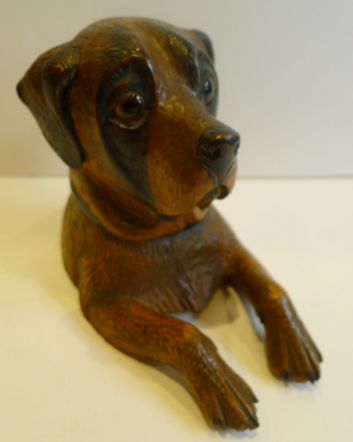


Dark Wood Inkstand
A dark wood inkstand brings tangible weight and character to a desk, holding inkwells and pens in rich timber.

Dark Wood Inkstand
A dark wood inkstand unites practical desk accessories with ornamental woodwork from the nineteenth century. These items serve to hold inkwells, pens and stationery in a tidy fashion upon a writing surface.
Common forms include stationary stands, desk tidies and figural inkwells shaped as owls, bears, dogs and cats. Each dark wood inkstand reflects the period preference for combining utility with naturalistic carving.
How they were made
Carvers shaped linden wood, oak and coromandel wood by hand, frequently employing deep relief work to render animal figures and foliage. Mother-of-pearl inlay and ormolu mounts punctuate the timber surfaces on select examples.
Makers integrated brass and glass components to hold the ink securely within the wooden housings. Metal hinges and mounts provided structural reinforcement to stationery and ink stands.
Dark Wood Inkstand Retail Price Guide 2026
Typical asking prices for dark wood inkstand among the pieces listed under this phrase on Sellingantiques today, from the lower quarter to the upper quarter. They describe what is for sale here now, not the wider market.
Listings combine Victorian craftsmanship with nineteenth-century Black Forest animal carvings in woods like coromandel and oak.
What varies in quality
The precision of the wood carving dictates the standard of each piece, distinguishing simple turned timber from intricate figural work depicting animals with glass eyes and detailed fur. Greater depth in the relief carving and lively animal postures elevate the status of an inkstand.
The choice of dense exotic timbers like coromandel wood, paired with quality metal mounts such as ormolu, separates more ambitious desk sets from basic utilitarian items.
The Dark Wood Inkstand Glossary
- Coromandel wood
- A dense, heavily figured tropical hardwood showing dark brown and black stripes. Craftsmen utilised this timber for luxury nineteenth-century desk accessories.
- Black Forest style
- A nineteenth-century carving tradition originating in the Swiss region, known for realistic representations of animals and forest elements. Artisans carved bears, dogs and owls with high naturalism.
- Ormolu
- Gilt bronze applied as mounts and decorative hardware on furniture and desk wares. This technique adds metallic contrast to dark wooden surfaces.
- Stationary stand
- A desk accessory designed to hold folded paper, envelopes and writing implements upright. These stands often incorporate integrated inkwells.
- Desk tidy
- A compartmented wooden tray for organising various writing tools and small office items. Pieces of this type gather scattered desk accessories into a single footprint.
Dark Wood Inkstand: Frequently Asked Questions
What is a dark wood inkstand?
A dark wood inkstand is a nineteenth-century desk accessory designed to hold inkwells and writing implements in timber such as coromandel or oak.
These pieces range from simple stationary stands to elaborate Black Forest carvings featuring animals.
How were inkstands used?
Users placed them on writing desks to keep inkwells, pens and paper organised and ready for correspondence.
The integrated glass inserts held liquid ink while preventing spills on the timber surface.
How do I identify Black Forest pieces?
Black Forest pieces display hand-carved wooden animal figures, such as bears, dogs or owls, often executed in linden wood.
They date primarily from the late nineteenth century and focus heavily on naturalistic textures.
What woods are common?
Coromandel wood, oak and linden wood appear frequently across these nineteenth-century desk accessories.
Coromandel provides a dark, striped grain while linden wood suits deep, figurative carving.