






Brass Mounted Stationery Box
A brass mounted stationery box brings order to a desk through nineteenth-century craftsmanship and substantial metalwork.
Brass Mounted Stationery Box
A brass mounted stationery box is a desk accessory designed to hold writing paper, envelopes and correspondence neatly upright. These pieces emerged principally during the nineteenth century, reflecting the Victorian appetite for organised writing desks and private correspondence. Buyers seeking this phrase encounter slope-front cabinets, domed caskets and fall-front boxes intended for domestic studies and country houses.
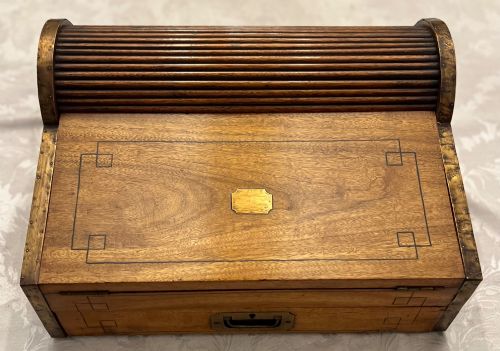
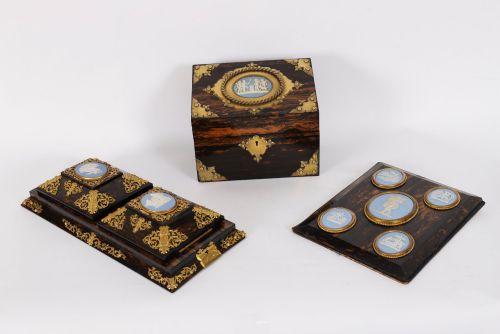
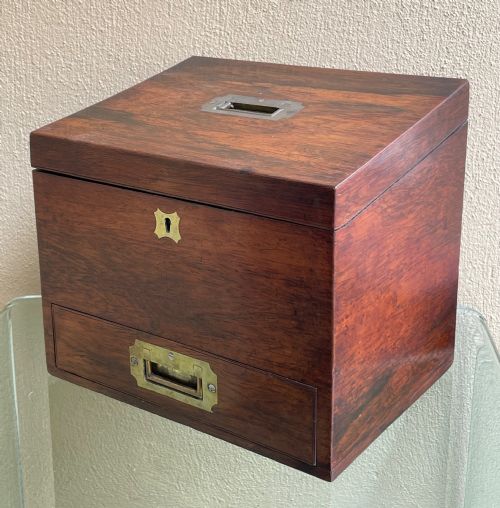
The objects appearing on this page span several decades of British craftsmanship, with the Victorian period providing the majority of examples. Pieces range from straightforward oak letter boxes to elaborate coromandel cabinets equipped with internal dividers. Alongside dedicated stationery boxes, the selection includes related desk equipment such as writing slopes, inkstands and correspondence chests.
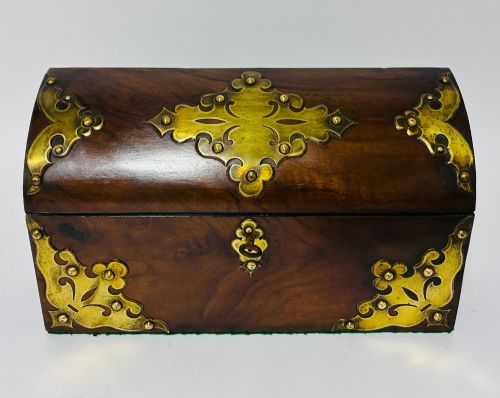
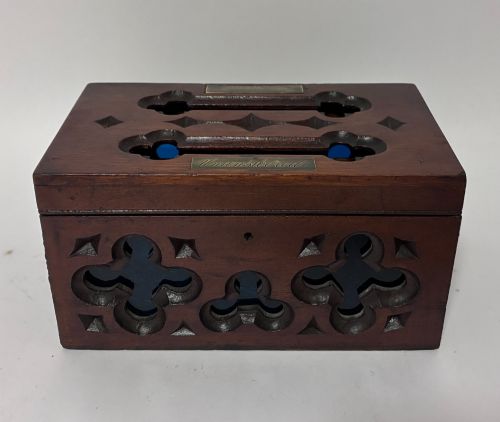
Makers and retailers of the era utilised varied regional styles, from Gothic Revival interpretations to utilitarian campaign designs fitted with brass carrying handles. Woods such as walnut, mahogany and burr veneers predominate, often enhanced by cut brass straps, escutcheons and corner mounts. Each format served the practical writing needs of the period while providing a decorative centrepiece for the library table.
Materials and Construction
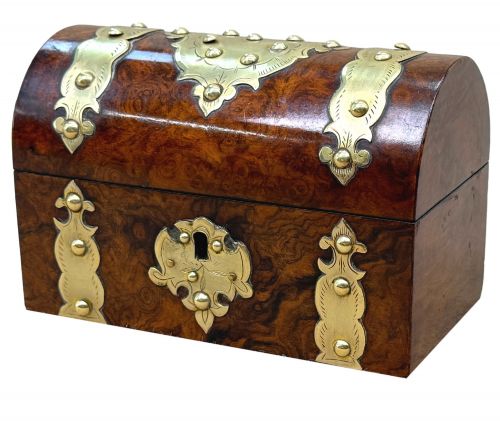
Cabinet makers constructed these boxes using solid timbers and decorative veneers over secondary woods, selecting dense hardwoods like oak, mahogany and walnut. Exotic timbers such as coromandel and pollard oak frequently appear on finer examples, prized for their rich grain patterns and dark tones. These wooden carcases were then fitted with heavy cast or sheet brass mounts, hinges and lock plates fixed with small slotted screws.
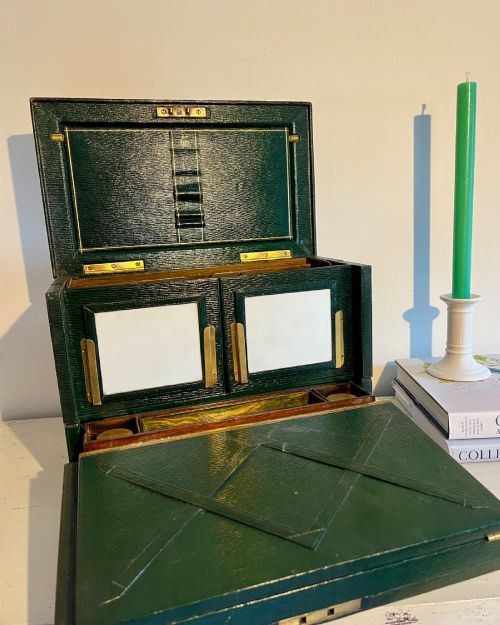
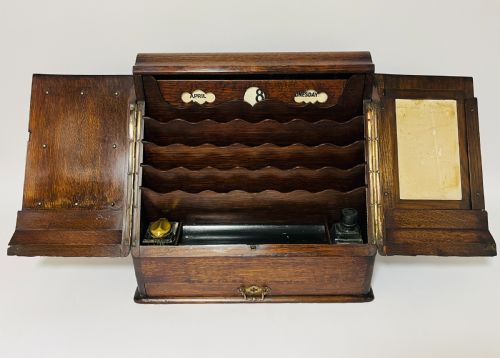
Surface ornamentation relied heavily on the natural figuring of burr walnut and burl veneers, sometimes complemented by cut brass inlay or brass strapwork in the Gothic Revival taste. Interiors typically featured sloping wooden partitions, leather-lined compartments, and occasionally glass inkwells or velvet-backed letter slots. Construction techniques prioritised sturdy mitred or dovetailed joints to withstand daily desk use and the weight of stacked paper.
Brass Mounted Stationery Box Retail Price Guide 2026
Typical asking prices for brass mounted stationery box among the pieces listed under this phrase on Sellingantiques today, from the lower quarter to the upper quarter. They describe what is for sale here now, not the wider market.
Listings feature Victorian pieces from the 1850s to the 1890s, alongside Edwardian examples in oak and walnut.
Judging Quality
Quality in these pieces rests upon the selection of timber and the precision of the brass mounts. Finer examples display carefully matched burr walnut or figured coromandel veneers that wrap continuously around the carcase, whereas simpler boxes use plain oak or mahogany. The weight and casting quality of the brass fittings also distinguish standard production from superior workshop output.
Internal joinery and fittings indicate the tier of manufacture, with better boxes incorporating dovetailed drawer linings, silk or leather pocketing, and integrated locking mechanisms with working keys. The integration of the brass mounts into the wood surface - set flush rather than simply surface-fixed - signals skilled hand assembly by nineteenth-century cabinet makers.
Houghton and Gunn·Mechi and Bazin·Mappin and Webb·Rodman and Co·Gillows of Lancaster·Trussell Brighton
The Brass Mounted Stationery Box Glossary
- Campaign
- Furniture and accessories built for travel, typically featuring recessed brass carrying handles, reinforced corners, and robust construction to withstand movement.
- Coromandel
- A dense, heavy tropical Asian timber with dark brown and black graining, heavily utilised by Victorian makers for luxury desk accessories and caskets.
- Fall-front
- A cabinet door or panel hinged at the bottom that drops forward to reveal internal stationery slots and letter compartments.
- Escutcheon
- A flat plate of brass surrounding a keyhole, serving both to protect the surrounding wood from wear and as a decorative element.
- Writing slope
- A portable desk featuring an angled writing surface that opens to reveal compartments for pens, ink and paper.
Brass Mounted Stationery Box: Frequently Asked Questions
What went inside a stationery box?
These boxes held folded writing paper, envelopes, visiting cards and correspondence stamps within fitted internal wooden partitions and leather pockets.
They kept loose paper tidy and protected inkwells or sealing wax close at hand on a library desk.
How do I date a Victorian box?
Dating relies on combining the timber choice, mount style, and registration marks or maker's plaques found inside the box.
Gothic Revival details and coromandel wood typically point to the middle decades of the nineteenth century.
Are campaign boxes different from regular ones?
Campaign pieces feature inset brass handles and reinforced corners originally designed for military officers on the move.
They are structurally heavier and built to endure transport across the British Empire.
Can I use these boxes for modern letters?
Most nineteenth-century stationery slots accommodate standard modern envelopes and notepaper, though very compact Victorian compartments suit smaller notes.
They function well on modern desks for sorting mail and holding contemporary stationery.