


Black Forest Eagle Carving
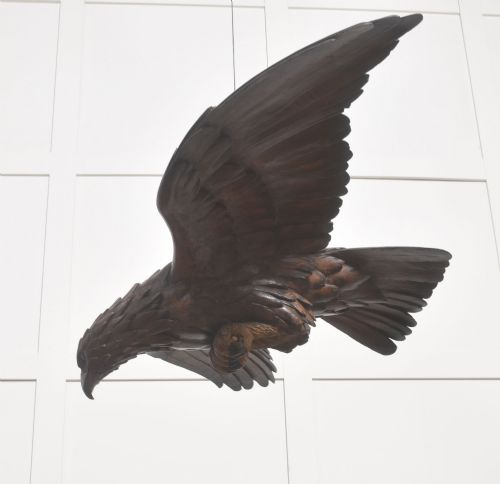
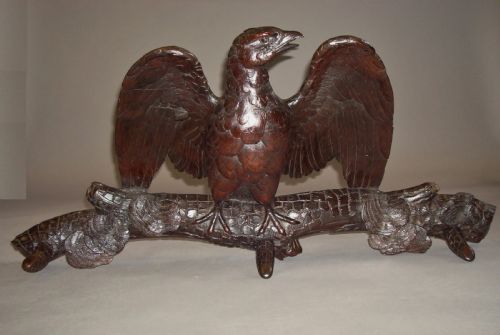
These black forest eagle carving pieces bring dramatic avian sculpture and dark wood grain into a room, combining fierce predatory detail with functional furniture.
Black Forest Eagle Carving
When you search for a black forest eagle carving, you enter a world of Victorian and turn-of-the-century wood sculpture where birds of prey dominate functional hall furnishings. The pieces appearing here span from the late nineteenth century to the early twentieth century, taking the form of wall mirrors, stick stands, hall stands, inkstands, and armchairs. Sculptures of the eagle appear either on their own or alongside other animals like foxes and ibex.
The most common formats you will meet on this page are carved wall mirrors topped with wings and talons, and substantial hall stands or coat racks designed for grand entryways. You will also find rarer domestic items, such as inkstands and armchairs, which integrate the fierce posture of the bird into everyday household objects.
How they were made
Carvers shaped these items primarily from solid timbers, utilising linden wood, walnut, and general dark-stained wood to achieve deep, moody tones. The carvers relied on hand tools to carve intricate feather patterns, hooked beaks, and outstretched wings directly into the solid wood.
Many sculptures incorporate secondary materials like glass for the eyes or metal fittings for structural support and mirrors. The natural grain of the lindenwood and walnut was often darkened with stain to emphasise the dramatic musculature and textured plumage of the eagle.
Eagles share their carved wooden perches with unexpected companions, including foxes and ibex.
What varies in quality
The distinction between ordinary and exceptional work lies in the depth of the carving and the anatomical accuracy of the bird. Superior pieces show feathered relief carved with fine, individual strokes rather than flat, blocky execution.
Scale and complexity also dictate the tier of a piece, separating simpler shelf sculptures from monumental hall stands and armchairs that integrate entire avian figures into the framework.
The Black Forest Eagle Carving Glossary
- Black Forest
- A style of ornate wood carving originating from the European mountain region, famous for realistic animal and wildlife motifs. This aesthetic defines the majority of the wooden sculptures and furniture found on this page.
- Linden wood
- A pale, fine-grained timber frequently utilised by carvers for its smooth consistency and ease of hand-shaping. It readily accepts dark stains and holds crisp detail in feather carving.
- Stick stand
- A hall item designed to hold walking sticks and umbrellas, often configured with a carved base to catch drips. In this context, it doubles as a sculptural support for an eagle figure.
- Inkstand
- A desk accessory holding inkwells and pens, decorated here with a small carved bird of prey. These desktop pieces bring miniature wildlife scenes into a study.
Black Forest Eagle Carving: Frequently Asked Questions
What rooms suit a black forest eagle carving?
These pieces fit naturally into entrance halls, studies, or libraries where dark wood furniture and natural motifs already set the tone. A mirror or coat rack placed near an entryway immediately establishes a striking focal point for visitors.
They also pair well with leather armchairs and heavy timber desks, echoing the nineteenth-century domestic aesthetic that originally welcomed them.
How do I care for carved wood?
Keep the wood away from direct heat sources and strong sunlight to prevent the timber from drying out or splitting. Dust the deep crevices of the feather carvings regularly with a soft brush.
Occasional light treatment with appropriate wood maintenance products will help preserve the dark stain and natural sheen of the walnut and linden wood.
Were these pieces made for practical use?
Many items serve a dual purpose, combining fierce sculptural art with everyday household utility. Coat racks, wall mirrors, stick stands, and armchairs were built to handle daily domestic life while displaying master craftsmanship.
Smaller desk inkstands and standalone sculptures, meanwhile, existed purely as decorative expressions of wildlife art.
How do I identify the period?
The pieces span the Victorian era up to around nineteen-ten, reflected in the dark timber finishes and naturalistic animal subjects. Construction methods, such as hand-carved solid wood panels and period glass plates in mirrors, help confirm their age.
Stylistic cues link them directly to the European and American folk art movements of the nineteenth century.