





Black Forest Coat Rack
These black forest coat rack pieces bring remarkable carved animal forms and rich natural timber into an interior.
Black Forest Coat Rack
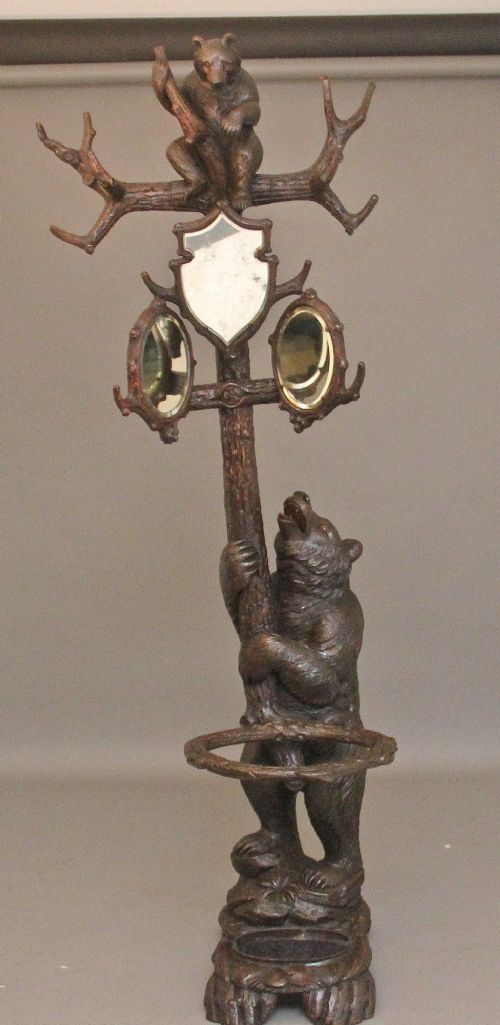
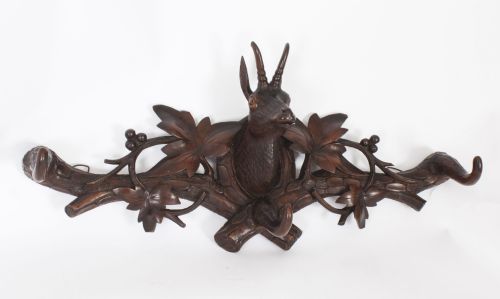
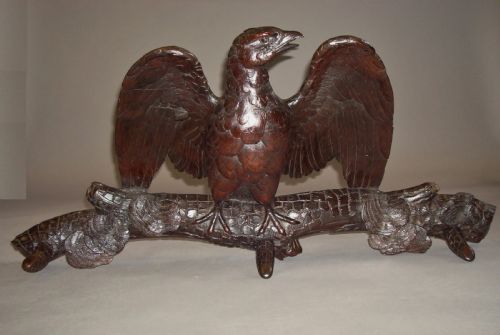
A black forest coat rack combines functional hallway storage with elaborate wood carving, frequently depicting bears, foxes, eagles, chamois goats, and deer. These pieces range from compact wall-hanging hat and coat racks to substantial hall stands incorporating umbrella stands and mirror frames.
The objects stem from the nineteenth and early twentieth centuries, reflecting continental hunting styles and rural French country influences. On this page, buyers frequently encounter wall hooks, mounted horn designs, and larger carved hallstands.
Originating largely from Swiss and South German workshops, these items served practical purposes in grand hallways and hunting lodges alike. They remain sought after for their distinct sculptural quality and historical connection to alpine woodcarving traditions.
How they were made
Carvers utilised linden wood and carved hardwood, selecting timber that accepted deep, intricate detailing without splitting. The natural grain of the oak and linden provided a rich foundation for the dark stains characteristic of the style.
Makers incorporated organic materials such as deer antler, animal horn, and taxidermy elements alongside carved wooden foliage and animals. Glass eyes were frequently added to animal figures to bring realism to bears, foxes, and birds of prey.
Black Forest Coat Rack Retail Price Guide 2026
Typical asking prices for black forest coat rack among the pieces listed under this phrase on Sellingantiques today, from the lower quarter to the upper quarter. They describe what is for sale here now, not the wider market.
Listings feature items dated from the nineteenth century up to 1920, incorporating linden wood, oak, horn, glass, and metal.
What varies in quality
The depth and realism of the carving separate standard examples from exceptional pieces, particularly in the rendering of animal musculature, fur texture, and facial expression. Superior items display meticulous attention to anatomical detail in bears, chamois, and eagles.
Scale and complexity also influence the standing of a piece, with exhibition quality items featuring multi-figure compositions, integrated oak tree motifs, and substantial dimensions. The clever integration of functional elements like hat hooks and umbrella wells into the naturalistic carved forms dictates the success of the design.
The Black Forest Coat Rack Glossary
- Linden wood
- A pale, fine-grained timber favoured by alpine carvers for its cooperative texture and lack of pronounced grain. It allows for intricate undercut carving without fracturing.
- Chamois
- A goat-antelope native to European mountains, frequently depicted in carved head mounts for wall-hanging hat and coat racks. These mounts showcase horns and detailed fur work.
- Hall stand
- A large piece of hallway furniture combining a coat rack, hat hooks, umbrella stand, and often a central mirror. They are central examples of the black forest style.
- Continental hunting style
- An aesthetic tradition rooted in nineteenth-century Central Europe celebrating forest fauna, game, and sporting motifs. It heavily influences the ornamentation of these items.
Black Forest Coat Rack: Frequently Asked Questions
Where were these pieces made?
The majority originate from workshops in Switzerland and South Germany during the nineteenth and early twentieth centuries. Carvers in these alpine regions specialised in detailed animal sculptures and rustic furnishings.
These items catered to an international market, often supplying grand European and British homes with decorative hallway pieces.
How do I mount a wall rack safely?
Wall-hanging hat and coat racks require secure fixing to solid masonry or direct attachment to wall studs. The weight of carved hardwood and natural horn demands robust brackets or screws.
Professional installation is recommended to support the weight of heavy coats and hats over time.
What animals are commonly depicted?
Bears are the most frequent subject, appearing on hall stands and whip hooks alike. Other common creatures include foxes, eagles, chamois goats, and deer.
These animals reflect the alpine forests and hunting culture of the regions where the carvers worked.
How should I clean the wood?
Dust the carvings gently with a soft, dry brush to reach into the crevices of the foliage and fur. Avoid using liquid polishes or harsh chemical cleaners that can damage the antique finish.
Maintaining a stable indoor humidity helps protect the linden wood and oak from splitting or drying out.