
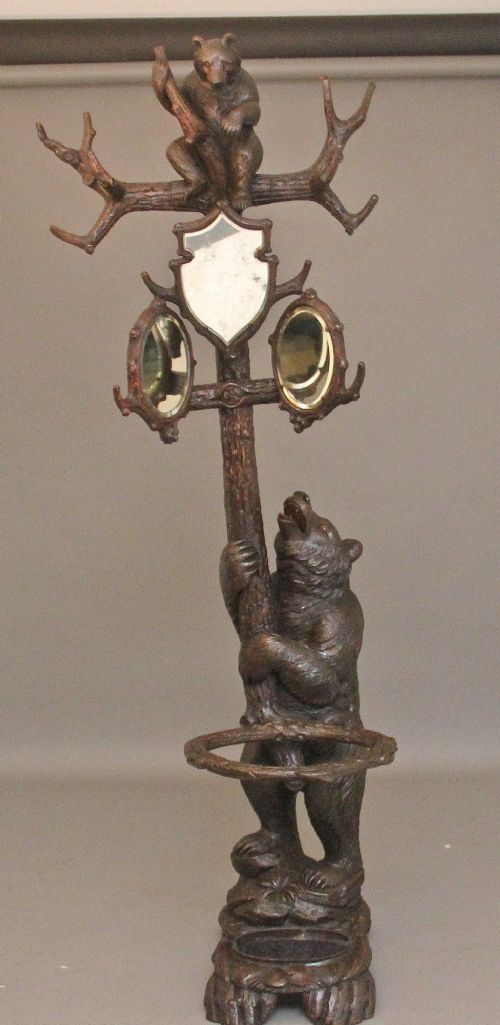
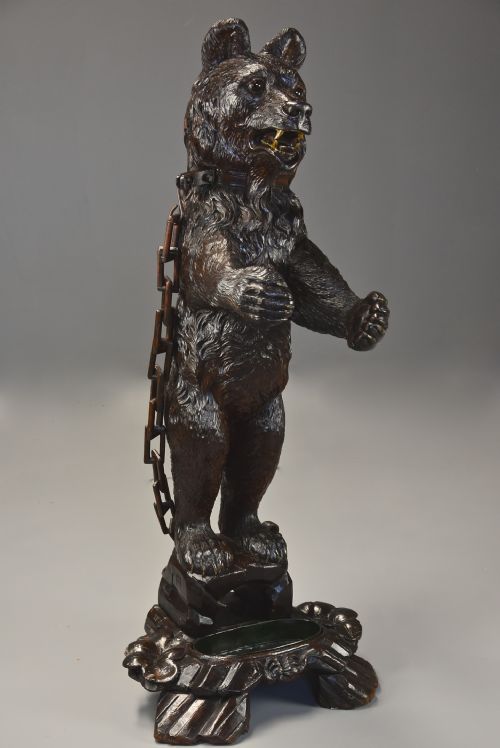


Carved Bear Umbrella Stand
A carved bear umbrella stand brings the rustic charm of the Black Forest tradition directly into the hallway, offering a sturdy and characterful place for walking sticks and wet brollies.
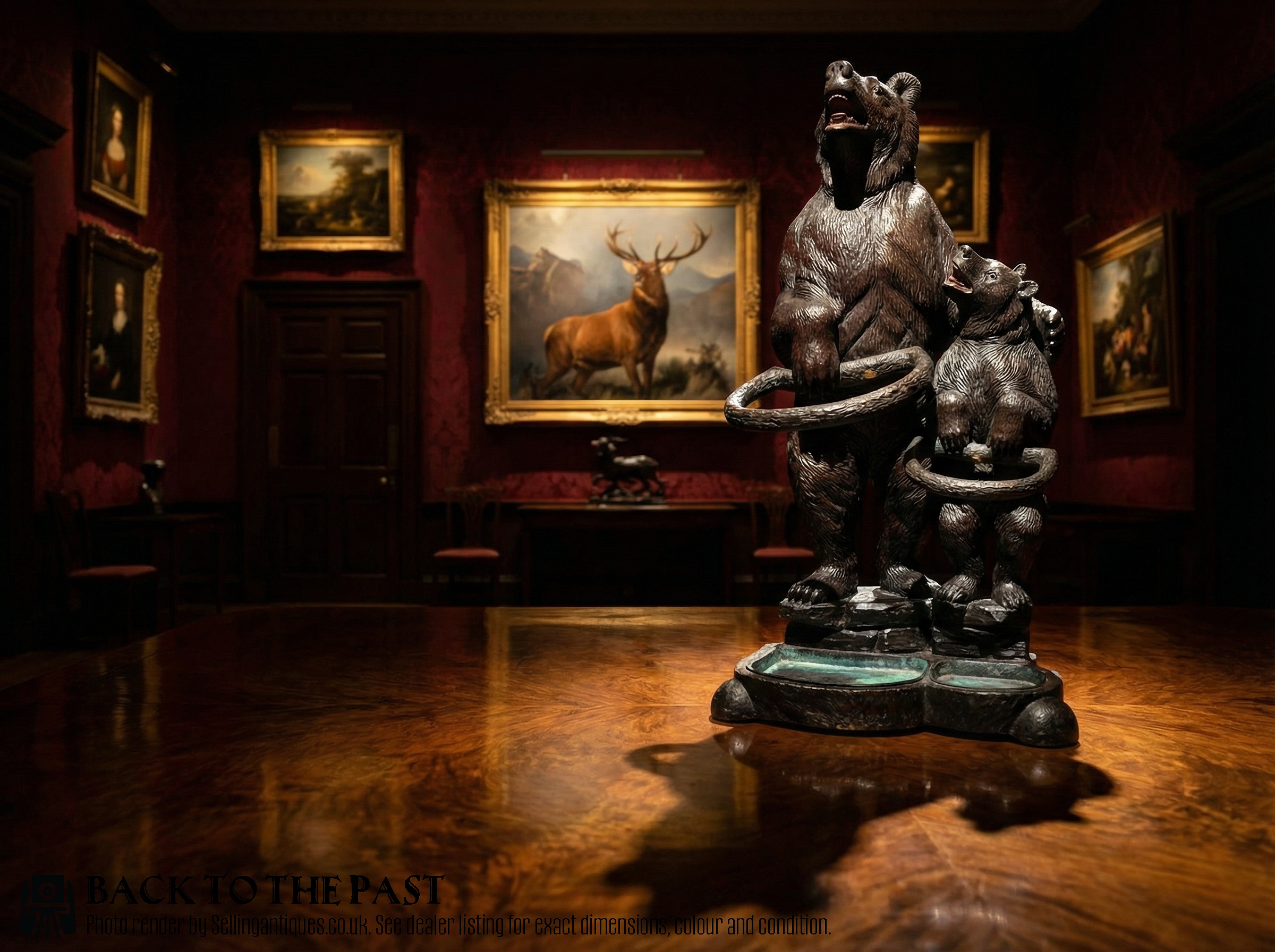
Carved Bear Umbrella Stand
A carved bear umbrella stand is a functional hallway furnishing usually fashioned in the distinctive Black Forest style, combining animal sculpture with practical storage for sticks and brollies. These hall stands and stick stands emerge primarily from the nineteenth century, including specific dates such as 1860, 1890, 1910, and 1920.
Most examples on this page take the form of substantial hall stands or dedicated double stick stands, frequently depicting carved bears interacting with oak trees or natural woodland elements. The pieces range from straightforward nineteenth-century umbrella holders to large exhibition-quality furniture featuring integrated mirrors and metal drip trays.
How they were made
Carved wood forms the structural and decorative core of these pieces, with specific listings recording lindenwood, linden wood, walnut, and carved hardwood. Artisans utilised traditional woodworking techniques to render detailed animal anatomy and foliage directly into the timber.
Metal components frequently appear alongside the wooden structure to form practical drip trays for wet umbrellas and sticks, protecting the organic material from water damage. Glass and mirror elements are also integrated into the taller hall stand formats to provide a functional looking-glass for the hallway.
Carved Bear Umbrella Stand Retail Price Guide 2026
Typical asking prices for carved bear umbrella stand among the pieces listed under this phrase on Sellingantiques today, from the lower quarter to the upper quarter. They describe what is for sale here now, not the wider market.
The listings here span the nineteenth century and the early twentieth century, incorporating periods like 1860, 1890, 1910, and 1920.
What varies in quality
The sculptural depth and anatomical realism of the bear carving distinguish an average piece from an exceptional one, particularly in the rendering of fur texture and facial expression. Exhibition-quality examples display a far higher degree of ambition in their design, often incorporating complex naturalistic tree forms and larger overall proportions.
The choice of primary timber and the integration of secondary materials such as fitted metal trays and mirrors dictate the execution standard of the piece. Superior craftsmanship shows in the seamless joinery of the woodwork and the retention of original surface finishes without clumsy alterations.
The Carved Bear Umbrella Stand Glossary
- Black Forest style
- A decorative tradition originating in the European mountain region, known for highly detailed animal carvings and rustic wooden furniture. This style heavily influences the bear umbrella stands found in nineteenth-century and early twentieth-century workshops.
- Hall stand
- A multi-functional piece of hallway furniture designed to hold coats, hats, and walking sticks, often incorporating a mirror. Many carved bear umbrella stands take this larger form.
- Stick stand
- A compact furnishing built specifically to store walking sticks and canes upright. These pieces often share similar proportions to dedicated umbrella holders.
- Lindenwood
- A pale, fine-grained timber frequently chosen by woodcarvers for its cooperative working qualities and smooth finish. It is one of the primary materials recorded in these carved bear pieces.
- Drip tray
- A metal insert placed at the base of a stand to catch water running off wet umbrellas. This functional addition protects the surrounding carved wood from moisture.
Carved Bear Umbrella Stand: Frequently Asked Questions
What is a carved bear umbrella stand?
A carved bear umbrella stand is a decorative hallway furnishing that combines a sculptural wooden bear with functional storage for walking sticks and wet brollies.
These pieces typically date from the nineteenth and early twentieth centuries, emerging primarily from the Black Forest carving tradition.
How were these stands used originally?
In period homes, these stands served as the primary drop-zone in the hallway for visitors and residents to leave walking sticks, canes, and wet umbrellas.
Taller hall stand variations often combined this storage with an integrated mirror and hanging hooks for hats and coats.
How do I live with one today?
Position your stand in a hallway or entrance lobby where it can serve its original purpose of holding umbrellas and walking sticks while acting as a striking decorative focal point.
Ensure the metal drip tray inside is kept clean and dry to protect the surrounding antique timber from moisture exposure.
How can I tell the periods apart?
Nineteenth-century examples often display deeper, more ambitious hand-carving and richer patination on woods such as lindenwood and walnut.
Pieces extending into the early twentieth century may show slightly different structural proportions or simpler decorative elements associated with later workshop production.