




Black Forest Coat Stand
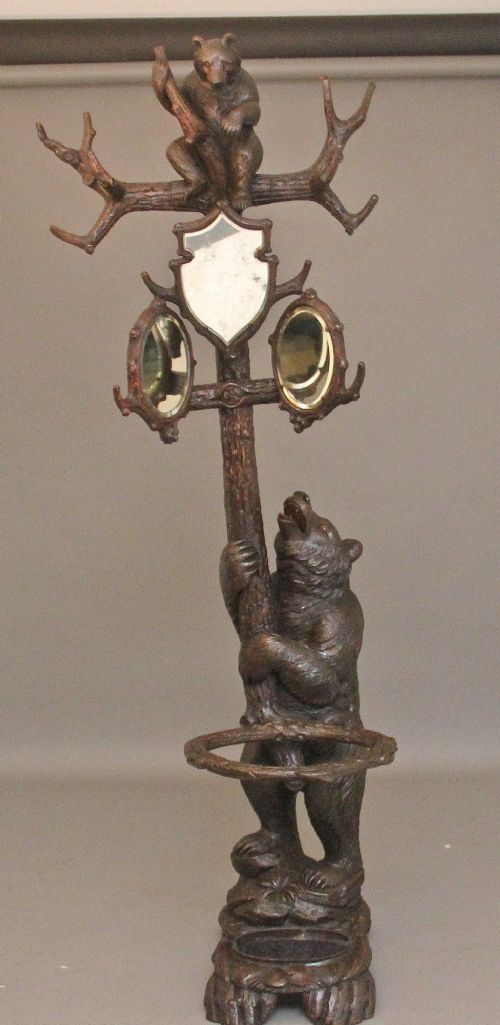
A black forest coat stand brings spirited animal carving and deep timber into a hallway with undeniable presence.

Black Forest Coat Stand
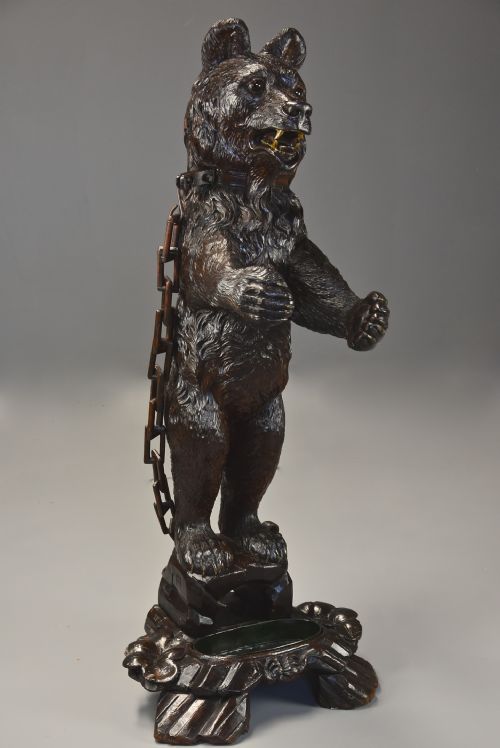
A black forest coat stand typically takes the form of a carved hall stand, wall rack, or umbrella holder featuring animal figures. Bears holding branches or standing on hind legs appear most frequently among the current pieces, often integrated into large hall furniture.
How they were made
Carvers utilised linden wood, walnut, and other carved hardwoods to shape realistic animal forms and naturalistic tree elements. These timbers allowed for deep, intricate undercutting in fur, foliage, and branch structures.
Makers incorporated organic materials such as horn and deer antler alongside glass and metal elements to construct functional hooks, umbrella trays, and wall mounts.
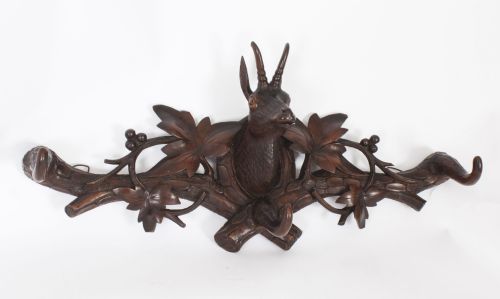
Animals appearing across the pieces include bears, foxes, eagles, and chamois goats.
What varies in quality
Depth of carving and anatomical accuracy distinguish ambitious exhibition pieces from standard production items. Stronger examples display lifelike tension in the musculature of bears, foxes, and chamois goats.
The integration of structural elements determines durability, as well-executed hall stands balance heavy timber forms with practical utility for hanging coats and storing walking sticks.
The Black Forest Coat Stand Glossary
- Black Forest
- A style of wood carving originating from the European region of the same name, known for naturalistic animal and foliage motifs. Pieces span the nineteenth and early twentieth centuries.
- Hall Stand
- A substantial piece of entranceway furniture combining coat hooks, a mirror or back panel, and a base for umbrellas and sticks. These items anchor the hallway space.
- Linden Wood
- A pale timber favoured by carvers for its fine, even grain and soft texture. It permits the high relief and deep undercutting seen on nineteenth-century animal figures.
- Chamois
- A mountain-dwelling goat-antelope whose head or horns occasionally feature in rustic hat and coat racks. Such trophies reflect the alpine themes common in the style.
Black Forest Coat Stand: Frequently Asked Questions
Where were they made?
These pieces originated primarily in Switzerland and South German workshops during the nineteenth century. Local artisans specialised in carving native fauna from regional timbers.
The regional trade supplied European and British homes with decorative yet practical furniture for grand entrance halls.
How do I care for the wood?
Maintain the timber by keeping the stand away from direct heat sources and sudden temperature shifts. Dust the intricate carvings gently with a soft brush.
Applying a light, appropriate wax occasionally helps preserve the natural finish of the linden wood or walnut without building up residue.
Are they sturdy enough for daily use?
Most hall stands are built from heavy hardwoods designed to support the weight of winter coats and heavy walking sticks. Larger bear forms provide a stable base when placed on a level floor.
Wall-hanging racks require secure fastening to wall studs to safely bear the load of hats and coats.
How can I tell the period?
Dating relies on construction methods, the style of the carving, and the materials used such as horn, glass eyes, or wrought metal fittings. Nineteenth-century examples often exhibit deeper hand-carving and denser hardwoods.
Archival pieces and listings from the eighteen eighties and nineties show distinct regional techniques that shifted slightly by nineteen twenty.