




Swiss Carved Hall Stand
A swiss carved hall stand brings the dramatic wildlife carving of the Black Forest straight into your entrance hall.
Swiss Carved Hall Stand
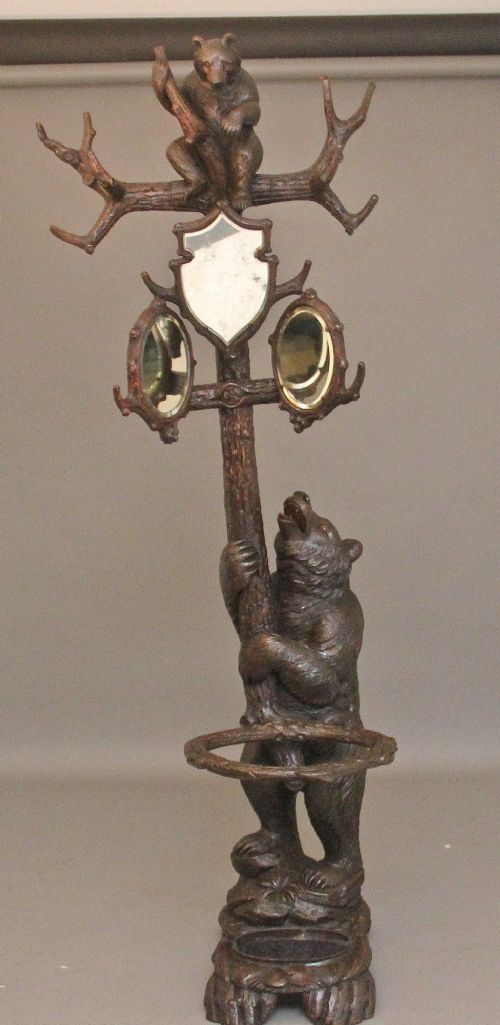
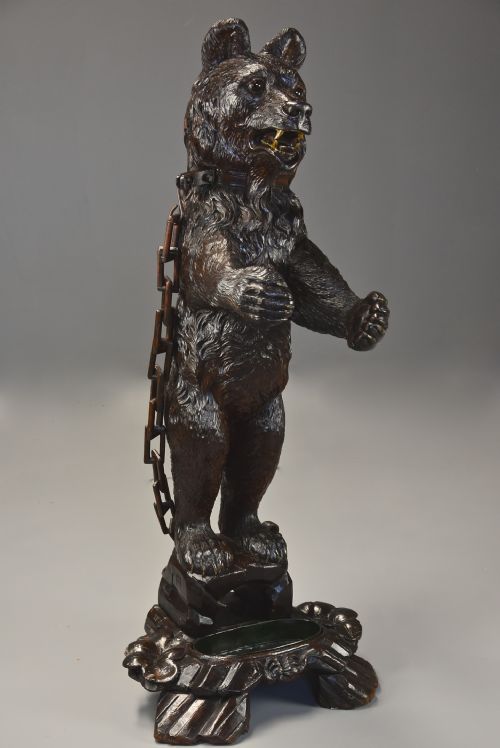
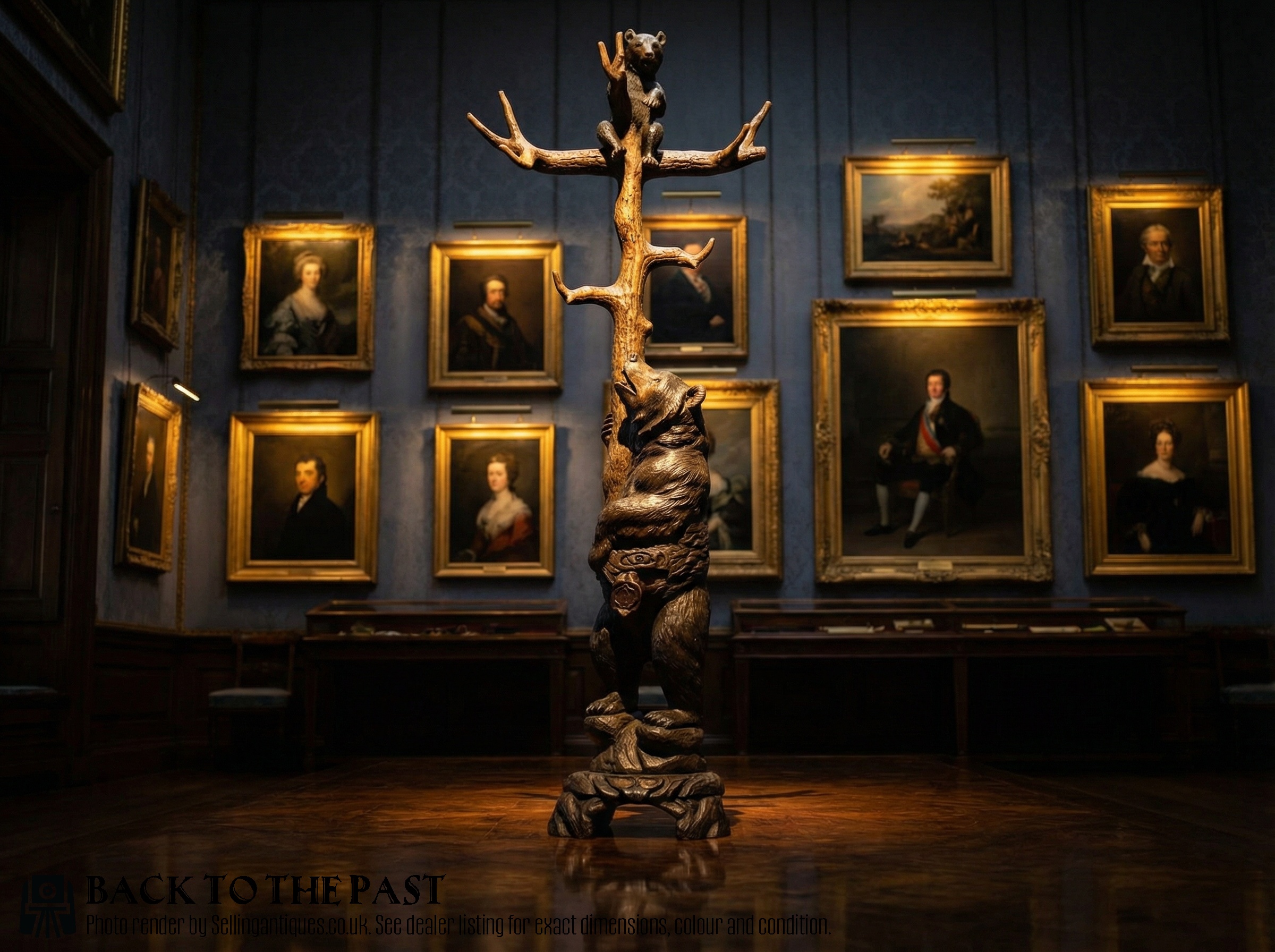
When you search for a swiss carved hall stand, you encounter striking pieces of furniture designed for entranceways, most frequently featuring realistic bears, foxes, eagles, and chamois goats. These items serve the practical purpose of holding coats, hats, and umbrellas while doubling as elaborate sculptural centrepieces.
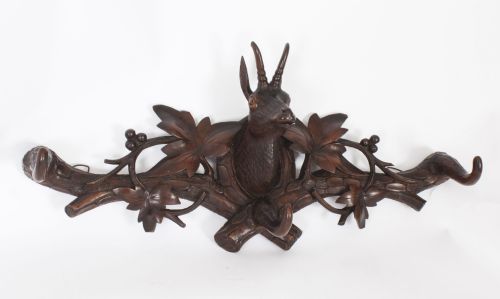
The pieces appearing on this page span the nineteenth century, the Victorian era, and the early twentieth century, showing a strong concentration of Black Forest style items. You will regularly find bear motifs holding sticks or umbrellas, alongside wall-hanging coat racks formed from deer antlers, horns, and linden wood.
How they were made
Makers utilised specific woods such as linden wood, lindenwood, walnut, and general carved hardwood to shape the intricate animal forms. Hand carving allowed artisans to render fur, muscle, and facial expressions with remarkable realism.
Functional elements like metal components, glass, and mirrors were integrated directly into the carved wooden structures. Wall-hanging pieces additionally incorporated natural materials such as deer antler and horn.
Listings span from the 1860s through to the 1920s, dominated by the Victorian era and the distinct Black Forest aesthetic.
What varies in quality
The distinction between ordinary and exceptional pieces lies in the depth and vitality of the carving. Superior examples display meticulous attention to anatomical detail in the animals and complex compositions involving multiple figures.
Scale and ambition also dictate the tier of a piece, moving from straightforward single-figure stick stands to large exhibition-quality oak tree stands incorporating multiple creatures.
The Swiss Carved Hall Stand Glossary
- Black Forest
- A regional style of nineteenth-century wood carving originating from the mountain regions of Switzerland and Germany, celebrated for naturalistic animal and foliage motifs.
- Linden wood
- A pale, fine-grained timber favoured by carvers for its cooperative texture and lack of prominent grain, allowing for deep undercut details.
- Stick stand
- A piece of furniture designed to hold walking sticks and umbrellas, often featuring a drip pan at the base to catch moisture.
- Chamois
- A goat-antelope native to the mountains of Europe, frequently depicted in horn, antler, and wood carvings from the period.
- Hall stand
- An upright piece of furniture placed in an entrance hall, combining hooks for coats and hats with compartments for walking gear.
Swiss Carved Hall Stand: Frequently Asked Questions
Where did these stands originate?
These pieces originate from the wooded mountainous regions of Switzerland and Germany during the nineteenth and early twentieth centuries.
Local artisans developed specialised wood-carving techniques to supply tourists and international markets with striking items inspired by local wildlife.
How are umbrellas kept?
Sticks and umbrellas are held upright in dedicated channels or rings built into the lower portion of the wooden frame.
A metal liner or tray typically sits at the bottom to catch water from wet items and protect the carved wood.
How do I clean the wood?
Dust the carved surfaces regularly using a soft, dry brush to reach into the deep recesses of the fur and foliage.
Avoid liquid cleaners and excessive moisture, which can damage the aged timber and any incorporated mirror glass.
Can these hold heavy coats?
Freestanding examples provide sturdy structural support for heavy winter garments through substantial wooden pegs and carved branches.
Wall-hanging versions require secure mounting directly into wall studs to safely bear the weight of coats and hats.