


Antique Carved Bear Furniture
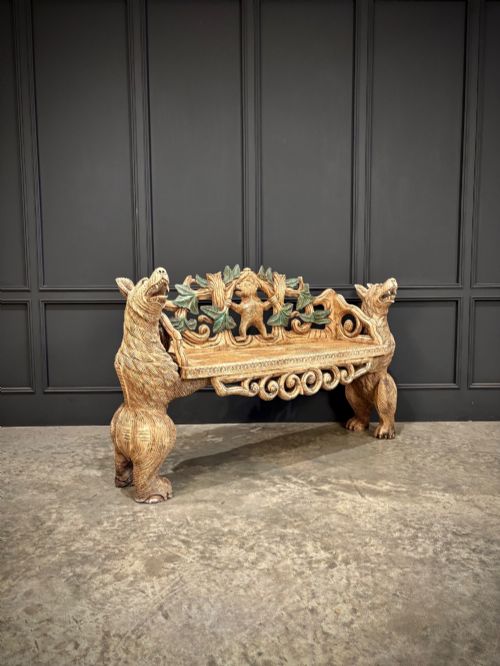
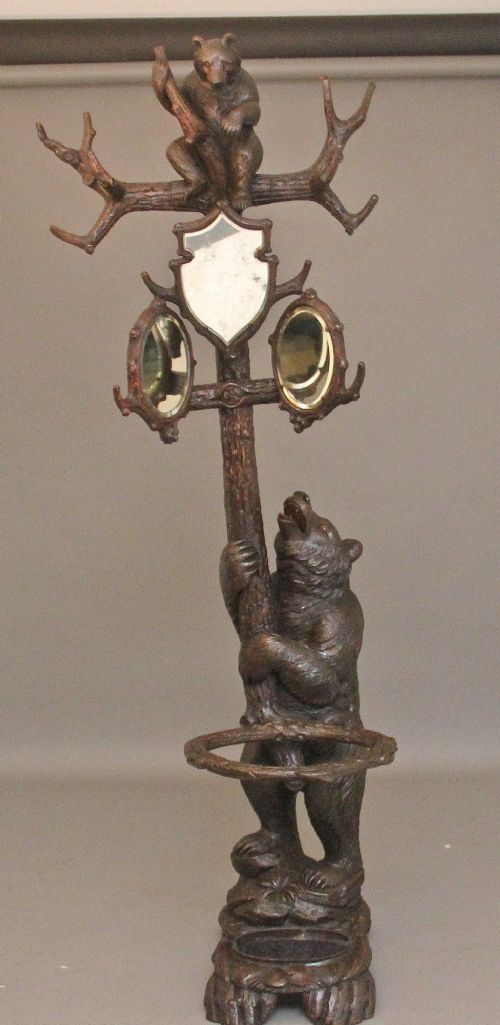
Antique carved bear furniture brings distinctive Black Forest charm into a hallway through carved wooden bears holding branches or standing as sturdy seats.
Antique Carved Bear Furniture
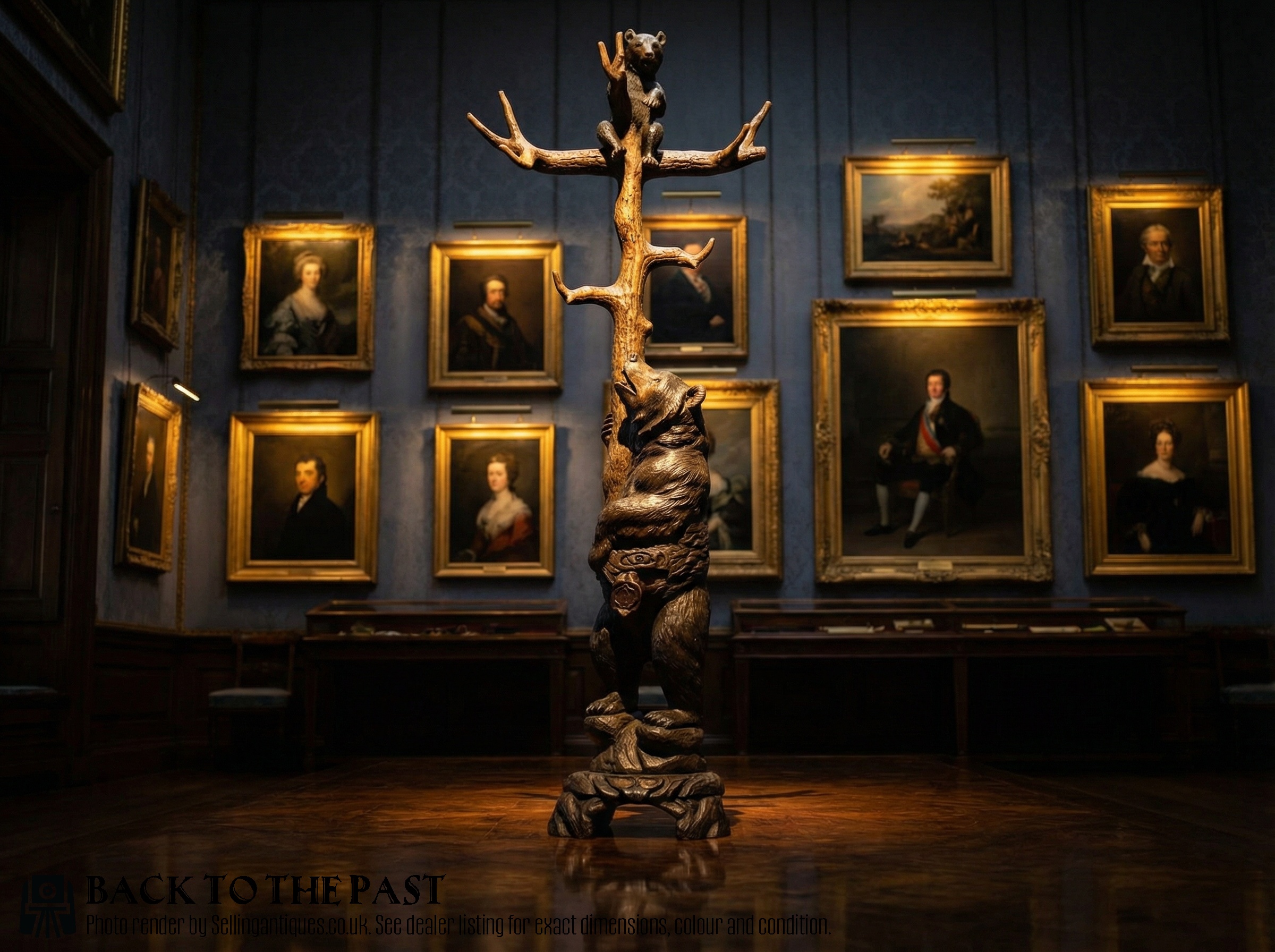
Antique carved bear furniture spans functional hallway pieces including hall stands, benches, stick stands, and hall seats. The most frequently encountered pieces on this page belong to the Black Forest tradition, emerging across the nineteenth and early twentieth centuries.
Makers fashioned these substantial items to dominate entrance halls, combining seating or coat hanging with naturalistic animal sculpture. Forms range from compact stools to large architectural hall stands incorporating mirrors and umbrella trays.
The aesthetic bridges domestic utility with dramatic woodland sculpture, capturing bears in lively poses that double as hooks, arms, and structural supports. Pieces frequently integrate natural elements like oak trees alongside the carved animals.
Materials and construction
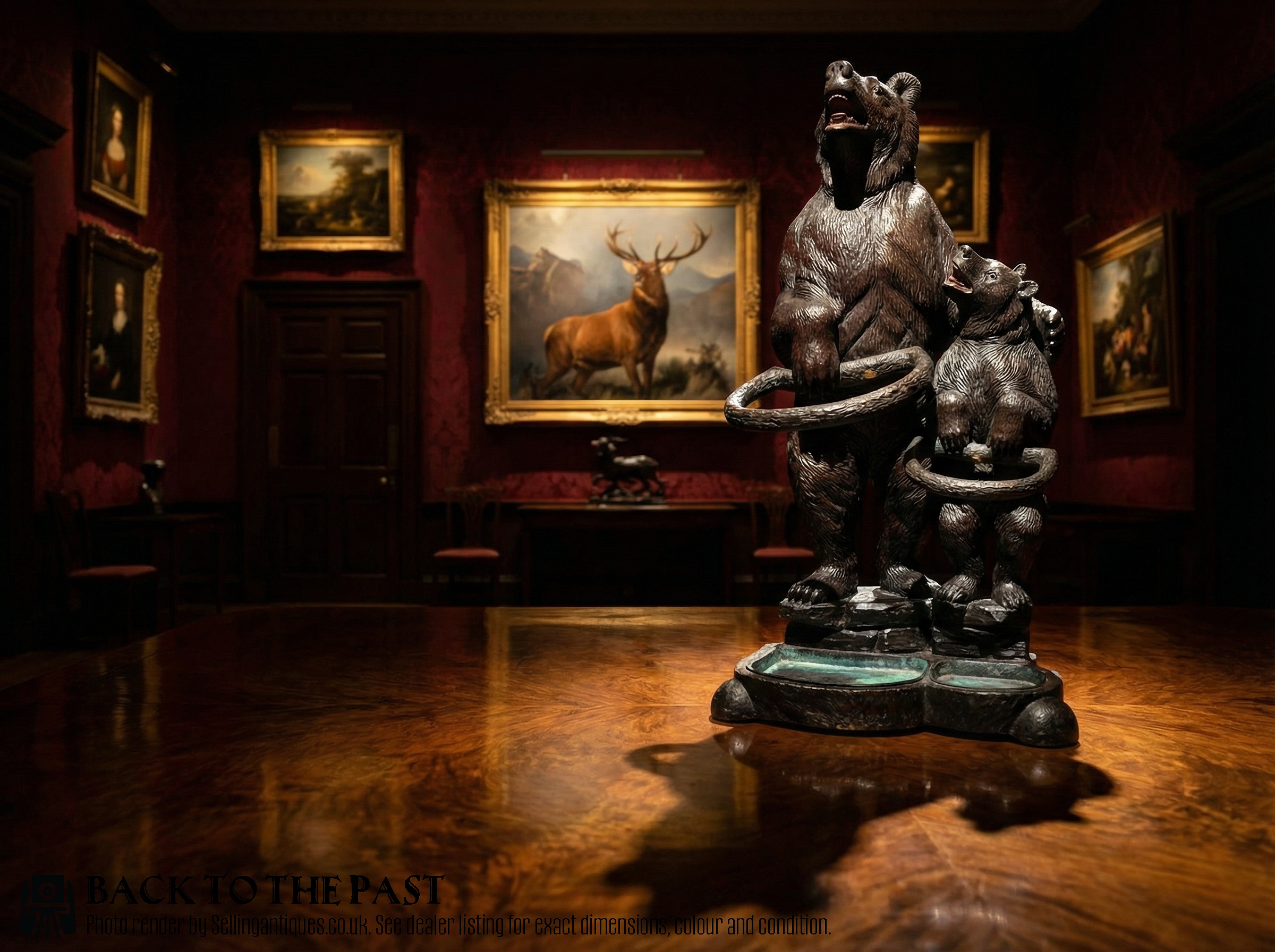
Carvers utilised solid woods including linden wood and oak, applying hand-carving techniques to render realistic fur texture, musculature, and facial expressions. Timber selection dictated how finely carvers could detail the paws, claws, and woodland foliage.
Larger items like hall stands often incorporated functional metal elements for drip trays, glass for mirrors, and occasionally paint or hardware to complete the piece. Construction relied on traditional joinery to support heavy timber bears and the weight of hanging garments.
Early carvers often inserted glass bead eyes into the bears, giving each hall stand an unnervingly watchful household guardian.
Defining quality and craftsmanship
Quality rests entirely in the anatomical accuracy and psychological expression of the carved bears, alongside the depth and crispness of the foliage. Master carvers achieved lifelike fur and natural poses that lesser workshops missed entirely.
Scale and ambition separate ordinary hall furniture from exhibition pieces, particularly when a design integrates an entire oak tree or multiple life-sized bears. The balance between sculptural presence and practical furniture function determines the standing of each piece.
The Antique Carved Bear Furniture Glossary
- Black Forest
- A style of wood carving originating from the mountainous region in Central Europe, known for realistic animals and foliage. This tradition produced the majority of bear furniture found today.
- Hall Stand
- A piece of furniture placed in an entrance hall for hanging coats, storing umbrellas, and occasionally sitting. These often feature integrated mirrors and drip pans.
- Stick Stand
- A dedicated receptacle for walking sticks and umbrellas, frequently formed here by carved bears embracing the cavity. They protect hallways by catching rainwater from wet accessories.
- Linden Wood
- A pale timber with a fine, even grain favored by carvers for its responsiveness to intricate hand tools. It allows for deep undercut details in fur and foliage.
Antique Carved Bear Furniture: Frequently Asked Questions
Where did Black Forest bear furniture originate?
These pieces originate primarily from the woodworking communities of the Swiss and German Black Forest regions during the Victorian era. Local artisans capitalized on abundant timber and tourist demand for picturesque alpine souvenirs.
Carvers developed distinct regional styles that transformed utilitarian hall furniture into elaborate woodland tableaus.
How do I care for carved wooden bears?
Maintain the timber by keeping pieces away from direct heat sources and sudden temperature fluctuations that cause wood to split. Dust regularly with a soft, dry cloth to protect the intricate hand-carved details.
Apply a microcrystalline wax sparingly every few years to nourish the original finish without building up residue.
What is the difference between a hall seat and a bench?
A hall seat typically refers to a more compact, single-person or small two-seat piece designed for narrow entryways. Benches offer wider seating capacities and often incorporate high backrests with integrated coat hooks.
Both forms utilise the carved bear figures as structural armrests or primary supports.
How can I date an antique bear hall stand?
Dating relies on examining the construction methods, the type of mirror glass used, and the style of the carving. Nineteenth-century examples often feature hand-cut joinery and bevelled mirror plates that show minor age foxing.
Compare the specific posture of the bears and the complexity of the oak tree motifs against documented Victorian design periods.