


Black Forest Coat Tree
A black forest coat tree brings remarkable carved woodland artistry into an interior, combining practical hanging space with striking sculptural presence.
Black Forest Coat Tree
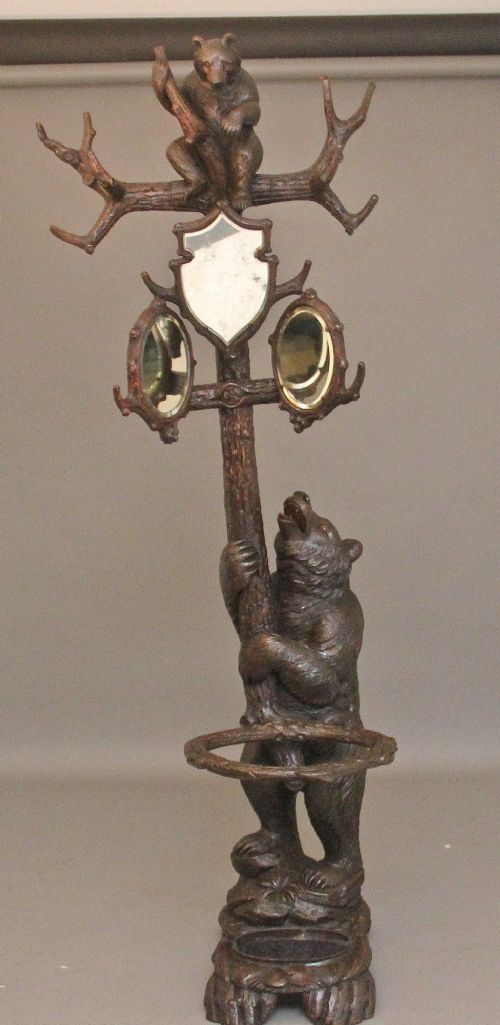
When searching for a black forest coat tree, buyers encounter elaborate hall stands and wall-hanging hat and coat racks originating from the nineteenth and early twentieth centuries. These objects combine naturalistic woodland motifs with domestic utility, serving as prominent hallway furniture.
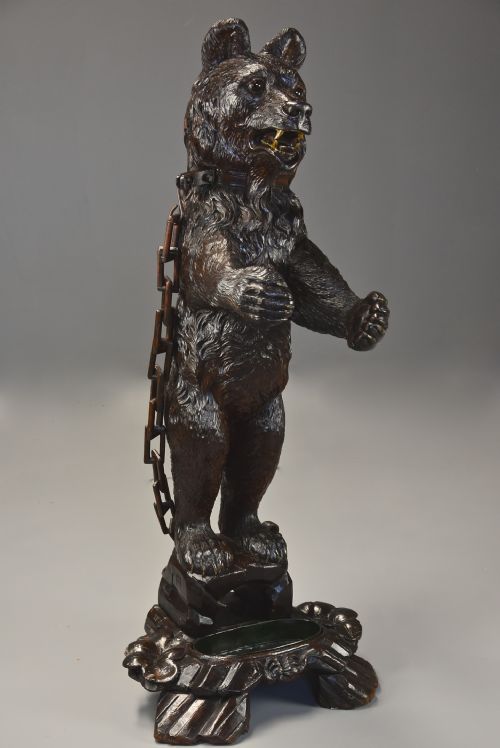
The most common versions on this page are carved bear hall stands, often depicted standing upright or holding branches, alongside variants featuring foxes, eagles, and deer antlers.
Originating predominantly from Swiss and South German workshops, these pieces utilise traditional regional carving techniques to depict wildlife with lifelike character. The forms range from substantial floor-standing hall stands with integrated umbrella storage and mirrors to wall-mounted horn and linden wood designs.
How they were made
Carvers utilised softwoods like linden wood alongside carved hardwood and oak to construct these sculptural furniture pieces, allowing for deep relief and intricate detailing of fur, feathers, and bark. Natural materials such as animal horn and deer antler are frequently incorporated into the structure to form functional hooks and branches.
Metal brackets and fixtures provide internal support for the larger freestanding hall stands, while glass and mirror elements are often embedded into the backboards to create functional hall furniture. Artisans combined hand-carving with fitted timber construction, shaping solid timber logs and branches into realistic tree trunks and foliage.
Several bears stand upright with human-like posture, carved as though offering to take your walking stick upon arrival.
What varies in quality
The distinction between ordinary and exceptional examples rests upon the depth and animation of the carving, particularly in the rendering of animal anatomy and facial expression. Finer specimens display meticulous attention to musculature, texture, and naturalistic posture, whereas simpler versions rely on standard decorative repetition.
Material selection also dictates standing, with exhibition-quality works demonstrating superior choice of timber, integrated natural antlers, and complex multi-figure compositions such as bears combined with foxes and eagles.
The Black Forest Coat Tree Glossary
- Hall stand
- A piece of entrance hall furniture designed to hold outerwear, hats, and walking sticks, often incorporating a mirror and umbrella wells. These items served both practical and decorative functions in Victorian and Edwardian interiors.
- Linden wood
- A pale, fine-grained timber favoured by European carvers for its even texture and suitability for intricate detail. It accepts sharp chisel work without splitting easily.
- Carved hardwood
- Dense timber shaped by hand using chisels and gouges to form structural elements and sculptural figures. This material provides durability for load-bearing sections of coat trees.
- Deer antler
- Shed bone material utilised in rustic and Black Forest furnishings to form naturalistic hooks and branch structures. Its organic branching shape offers practical utility for hanging garments.
Black Forest Coat Tree: Frequently Asked Questions
What is a black forest coat tree?
A black forest coat tree is a heavily carved wooden hall stand or wall rack, typically depicting woodland animals and trees from nineteenth-century Europe. These pieces combine sculptural artistry with functional storage for hats, coats, and umbrellas.
They originate mainly from Swiss and South German makers who specialised in naturalistic woodcarving. The designs frequently incorporate bears, deer antlers, and foliage to bring the aesthetic of the forest indoors.
How were these coat stands used?
These pieces served as functional furniture in the entrance halls of grand homes, where guests and residents would hang outerwear upon entering. Integrated hooks accommodated hats and coats, while lower sections often held walking sticks and umbrellas.
Many examples also included built-in mirrors for checking one's appearance before heading outside. Their imposing presence made them a decorative statement piece as well as a practical utility item.
Where should I place one at home?
These substantial hall stands belong in an entrance hall or spacious entryway where they can function as intended for coats and walking sticks. Their sculptural nature requires adequate floor space and a strong wall or backing to support their weight.
Placing them away from direct heat sources helps protect the carved wood and natural antlers from drying out. They anchor a hallway scheme while providing practical storage for daily use.