


Carved Black Forest Bear
Carved black forest bear carvings bring the vigorous animalism of nineteenth-century European foresters directly into the hallway or study.
Carved Black Forest Bear
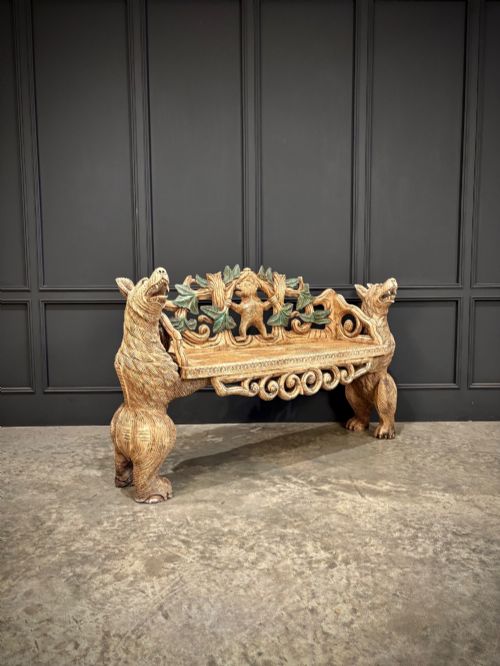
A carved black forest bear functions as both whimsical folk art and substantial furniture, spanning grand hall stands and diminutive desk ornaments. These sculptural items range from towering umbrella holders to small inkstands, bookends, and miniature figurines.
The objects derive principally from nineteenth-century Swiss and German workshops operating in the Black Forest region and surrounding areas. Domestic items such as tobacco jars, humidor boxes, and table lamps appear frequently alongside large hall seats and benches.
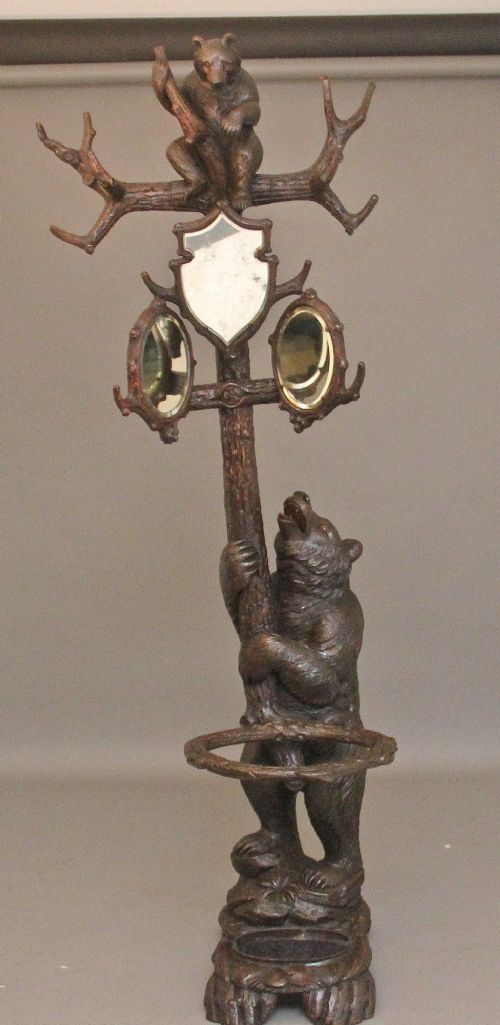
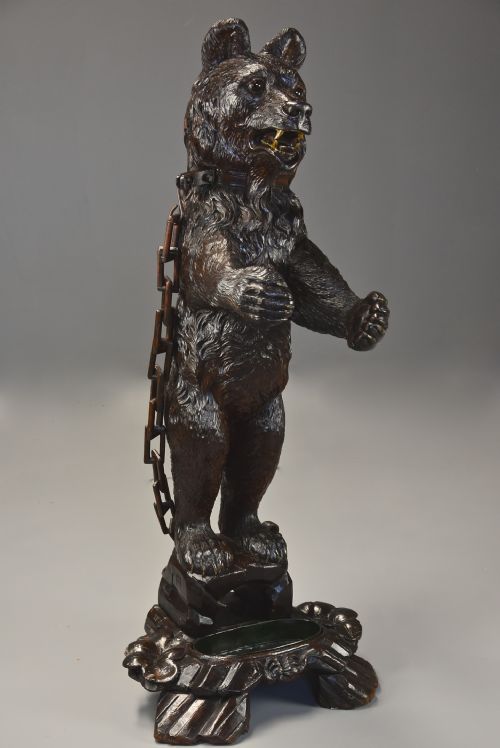
Collectors frequently encounter functional hall furniture where bears hold branches for walking sticks or support trays for visiting cards. Smaller study pieces, including inkwells, match holders, and condiment figures, show identical naturalistic treatment on a domestic scale.
How they were made
Carvers shaped these figures primarily from pale European timbers, notably linden wood, lime wood, walnut, and occasional oak. The soft grain of linden allowed artisans to carve deep fur textures and muscular forms with considerable precision.
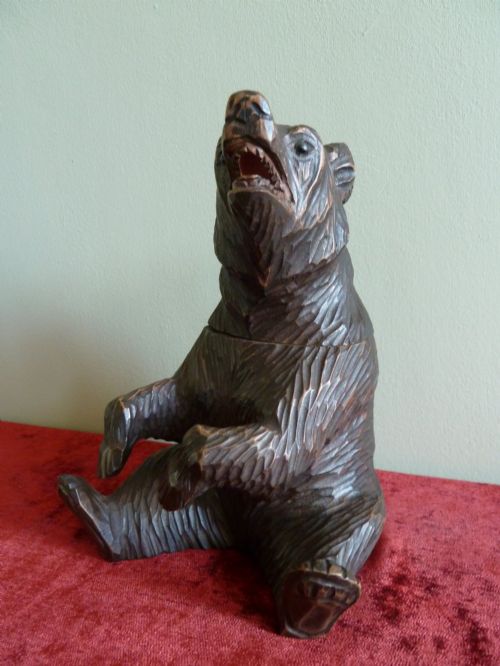
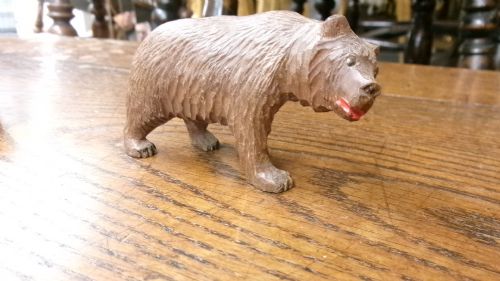
One tiny bear clutches a log as an inkwell, reminding us that Victorian desks needed more wilderness.
What varies in quality
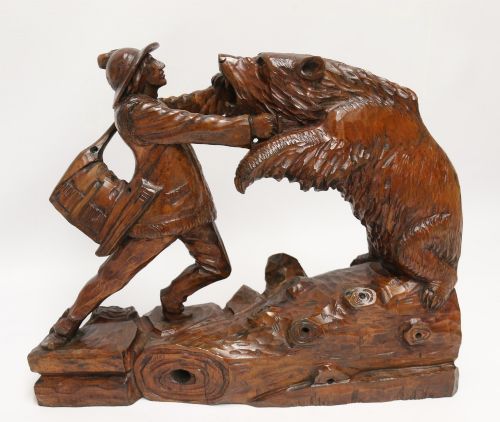
The ambition of the original design and the anatomical accuracy of the bear separate standard production items from exhibition pieces. Master carvers captured tension in the muscles and personality in the facial expression rather than relying on stiff symmetry.
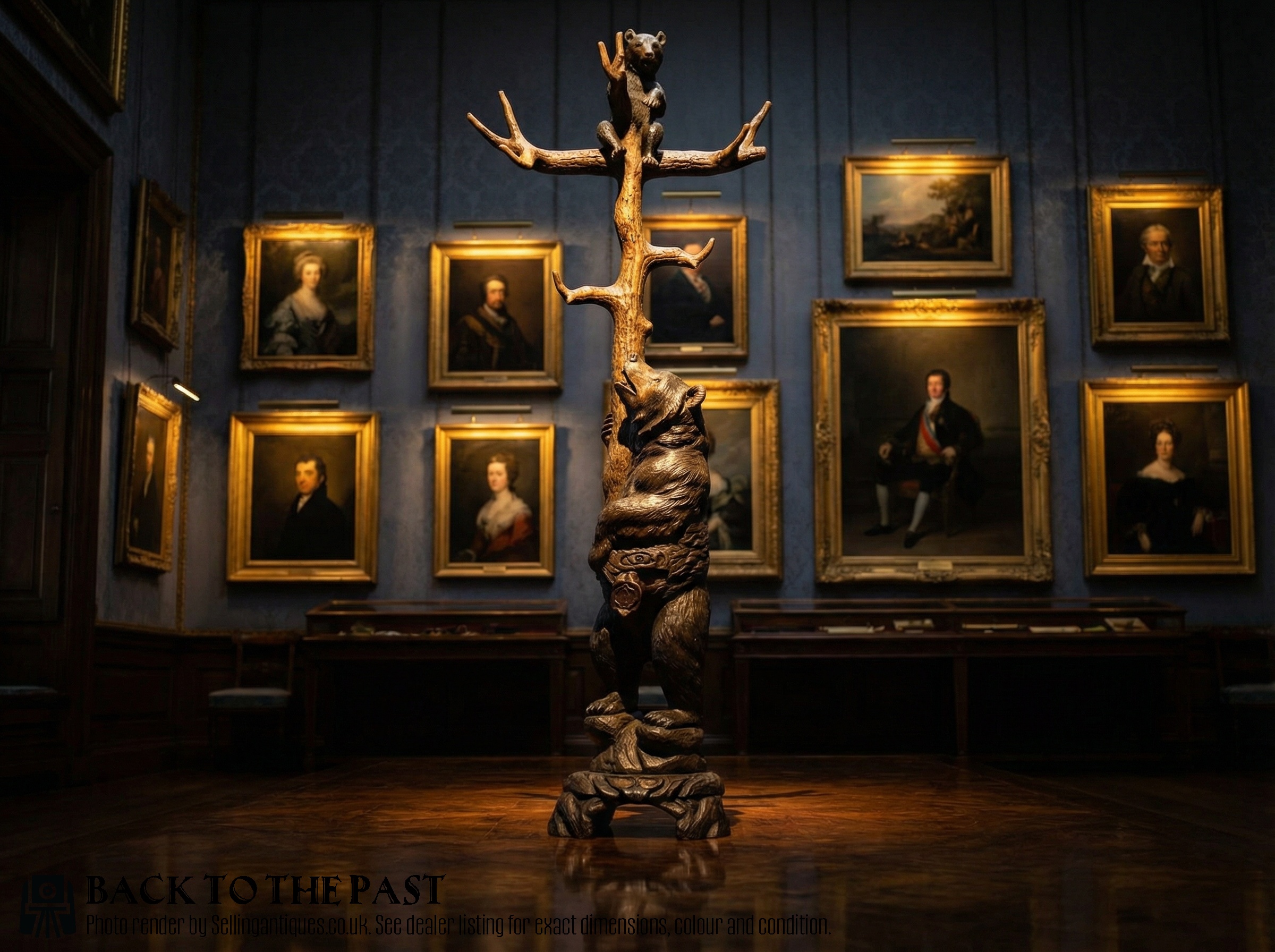
The depth of the undercutting in the fur and the complexity of the integrated object determine the tier of the piece. Large hall stands featuring structural trees and multiple functional elements demand greater sculptural mastery than small standalone figures.
The Carved Black Forest Bear Glossary
- Linden wood
- A pale timber with a fine, even grain favoured by nineteenth-century carvers for detailed figurative work. It resists splitting and allows for deep, crisp texturing.
- Hall stand
- A tall piece of entrance furniture incorporating coat hooks, mirror frames, and umbrella trays. In this genre, carved bears form the main structural uprights or serve as attendants.
- Humidor
- A specialised box designed to keep tobacco moist. These containers often take the form of crouching or seated bears holding hollowed logs.
- Stud eyes
- Small glass or metal inserts fitted into the carved sockets to give the animal a lifelike gaze. They are typical of nineteenth-century European taxidermy and carving traditions.
- Novelty desk top
- Small functional desk accessories made in amusing shapes. Inkwells, stamp boxes, and match strikers formed the bulk of these items.
Carved Black Forest Bear: Frequently Asked Questions
What are carved black forest bears?
These pieces are wooden sculptures and carved furniture items depicting bears, originating mainly from nineteenth-century European alpine regions. They combine practical utility with naturalistic animal carving.
Artisans fashioned them into everyday objects like hall stands, umbrella holders, tobacco jars, and desk accessories for Victorian homes.
How were they used originally?
Larger items stood in domestic entryways to hold coats, hats, walking sticks, and umbrellas for visitors. Smaller versions sat upon desks and tables as inkwells, match holders, or decorative ornaments.
They served as both conversation pieces and practical furniture for wealthy nineteenth-century households.
How do you clean carved wood bears?
Maintenance requires gentle dusting with a soft brush to protect the deep crevices of the carved fur. Water and chemical polishes should be avoided to preserve the original timber and historic finish.
Keeping pieces away from direct sunlight prevents the wood from drying out and cracking over time.
How can you tell the period?
Nineteenth-century items generally exhibit hand-carved tool marks, traditional joinery, and natural patination on the timber. The integration of functional elements like metal drip pans or glass eyes also helps establish age.
Later twentieth-century reproductions often feature simplified carving styles and different surface treatments.