
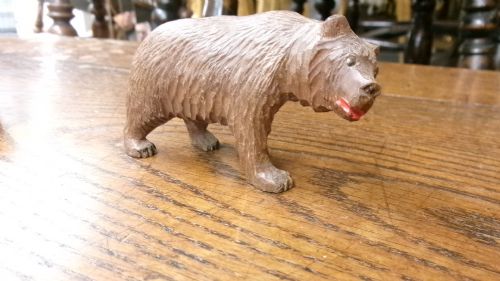
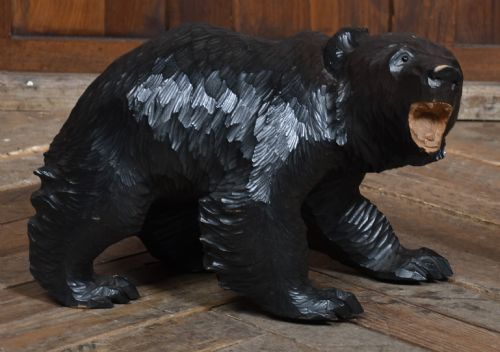


Antique Wooden Bear Sculpture
An antique wooden bear sculpture brings character into a room through the skill of the carver.
Antique Wooden Bear Sculpture
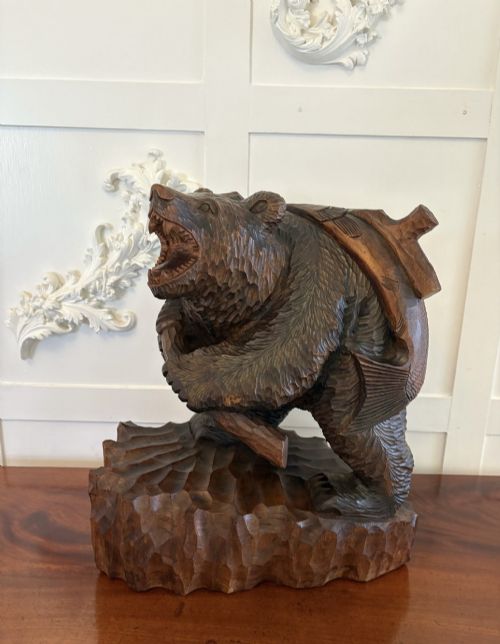
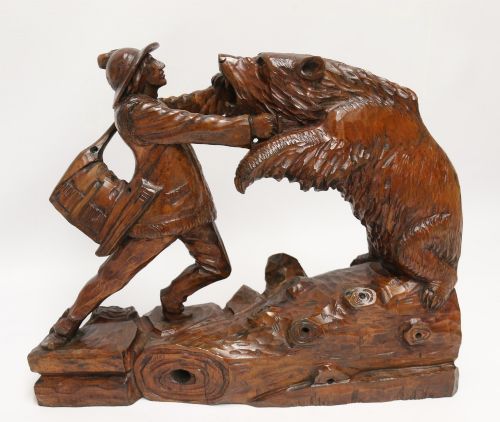
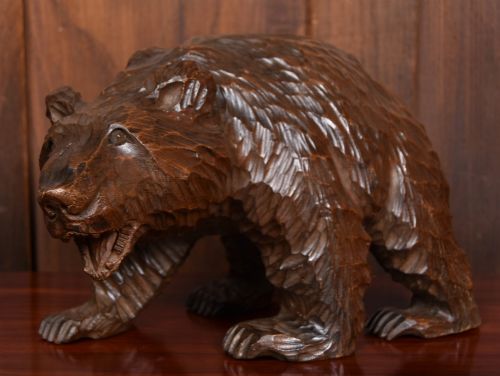
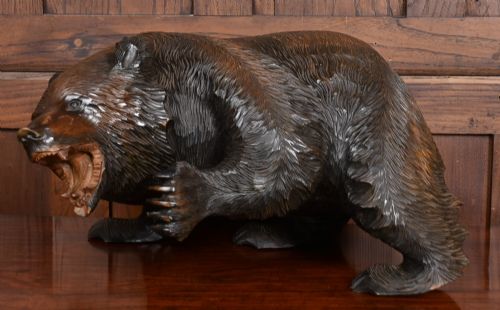
An antique wooden bear sculpture is a carved representation of a bear, taking forms from small tabletop figurines to large hall stands and umbrella stands. These pieces emerge from the nineteenth century into the Edwardian era, showing both European and Japanese folk art traditions. The most common examples met here belong to the Black Forest style or Japanese carving traditions, often depicted carrying fish or standing upright.
Functional items form a significant part of these carvings, ranging from tobacco boxes and humidor containers to inkstands and stick stands. Figures appear singly, in pairs, or as miniature sets, reflecting varied domestic uses in Victorian and Edwardian interiors. The regional origins span Swiss and broader European workshops alongside Japanese Kibori Kuma traditions.
How they were made
Carvers shaped these objects primarily from linden wood and walnut, utilising the soft grain of linden or the dense figure of hardwood to define the animal's fur and musculature. Some pieces display dark stains applied to the wood surface to enhance the natural tones of the carving. Metal components occasionally appear within functional pieces like inkstands or umbrella holders.
Several bears are caught in the eternal act of carrying a fish, refusing to drop their catch across the centuries.
What varies in quality
The articulation of the anatomy and the depth of the fur carving distinguish finer sculptures from simpler production pieces. Superior examples show careful attention to the proportions of the head, paws, and the specific action of the bear, such as holding a fish or supporting a heavy stand. Expression in the eyes and realism in the posture separate ambitious workshop pieces from standard decorative items.
The integration of the bear figure into practical objects, such as hall stands or humidors, demonstrates the maker's skill in balancing sculpture with utility. The choice of timber, particularly well-figured walnut or clean linden wood, also indicates the tier of the piece.
The Antique Wooden Bear Sculpture Glossary
- Black Forest
- A regional style of wood carving originating in Switzerland and Germany during the nineteenth century. These pieces typically feature realistic animals and foliage.
- Kibori Kuma
- A traditional style of Japanese wood-carved bear originating from Hokkaido. These sculptures often depict bears holding salmon in their jaws.
- Linden wood
- A pale, fine-grained timber frequently utilised by European carvers for detailed figurative work. Its even texture allows for deep undercut carving without splintering.
- Humidor
- A specialised box designed to store tobacco or cigars while maintaining humidity. In these listings, they are carved in the shape of a seated bear.
- Hall stand
- A large piece of furniture placed in an entrance hall for coats, hats, and umbrellas. Carved bear examples often incorporate tree trunk motifs and stick rings.
Antique Wooden Bear Sculpture: Frequently Asked Questions
How were bear umbrella stands used?
These large hall furnishings stood in domestic entranceways to hold walking sticks, canes, and umbrellas. The carved bear often served as the structural support or stood beside the receptacle.
Owners utilised them daily as practical hallway furniture that doubled as rustic decorative sculpture.
What is a Kibori Kuma carving?
Kibori Kuma refers to Japanese wooden bear sculptures produced primarily in Hokkaido. They are hand-carved from local wood and typically show distinct texturing to represent fur.
These sculptures often portray the bear with a fish, reflecting regional wildlife and folk art traditions.
Where were Black Forest carvings made?
Black Forest carvings were produced mainly in Swiss and German mountain regions during the nineteenth century. Workshops in these areas specialised in realistic representations of local fauna.
Carvers exported these functional and decorative wooden pieces across Europe and Britain for Victorian interiors.
How do I care for antique wood sculptures?
Keep wooden bear sculptures away from direct heat sources and strong sunlight to prevent the timber from splitting. Dust them gently with a dry, soft cloth rather than using liquid polishes.
Stable indoor humidity helps preserve the carved surface and any original stained finish.