
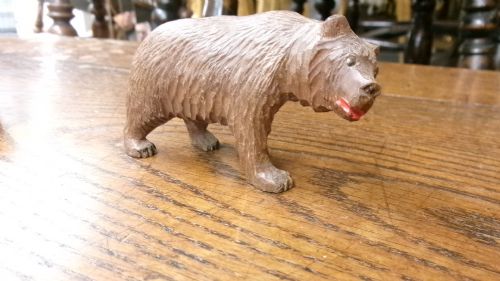


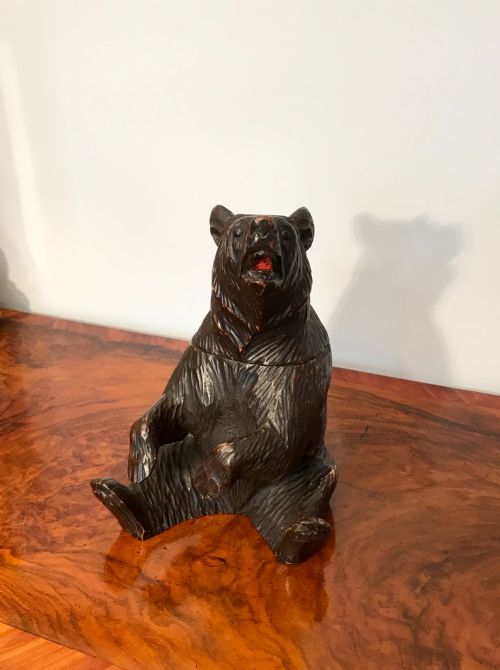
Carved Wood Bear Figure
A carved wood bear figure brings character to a room through traditional craftsmanship and enduring animal forms.
Carved Wood Bear Figure
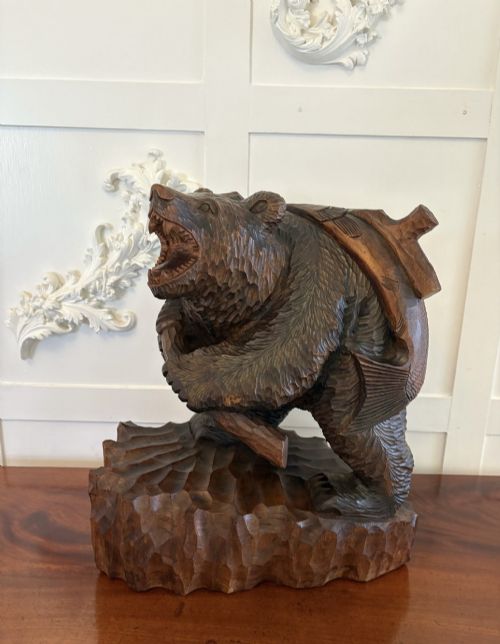
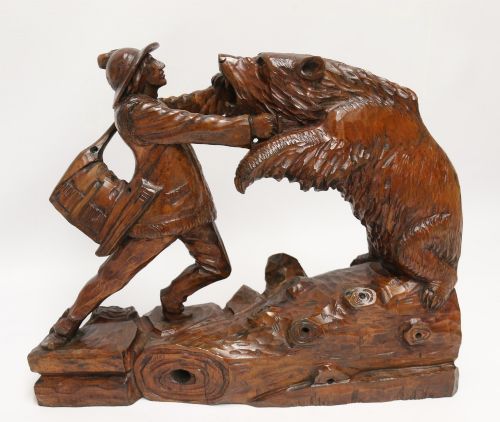
A carved wood bear figure represents sculptural animal art primarily originating from the Black Forest and Swiss folk traditions, alongside Japanese folk art examples. These pieces range from miniature figures to large decorative sculptures, statue groups, inkstands, and condiment sets.
Buyers frequently encounter nineteenth century items, including Victorian and Edwardian pieces, fashioned from linden wood, walnut, and various hardwoods. The selection spans solitary bears carrying fish, hiking figures, and multi-piece sets.
How they were made
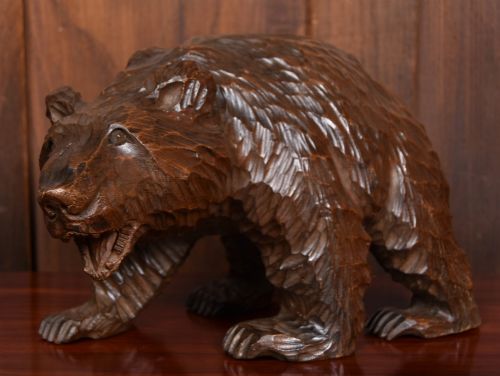
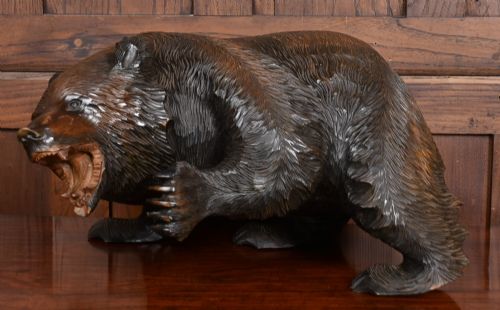
Artisans carved these figures by hand from linden wood, walnut, and other hardwoods, utilising traditional woodworking tools to shape the fur, facial expressions, and anatomical details. Certain pieces incorporate metal elements or stud eyes to accentuate the design.
Makers applied wax finishes to the wooden surfaces to protect the material and highlight the natural grain and texture of the carved timber.
Materials recorded across the inventory include linden wood, walnut, general hardwood, wax, and metal.
What varies in quality
The degree of anatomical precision and expressive depth in the carving distinguishes finer examples from simpler production. Master carvers captured realistic textures in the fur and lifelike postures in the animal forms.
Complexity of form also dictates distinction, separating standard single figures from elaborate multi-piece figure groups, inkstands, and functional novelty items that require intricate assembly and joinery.
The Carved Wood Bear Figure Glossary
- Black Forest
- A regional style of wood carving originating from the mountain region of Central Europe, known for realistic representations of wildlife and woodland animals. These items often feature detailed fur texturing and naturalistic poses.
- Linden Wood
- A timber commonly used by carvers for its fine, even grain and soft texture. This wood permits intricate detail work without splitting easily.
- Inkstand
- A desk accessory fitted with containers for ink and pen rests, occasionally incorporated into carved animal figures as a novelty functional object.
- Folk Art
- Objects created within a traditional cultural framework by artisans rather than academic sculptors. These pieces reflect regional aesthetics and utilitarian or decorative purposes.
Carved Wood Bear Figure: Frequently Asked Questions
How do I date a carved bear?
Dating relies on examining the specific wood species, tool marks, and stylistic conventions associated with periods like the Victorian era or Edwardian times. Archive comparisons and regional carving traits help establish the likely decade of production.
Physical indicators such as wax patination and metal eye fixings offer further clues to the age and origin of the sculpture.
Where did Black Forest carvings originate?
The tradition centres around the mountainous regions of Central Europe where local woodworkers produced carved wooden animals and furniture. These items became popular souvenirs for travellers visiting the area during the nineteenth century.
Production eventually expanded to include specialised workshops turning out varied animal forms and household objects.
How should I clean carved wood?
Dust the surface gently using a soft, dry brush to prevent dirt accumulation within the detailed fur carvings. Avoid harsh chemical cleaners or excessive moisture that might compromise the antique wax finish.
Maintaining a stable room environment away from direct heat sources protects the timber from drying out or splitting.