




Carved Wooden Desk Tidy
These carved wooden desk tidy pieces bring order to papers and ink, combining practical utility with ornate nineteenth and early twentieth century craftsmanship.
Carved Wooden Desk Tidy
A carved wooden desk tidy serves as a functional workspace organiser, holding items like inkwells, pens, and correspondence. When exploring a carved wooden desk tidy selection, buyers encounter formats ranging from simple coin trays to elaborate stationery boxes with multiple compartments.
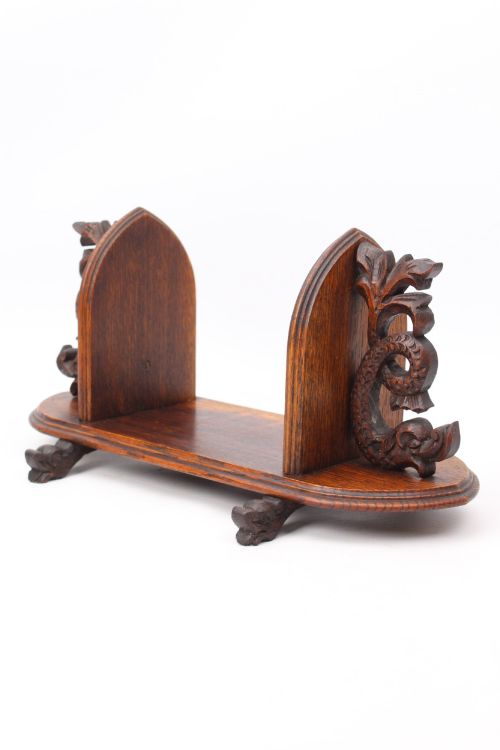
The objects appearing on this page span the Victorian and Edwardian eras, alongside pieces dated around 1900 and the late nineteenth century. Forms include inkstands, book stands, letter racks, and document boxes executed in distinct historical styles.
Examples often incorporate regional characteristics, such as Black Forest animal carvings, Anglo-Indian bone inlays, or Gothic Revival architectural motifs. Each piece reflects the desk accessory requirements of domestic and professional studies from these periods.
How they were made
Construction relies heavily on timbers such as oak, mahogany, linden wood, and general wood bodies shaped through traditional carpentry techniques. Carvers utilised hand tools to render intricate foliage, geometric patterns, and figural animal studies directly into the timber.
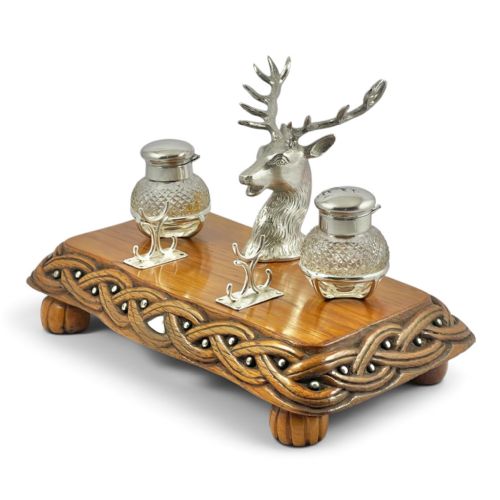
Many items integrate contrasting materials to enhance utility and decoration, pairing the wooden frames with brass hinges, glass inkwells, silver mounts, and bone details. Bun feet, drawers, and tiered platforms are joined mechanically to support the weight of heavy desk accessories.
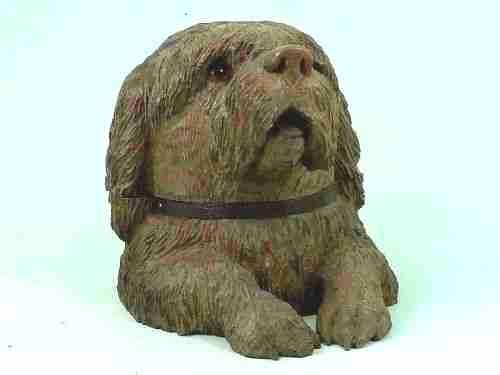
St. Bernard dogs and energetic terriers peer out from carved wooden inkstands to guard your paperclips.
What varies in quality
Quality in these pieces is dictated by the depth, precision, and naturalism of the carving work across the wooden surface. Finer examples display crisp relief details and well-proportioned figural anatomy, particularly in Black Forest animal studies or Gothic tracery.
The integration of secondary materials also separates standard items from superior works, such as heavy gauge brass hardware, undamaged glass inserts, and carefully fitted drawers. The choice of timber grain and the structural integrity of joints further define the standard of execution.
The Carved Wooden Desk Tidy Glossary
- Inkstand
- A tray or stand designed to hold one or more inkwells, often featuring pen grooves and compartments for sealing wax. These pieces formed the centrepiece of a nineteenth century writing table.
- Black Forest carving
- Woodwork originating from the Brienz region of Switzerland and the Black Forest in Germany, noted for realistic animal sculptures and deep leaf ornamentation. Dogs and forest fauna frequently populate these items.
- Stationery box
- A desk accessory fitted with tiered slots to organise letters, envelopes, and writing paper upright. They frequently incorporate sloping lids and lockable doors.
- Gothic Revival
- An architectural and decorative style drawing on medieval ecclesiastical forms, characterised by pointed arches, trefoils, and heavy oak construction. This aesthetic appears on several Victorian desk stands.
- Anglo-Indian
- A designation for decorative objects produced in India under British colonial rule, typically featuring dense plant motifs and contrasting bone inlay against dark woods.
Carved Wooden Desk Tidy: Frequently Asked Questions
What is a desk tidy used for?
A desk tidy organises writing implements, inkwells, and correspondence on a desktop to keep workspace clutter to a minimum.
Historically, these accessories held the necessary tools for daily letter writing and record keeping in both home studies and offices.
How do I identify a Black Forest desk tidy?
Black Forest pieces are characterised by naturalistic carvings of animals, particularly dogs, alongside deeply undercut foliage and rustic timber textures.
Originating from European forest regions during the nineteenth century, these items focus heavily on sculptural three-dimensional wooden ornamentation.
What materials are used in these pieces?
Construction primarily utilises solid woods such as oak, mahogany, and linden wood, shaped through carving and basic cabinetmaking methods.
Secondary materials often include fitted glass inkwells, brass hinges, bone inlay details, and occasional silver mounts to complete the desk accessories.
How can I tell Victorian pieces apart from Edwardian ones?
Victorian examples frequently display heavier proportions, Gothic Revival architectural influences, or dense ornamental carving typical of the mid to late nineteenth century.
Edwardian pieces often shift toward lighter Arts and Crafts forms or simpler oak stationery racks and letter stands suited for more restrained interiors.