



Carved Timber Bear Figure
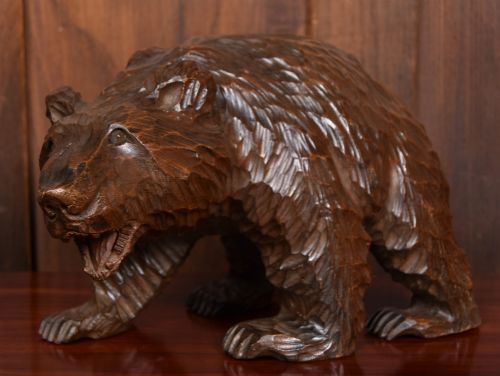
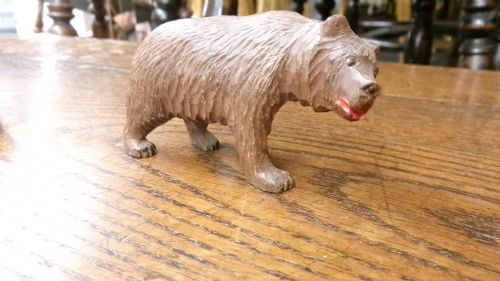
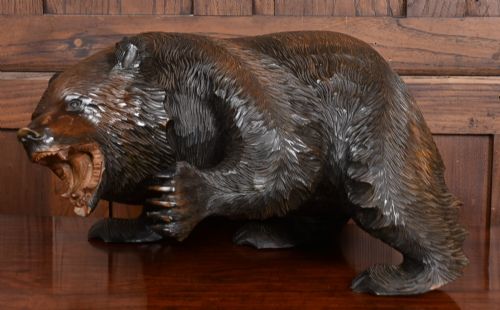
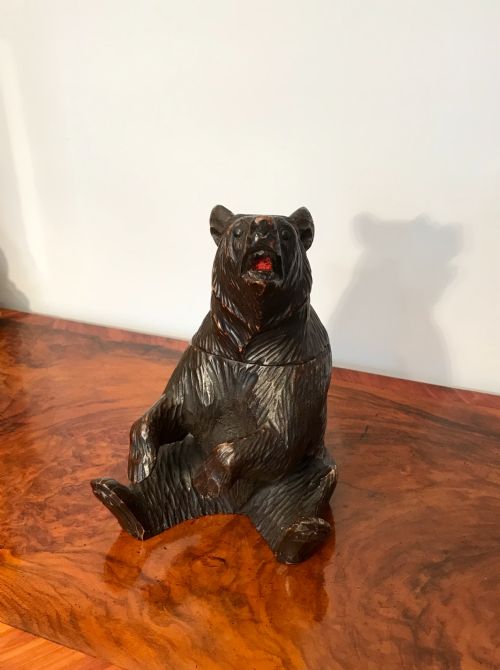
These carved timber bear figure pieces range from Black Forest walnut groups to Japanese folk art sculptures.
Carved Timber Bear Figure
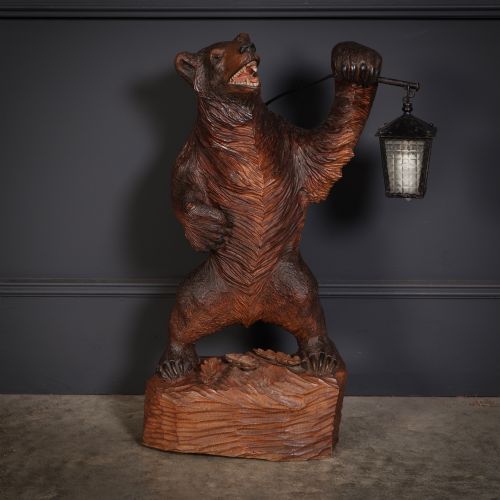
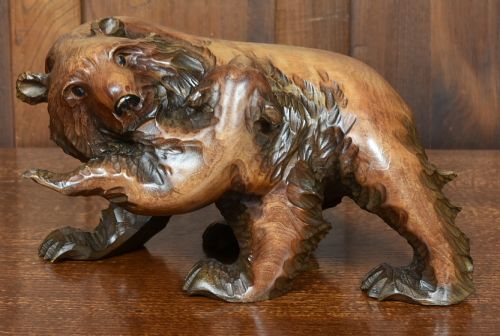
A carved timber bear figure represents sculptural objects shaped from woods such as walnut, linden wood, and general hardwoods. Buyers searching this phrase encounter items spanning the Georgian, Victorian, and Edwardian periods, alongside nineteenth-century examples and specific dates like 1860, 1880, 1890, and 1900.
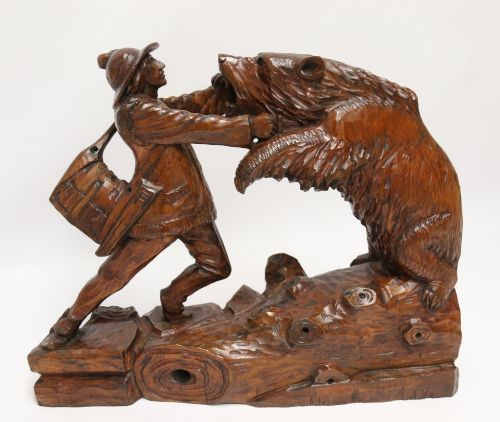
The most common versions met on this page belong to the Black Forest tradition, often appearing as single animals, figure groups, or miniature sets. Japanese folk art pieces also occur among these listings, offering an alternative regional interpretation of the subject in carved wood.
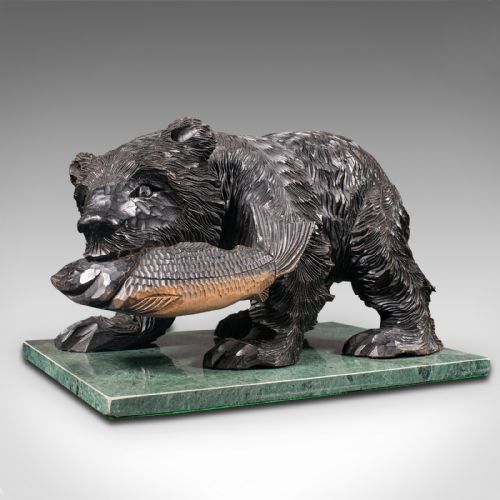
Forms vary from small individual figurines and decorative statuettes to large carvings and sets of multiple bears. Some examples incorporate stud eyes or surface finishes involving wax and stain to alter the appearance of the timber.
Materials and construction methods
Maker techniques rely on direct carving into various timbers, predominantly walnut and linden wood, alongside unassigned hardwoods and general wood. Artisans shape the raw material using hand tools to establish the musculature, fur texture, and posture of the animal.
Surface treatments recorded in the evidence include the application of wax and stain to enhance the grain and colour of the carved wood. Detail work occasionally incorporates separate elements, such as stud eyes inserted into the timber heads.
Carved Timber Bear Figure Retail Price Guide 2026
Typical asking prices for carved timber bear figure among the pieces listed under this phrase on Sellingantiques today, from the lower quarter to the upper quarter. They describe what is for sale here now, not the wider market.
Assessing quality in carved bears
Quality differences emerge in the depth and precision of the carving, distinguishing fluent anatomical rendering from rigid execution. Pieces with complex groupings or fine surface detailing demonstrate greater technical control by the maker than simpler individual figurines.
The Carved Timber Bear Figure Glossary
- Black Forest
- A style of wood carving originating from the European region of the same name, known for realistic animal sculptures. These pieces typically depict bears in various poses and groupings.
- Linden wood
- A pale, fine-grained timber frequently utilised for detailed carving due to its softness and uniform texture. This material allows artisans to achieve smooth surfaces and delicate facial expressions.
- Stud eyes
- Small manufactured inserts used to represent the eyes of the carved figure. They provide a reflective focal point that contrasts with the matte timber surface.
- Figurine
- A small statuette representing a human or animal form. In this context, the term applies to compact representations of bears suitable for tabletop display.
- Figure group
- An arrangement of multiple carved subjects composing a single unified scene. These compositions often show interactions between several bears.
Carved Timber Bear Figure: Frequently Asked Questions
What periods do these carved bears come from?
The listings include pieces from the Georgian, Victorian, and Edwardian eras, as well as specific dates like 1860, 1880, 1890, and 1900. Nineteenth-century items form a large portion of the available selection.
Specific stylistic categories such as Black Forest and Japanese folk art also help indicate the origin and era of individual sculptures.
How were these wooden bears used originally?
These items functioned primarily as decorative objects, ornaments, and sculptures displayed within domestic interiors. Miniature sets and individual figurines served as tabletop displays or cabinet pieces.
Larger sculptures were positioned as standalone decorative elements on furniture or mantels.
What woods are commonly found in these carvings?
Makers utilised walnut, linden wood, and general hardwoods for their sculptures. Walnut provides a dark, rich tone, while linden wood offers a lighter canvas for intricate work.
Surfaces are sometimes treated with wax or stain to alter the final appearance of the timber.
Are there different styles of bear carvings available?
The available pieces encompass European Black Forest traditions alongside Japanese folk art interpretations. Black Forest works focus on naturalistic or whimsical animal groupings.
Japanese pieces offer a distinct regional carving style executed in wood.