


Carved Wooden Bear Statue
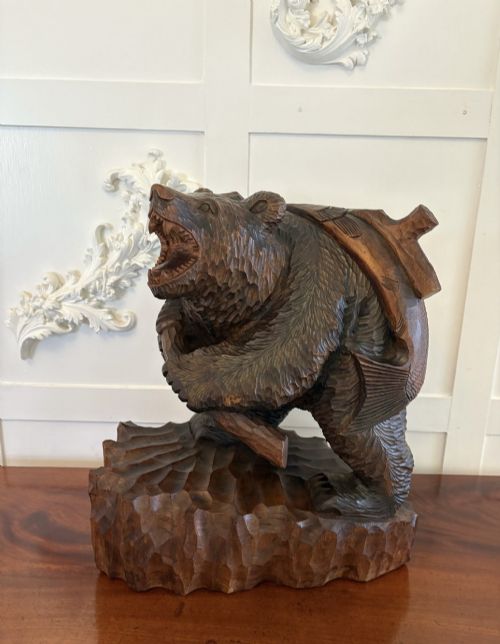
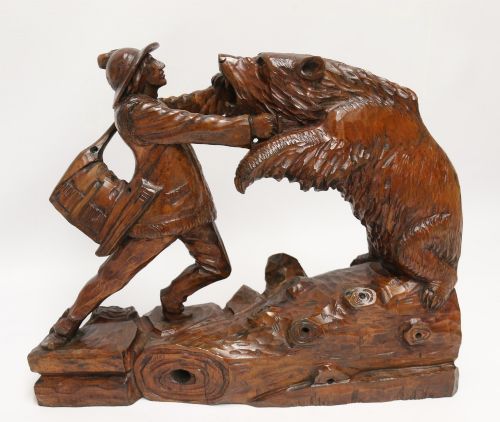
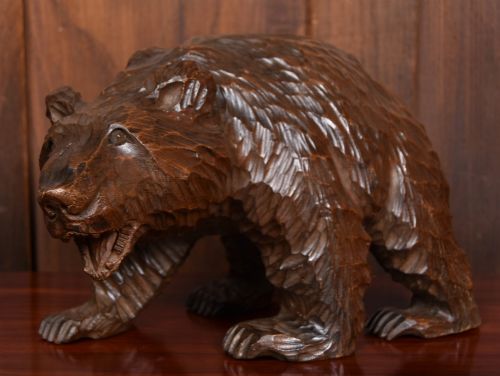
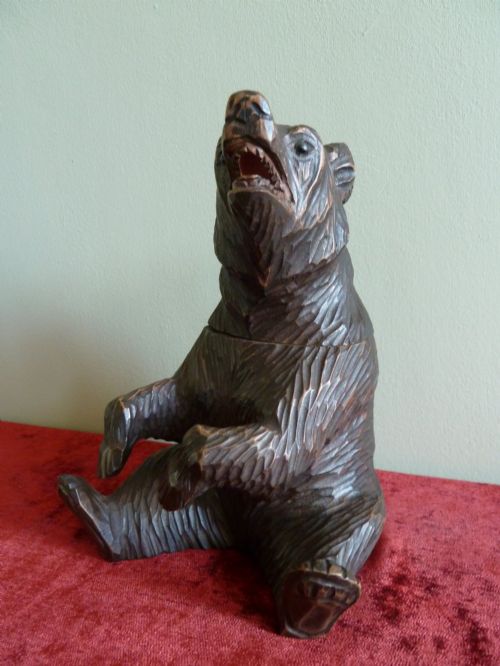
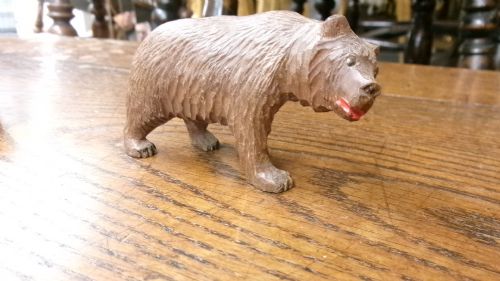
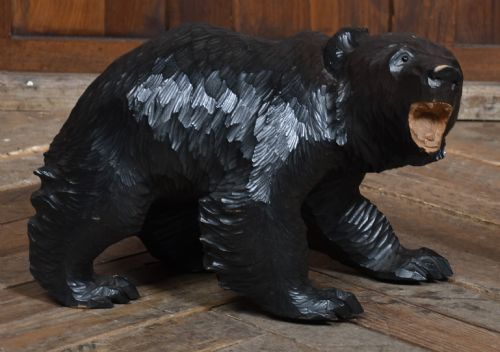
These carved wooden bear statue examples bring rustic charm to a room, valued for their expressive postures and detailed forms.
Carved Wooden Bear Statue
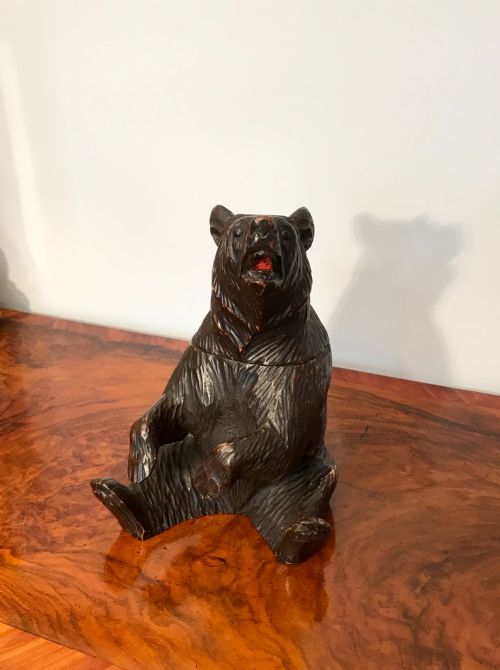
A carved wooden bear statue encompasses figurative sculptures, tobacco holders, lamps, and miniature sets spanning the Georgian, Victorian, and Edwardian eras. Buyers search for these pieces to add character and historical interest to interiors.
Makers often captured bears in active poses, such as carrying fish, standing upright, or grouped together. The materials vary across the pieces, combining traditional woodcraft with occasional glass or metal elements.
Materials and construction
Carvers utilised native timbers such as linden wood, walnut, and various hardwoods to shape each carved wooden bear statue. Linden wood offered a fine grain suited to intricate detail work, while walnut provided rich natural tones.
Techniques relied on hand tools to define fur texture, muscular forms, and distinct facial expressions. Some figures incorporate inset glass eyes or metal stud details to heighten realism.
Finishes typically involve wax to protect the timber surface while preserving the natural grain and carved contours of the wood.
The selection includes functional objects such as tobacco jars and lamps alongside purely decorative figures and miniature sets.
Assessing quality in carving
The depth and precision of the carving separate finer examples from simpler workshop pieces. Superior items display careful attention to anatomical proportions and realistic fur texture rather than generic shaping.
Scale and complexity also define the higher tier of the selection, seen in large figure groups or functional items like lamps and tobacco jars. Consistency in the hand finish across the entire form indicates skilled workmanship.
The Carved Wooden Bear Statue Glossary
- Black Forest
- A regional style of wood carving originating from the mountainous areas of central Europe, famous for animal figures and rustic furniture. These pieces often depict bears and natural woodland themes.
- Kibori Kuma
- A traditional Japanese style of wood-carved bear originating from Hokkaido, typically produced as folk art. These sculptures emphasise bold carving marks and natural wood textures.
- Linden wood
- A pale, fine-grained timber frequently chosen by carvers for its uniform texture and ease of shaping. It allows for crisp detail in figurative sculpture.
- Tobacco jar
- A lidded vessel designed to keep tobacco moist, occasionally formed as a carved animal figure with a hollow interior. These functional objects combined utility with decorative carving.
Carved Wooden Bear Statue: Frequently Asked Questions
What periods do these bears come from?
The listings span the Georgian period, Victorian era, Edwardian period, and the early twentieth century.
Craftsmen produced these figures across European and Japanese folk art traditions during those years.
How were these statues used originally?
Many served purely as decorative sculptures or mantel ornaments within homes.
Others had specific domestic functions, including tobacco holders, lidded jars, and lamp bases.
What woods were used for carving?
Carvers worked primarily in linden wood, walnut, and general hardwoods available locally.
Each timber influenced the final tone and the crispness of the carved fur details.
How do I spot regional styles?
European Black Forest carvings often feature darker walnut tones and naturalistic woodland poses.
Japanese Kibori Kuma pieces display distinct folk art characteristics associated with northern woodcarving traditions.
Are these pieces solid wood?
The sculptures and figures are carved from solid blocks of timber.
Certain functional items like tobacco jars and lamp bodies feature hollowed interiors to accommodate their purpose.