

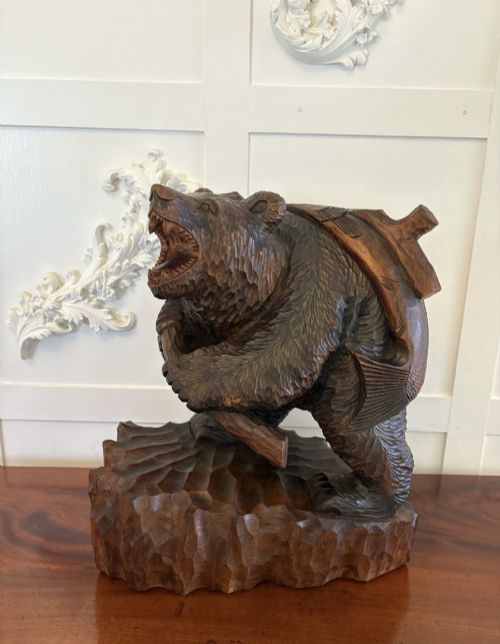


Linden Wood Bear Carving
These linden wood bear carvings bring rustic charm indoors, capturing animals at rest or carrying fish in finely detailed sculptures.
Linden Wood Bear Carving
When you search for linden wood bear carving, you encounter sculptural works originating predominantly from the Black Forest region alongside examples reflecting Swiss folk art and Japanese folk art influences. The forms span functional and decorative household objects including table lamps, tobacco boxes, bookends, inkwells, hall stands and hall chairs.
Most examples date from the late nineteenth and early twentieth centuries, encompassing the Edwardian era as well as specific years such as 1870, 1890, 1900, 1910 and 1920. Collectors commonly meet bears rendered as single decorative sculptures or paired as bookends, often posed with logs or fish.
How they were made
Artisans utilised linden wood and stained timber as the primary medium for these hand-carved animal figures, shaping soft wood to achieve intricate fur textures and lifelike facial expressions. Workshops occasionally incorporated subsidiary materials such as brass, metal, fabric and glass into functional pieces like inkwells and table lamps.
The sculptural execution relies on traditional carving techniques associated with Black Forest and folk art traditions, creating dimensional depth in items ranging from humidor boxes to large hall furniture.
Linden Wood Bear Carving Retail Price Guide 2026
Typical asking prices for linden wood bear carving among the pieces listed under this phrase on Sellingantiques today, from the lower quarter to the upper quarter. They describe what is for sale here now, not the wider market.
Bears double as domestic helpers, holding your mail in a hall stand or keeping watch over your inkwell.
What varies in quality
Depth and precision of the hand-carving separate standard decorative objects from superior examples, particularly in the rendering of animal anatomy and fur texture. The complexity of the form also influences distinction, where multi-functional items like hall stands, inkwells and table lamps demand greater joinery and structural integration than standalone sculptures.
The stylistic influence dictates aesthetic variation, with certain pieces showing distinct Swiss folk art or Japanese folk art interpretations alongside classic Black Forest designs.
The Linden Wood Bear Carving Glossary
- Linden wood
- A pale, fine-grained timber traditionally chosen by carvers for its softness and even texture. This wood permits deep, intricate detailing without splintering.
- Black Forest
- A regional designation for carved wooden animal sculptures produced in central Europe during the nineteenth and twentieth centuries. These works frequently depict bears engaged in human activities or holding objects.
- Humidor
- A specialised box designed to maintain humidity for tobacco storage. In this category, such boxes double as carved bear sculptures.
- Hall stand
- A large piece of entrance furniture incorporating hooks and trays. Examples in this category integrate carved bear figures into the wooden framework.
Linden Wood Bear Carving: Frequently Asked Questions
What periods do these bear carvings span?
The available selection spans the late nineteenth century and the early twentieth century, including Edwardian pieces and specific decades such as 1870, 1890, 1900, 1910 and 1920.
These dates align with the height of the Black Forest carving tradition and related folk art movements.
How were these carved bears used?
Many pieces served practical domestic functions alongside their decorative appeal, appearing as table lamps, bookends, tobacco boxes, inkwells and hall furniture.
Others functioned purely as sculptural ornaments for display on mantelpieces and tables.
What materials besides wood appear on them?
While linden wood and stained timber form the primary structure, makers occasionally integrated brass and metal for hardware or fittings.
Glass elements and fabric accents also appear in specific functional objects like lamps and lidded boxes.
What styles influence these carvings?
The predominant aesthetic is Black Forest, characterised by naturalistic animal subjects carved with rich textural detail.
Certain pieces also reflect Swiss folk art traditions and Japanese folk art influences.