



Antique Black Forest Ornament
An antique black forest ornament brings the rustic charm of alpine woodworking into the room through carved animals and figures.
Antique Black Forest Ornament
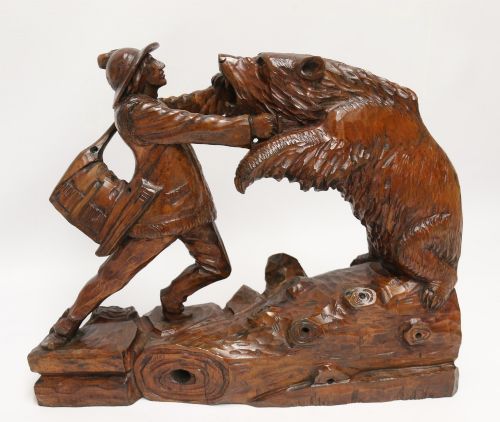
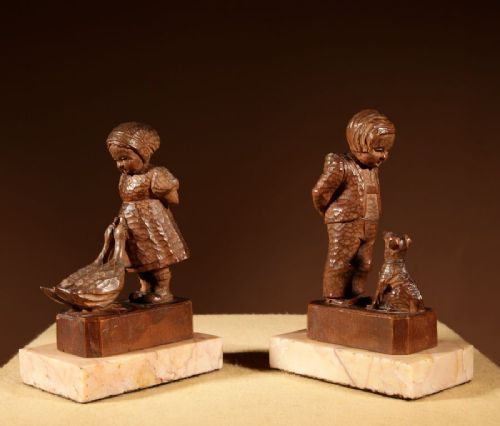
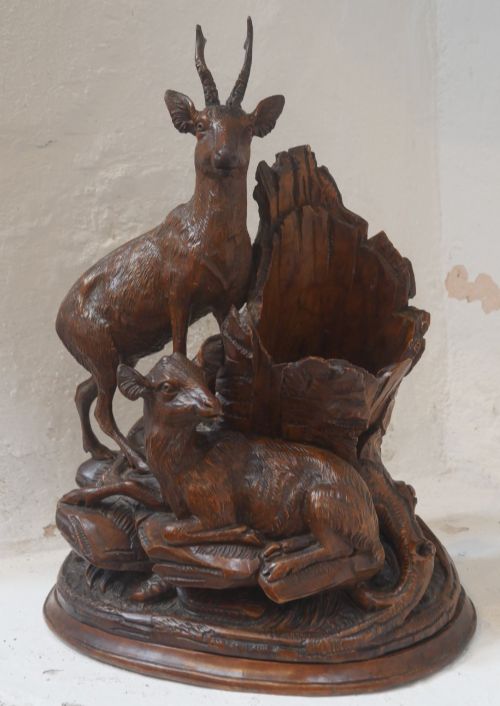
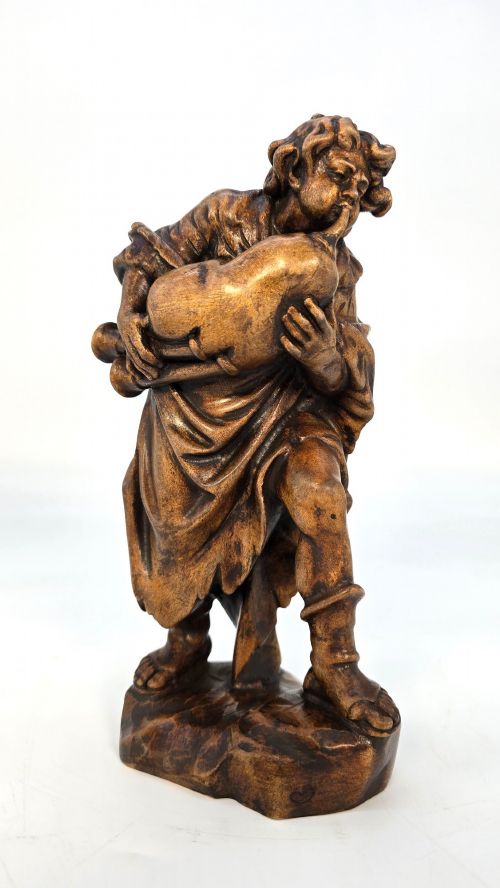
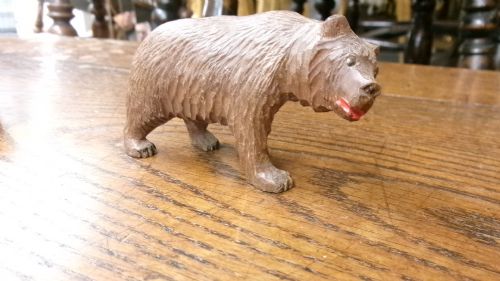
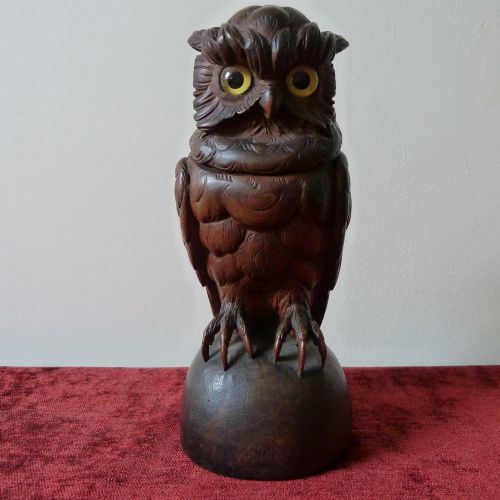
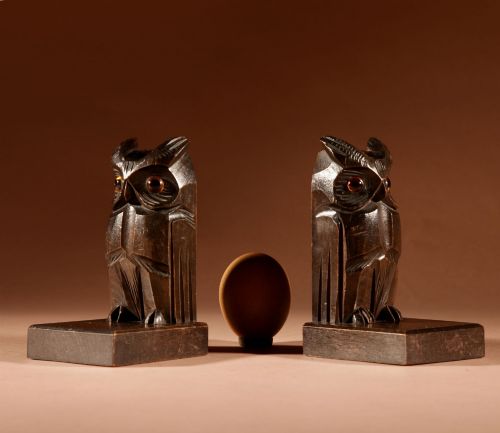
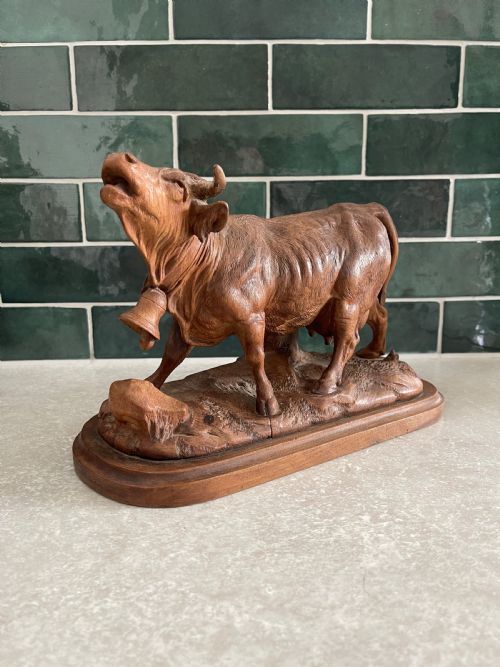
An antique black forest ornament is a carved wooden object originating from the woodland regions of central Europe, encompassing both Switzerland and Germany. These pieces take the form of detailed animal sculptures, inkwells, bookends, and figurative groups depicting bears, dogs, birds, and human figures.
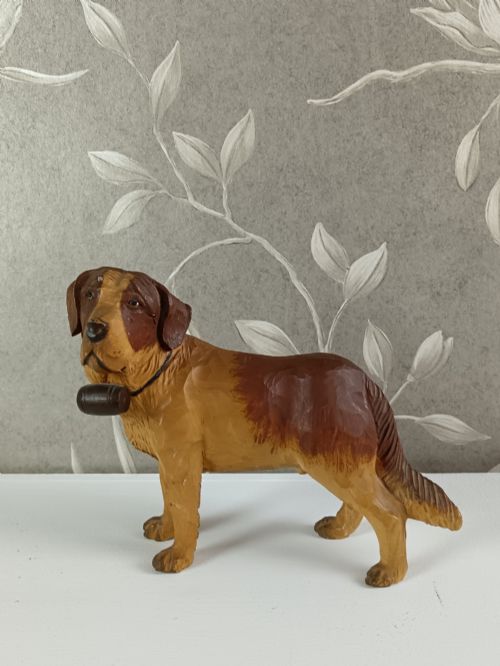
The selection here draws primarily from the nineteenth century and the early decades of the twentieth century, showcasing the distinctive regional style of alpine folk art. Animal studies, particularly bears and Saint Bernard dogs, dominate the available forms alongside functional items such as match holders and table centrepieces.
How they were made
Certain pieces incorporate contrasting materials, pairing carved wooden mounts with glass elements such as Baccarat crystal inserts for inkwells and epergnes. The surfaces received careful hand finishing and wax polishing to highlight the natural tone and texture of the carved timber.
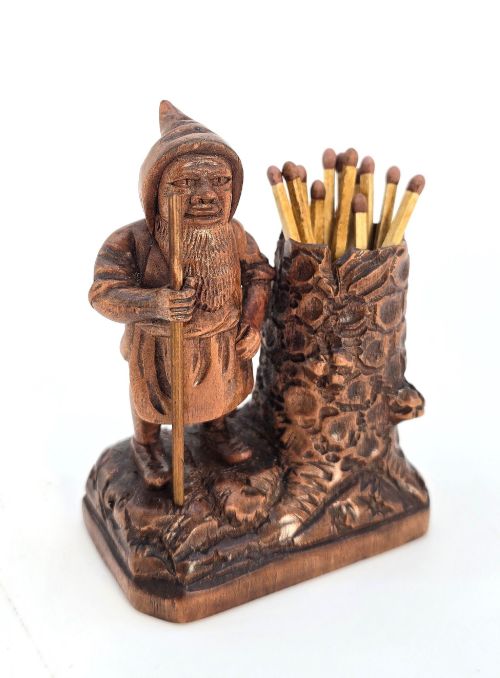
A signed 1916 match striker depicts a gnome.
What varies in quality
The distinction between standard items and superior examples lies in the depth and anatomical accuracy of the carving. Master carvers captured musculature, movement, and expression with convincing realism, whereas lesser pieces display stiff postures and simplified facial details.
Proportion and scale also define the upper tier of these carvings, particularly in complex figure groups and multi-element compositions. The integration of functional components, such as hinged inkwell lids and fitted glass inserts, further separates routine workshop output from exceptional artistry.
The Antique Black Forest Ornament Glossary
- Black Forest
- A style of wood carving originating from the mountainous regions of central Europe, known for realistic depictions of local wildlife and rustic figures.
- Linden wood
- A pale, fine-grained timber frequently chosen by carvers for its cooperative texture and lack of prominent knots.
- Epergne
- A tabletop centrepiece featuring multiple branching dishes or holders, occasionally combined with carved wooden supports and crystal glass.
- Inkwell
- A small desk accessory designed to hold liquid ink, often incorporated into figural animal carvings featuring hinged lids.
Antique Black Forest Ornament: Frequently Asked Questions
What animals are most common?
Bears and dogs, particularly Saint Bernards and rescue hounds, appear most frequently in these carvings. Owls, mountain goats, and cows also feature regularly.
Human figures representing alpine locals, huntsmen, and medieval musicians complete the traditional subject matter.
How do I date an ornament?
Dating relies on stylistic markers, framing techniques, and the degree of hand-tool finish visible on the timber. Nineteenth-century examples generally exhibit deeper undercutting and greater anatomical realism than later tourist pieces.
Signatures, dates carved directly into the wood, and associated hardware like brass hinges provide additional chronological clues.
Were these pieces functional?
Many items served practical purposes on Victorian desks and dining tables alongside purely decorative sculptures. Inkwells, match holders, bookends, and letter stands combined utility with expressive carving.
Larger figures and epergne centrepieces remained strictly ornamental, designed to display wealth and taste in a domestic interior.
How should I clean the wood?
Maintenance requires only a soft, dry brush to remove dust from deep recesses and carved fur textures. Moisture and chemical polishes damage the historic patina and dry out the timber.
Keeping the ornaments away from direct sunlight and sudden temperature changes preserves the natural finish of the walnut and limewood.