


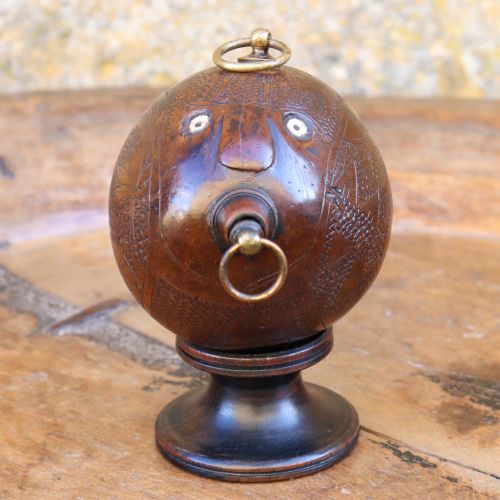


19th Century Bear Carving
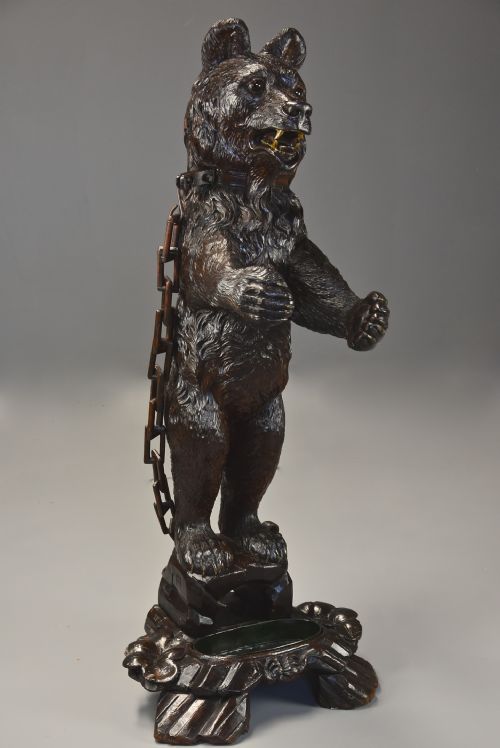
A 19th century bear carving brings rustic charm and practical utility into a hallway, modelled in wood with glass eyes.
19th Century Bear Carving
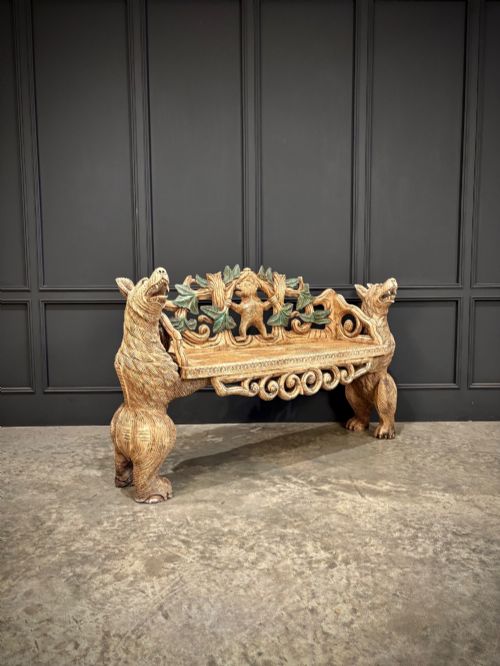
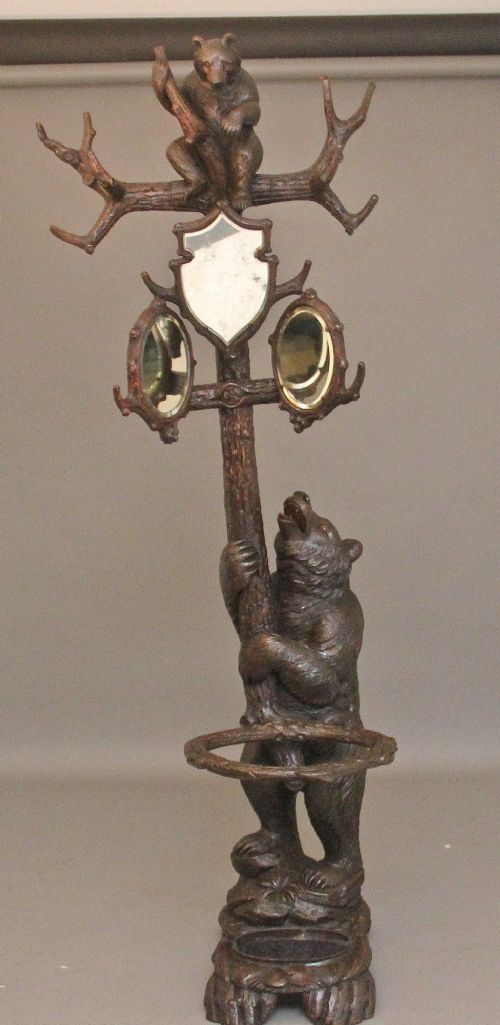
A 19th century bear carving encompasses a diverse range of domestic objects and sculptures, most notably originating from the Black Forest style. You will frequently encounter substantial hall stands, benches, and umbrella stands designed to greet visitors in an entranceway.
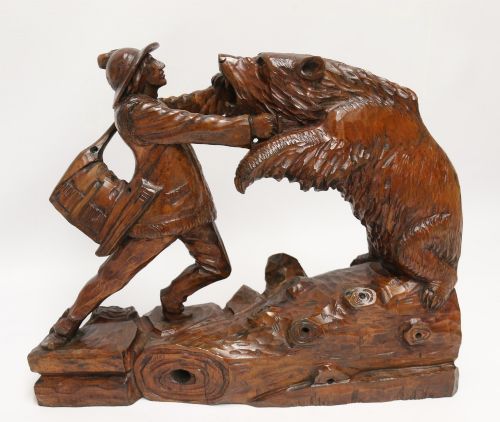
Beyond large furniture, smaller decorative objects appear regularly, including tobacco jars, humidors, inkstands, and miniature figures. These pieces merge utilitarian function with skilled woodwork, depicting bears in upright postures, holding logs, or gathered in sets.
Maritime folk art also contributes to this category through carved coconut bug bear flasks, offering a distinct alternative to traditional continental wood sculpture.
Materials and construction
Carvers predominantly utilised linden wood, walnut, and various carved hardwoods to shape these biological forms. The natural grain of the timber was often manipulated to suggest thick fur, while glass insert eyes brought a lifelike intensity to the animal figures.
Construction techniques combined robust joinery for functional furniture like hall seats and benches with intricate hand-carving for smaller novelties such as inkwells and condiment figures. Selected pieces incorporated metal elements for hinges, linings, or hardware.
One miniature set gathers fifteen tiny bears together, proving that nineteenth-century carvers enjoyed scaling their fierce subjects down to pocket size.
Assessing quality in carved bears
The distinction between standard items and exceptional works lies in the depth and anatomical accuracy of the carving. Master carvers captured the weight, muscle structure, and varied textures of fur with precision, whereas lesser examples remain stiff and generalised.
Scale and ambition also define the upper tier, with large exhibition pieces such as multi-figure hall stands or oak tree combinations demonstrating far greater sculptural complexity than smaller standalone figures.
The 19th Century Bear Carving Glossary
- Black Forest
- A regional style of wood carving associated with Switzerland and Germany during the nineteenth century, famed for realistically rendered fauna. Pieces from this tradition often take the form of bears incorporated into furniture.
- Hall stand
- A tall piece of entranceway furniture designed to hold coats, hats, umbrellas, and walking sticks. In this category, they incorporate carved bears as structural supports or decorative figures.
- Humidor
- A specialised box or jar designed to keep tobacco or cigars at the proper humidity. These items frequently feature carved bear lids or bodies.
- Bug bear
- A term historically applied to carved coconut shell flasks featuring grotesque or animalistic faces. They represent a specific strand of maritime folk art.
- Inkstand
- A desk accessory holding inkwells, sanders, and pen trays. Examples in this category utilise carved bears gripping logs or sitting beside inkwells.
19th Century Bear Carving: Frequently Asked Questions
Where were these carvings made?
Many of these pieces originated in the mountainous regions of Central Europe, specifically within the Black Forest tradition of Switzerland and Germany. Artisans in local workshops utilised native timbers to produce both decorative sculptures and functional household furniture.
Other variations, such as coconut flasks, emerge from maritime folk art traditions, reflecting a different geographic origin and set of materials while sharing the same period.
How do I place a hall stand?
A hall stand requires adequate wall space and a secure anchoring point in an entrance hall or large reception room. Because these pieces are substantial and often incorporate hooks for heavy garments, stability is essential.
Povide enough clearance around the piece so that the carved bear figures and umbrella wells remain fully visible rather than cramped against other furniture.
What timber was used?
Carvers relied primarily on linden wood and walnut, choosing them for their favourable grain structure and responsiveness to hand tools. These woods allowed artisans to carve deep texture into fur and facial expressions.
Hardwoods and oak also appear, particularly in larger architectural furniture like multi-seat benches and exhibition-quality hall stands.
How do I clean carved wood?
Maintain the surface by dusting gently with a soft, dry brush to prevent dirt from settling into the carved fur grooves. Avoid applying liquid cleaners or household polishes that might damage the historic patina of the timber.
Keep pieces away from direct sunlight and sudden changes in temperature to prevent the wood from drying out and splitting over time.