


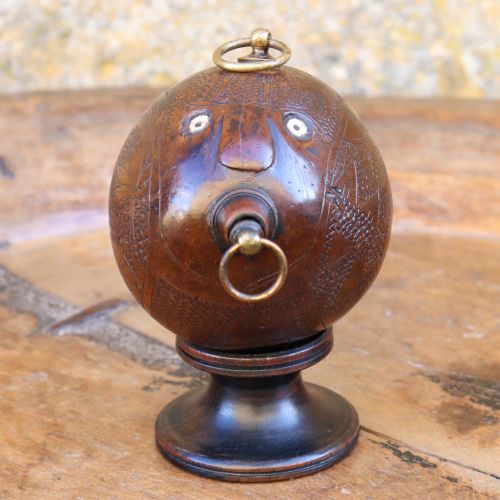


Dark Brown Bear Carving
These dark brown bear carving pieces bring robust timber craft and striking character into a room.
Dark Brown Bear Carving
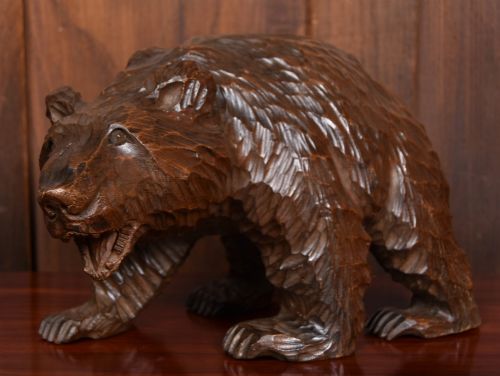
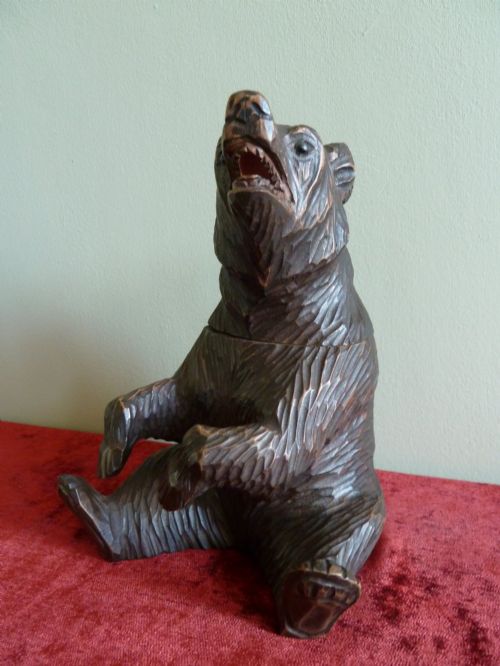
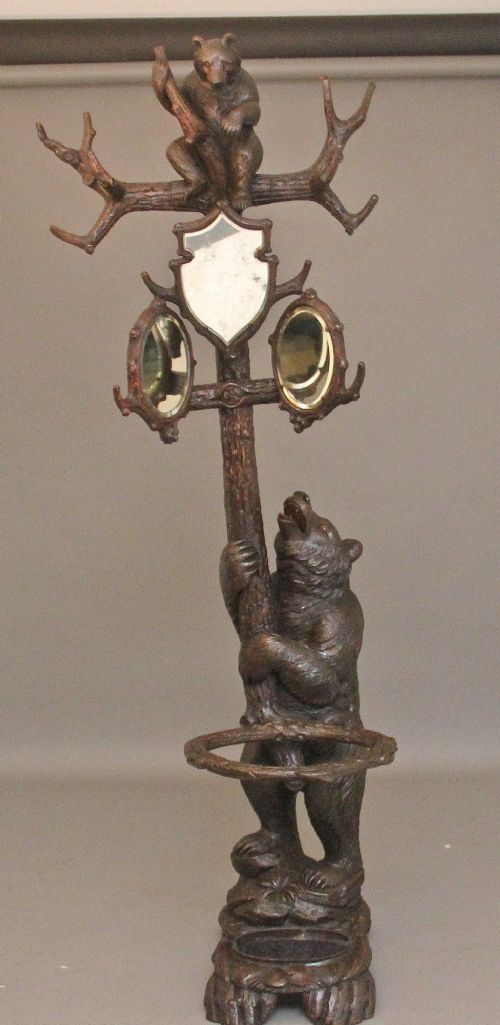
A dark brown bear carving brings solid timber sculpture into domestic spaces, drawing on European and Asian folk traditions. These pieces range from substantial furniture elements like hall stands to small desk items such as inkwells and tobacco jars.
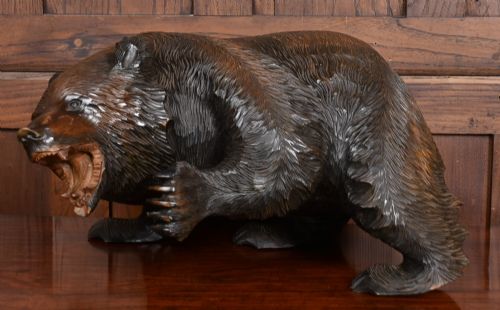
Black Forest pieces dominate the selection, often rendered in linden wood with glass eyes and naturalistic postures. Japanese folk art interpretations, including kibori kuma, also appear alongside maritime and 19th-century naive examples.
Functional objects make up a large portion of the forms, serving as stick stands, humidors, and lamps. Purely decorative sculptures and miniature figures provide alternative ways to bring the subject into an interior.
How they were made
Carvers predominantly utilised linden wood and other hardwoods, exploiting the grain to define dense fur and musculature. Hand tools shaped the timber into lifelike or stylised forms, sometimes incorporating glass for inset eyes or metal fittings for functional hardware.
Listings span the nineteenth century through the Edwardian period, featuring materials from linden wood and coconut shell to glass and metal.
What varies in quality
The anatomical accuracy and depth of the carving determine the distinction between standard workshop output and exceptional sculpture. Mastery over the texture of fur and the natural tension of the animal separates superior examples from stiffer, more generic items.
Scale and ambition dictate distinction, with large furniture pieces and multi-figure compositions demanding greater joinery skill. The preservation of original surface finishes and intact glass eyes maintains the integrity of the piece.
The Dark Brown Bear Carving Glossary
- Black Forest
- A regional style of wood carving originating in central Europe during the nineteenth century, known for naturalistic animals and furniture.
- Kibori Kuma
- A traditional style of Japanese wooden bear sculpture originating from Hokkaido, typically hand-carved with textured fur.
- Linden wood
- A pale, fine-grained timber favoured by carvers for its even texture and suitability for intricate detail work.
- Bug bear
- A carved flask or container fashioned from a coconut shell, often featuring folk art imagery.
- Humidor
- A specialised box or jar designed to keep tobacco moist, frequently carved in the form of an animal.
Dark Brown Bear Carving: Frequently Asked Questions
What are Black Forest bear carvings?
These are nineteenth-century wooden sculptures and furniture pieces originating primarily from European carving centres, depicting bears engaged in human activities or natural poses.
Craftsmen utilised local timbers like linden wood to create detailed items ranging from desk accessories to large hall stands.
How were bear hall stands used?
Large carved bear figures held umbrellas, walking sticks, and hats in entrance halls, functioning as both utility and sculpture.
Their robust timber construction supported heavy outerwear while greeting visitors near the front door.
How do I care for wooden bear carvings?
Keep wooden sculptures away from direct heat sources and strong sunlight to prevent the timber from splitting or drying out.
Dust gently with a dry cloth and avoid applying modern chemical polishes that might alter the historic surface finish.
What is kibori kuma?
This term refers to Japanese wood-carved bears produced as folk art, often showing distinct regional carving techniques.
These pieces share shelf space with European works, demonstrating a parallel global interest in animal sculpture.