


Carved Bear Stick Stand
A carved bear stick stand brings undeniable character to an entrance hall, combining practical storage for umbrellas with charming animal sculpture.
Carved Bear Stick Stand
A carved bear stick stand is a hall furniture piece designed to hold walking canes, umbrellas and coats. When you search for this phrase, you encounter grand Black Forest pieces created during the nineteenth and early twentieth centuries.
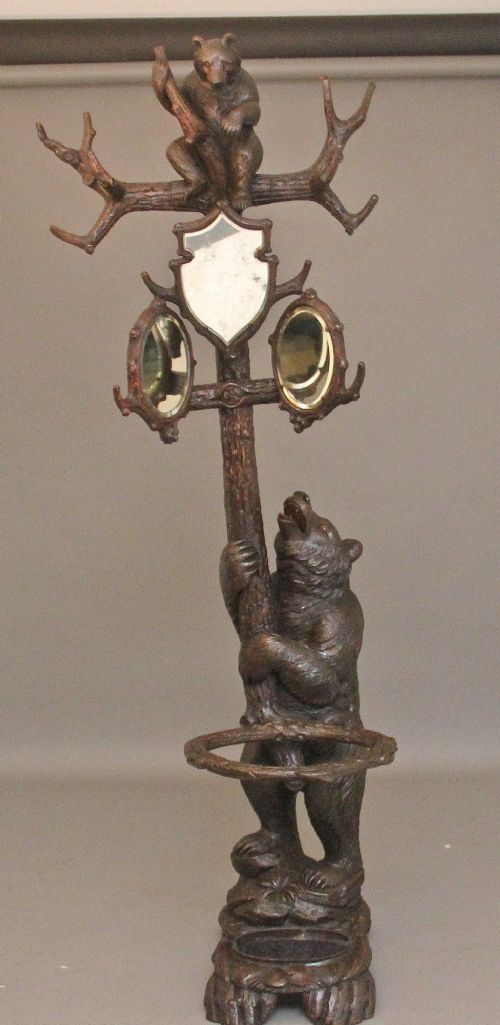
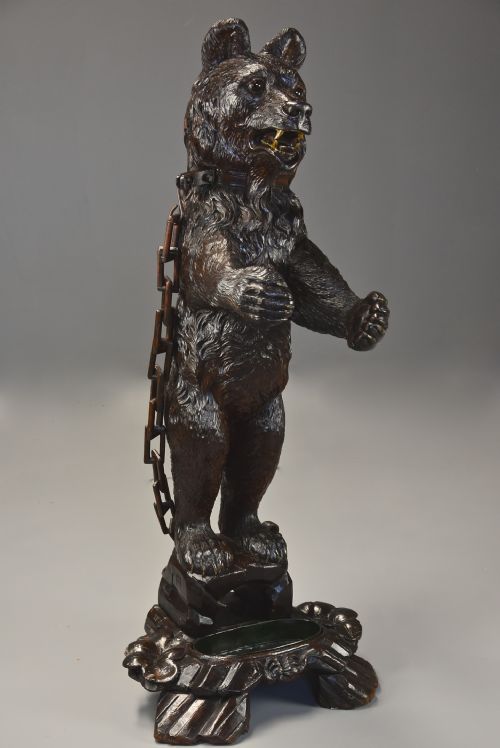
The versions most commonly met on this page take the form of standing bears carved from solid timber. These objects double as hall stands, umbrella stands and hallstands featuring integrated drip pans and coat hooks.
Originating predominantly from the Black Forest region, these items reflect a distinct nineteenth century carving tradition. They range in size from compact umbrella stands to large exhibition pieces incorporating oak trees and mirrors.
How they were made
Carved bear stick stands rely upon traditional woodworking techniques executed in lime wood, lindenwood, linden wood and carved hardwood. Artisans shaped these timbers using specialised gouges and chisels to render realistic fur texture and anatomical detail.
Many larger examples integrate metal drip pans to catch water from wet umbrellas, alongside glass or mirror elements set into the backing. The structural framework frequently utilises oak or heavier hardwoods to support the weight of coats and walking sticks.
What varies in quality
The distinction between standard examples and exhibition quality pieces lies in the depth and realism of the carving. Superior items display meticulous attention to the bear's expression, claws and fur rather than basic shaping.
Scale and complexity also dictate the tier of a piece, with large double stick stands incorporating multiple functional elements commanding greater presence. The selection of timber, particularly fine-grained linden wood, permits sharper detail and smoother finishes.
The Carved Bear Stick Stand Glossary
- Black Forest
- A style of wood carving originating from the mountain region in Germany and Switzerland, famous for animal figures and rustic furniture. These items typically feature bears, dogs or deer rendered in naturalistic poses.
- Linden wood
- A pale, fine-grained timber favoured by carvers for its uniform texture and lack of prominent grain. This material allows artisans to execute intricate fur details without splitting.
- Hall stand
- A multi-functional piece of entrance furniture combining a mirror, coat hooks, glove box and stick stand. They anchored the hallway of nineteenth century homes.
- Drip pan
- A removable metal tray fitted at the base of a stick stand to catch moisture from wet umbrellas. It protected the wooden floor from water damage.
- Umbrella stand
- A dedicated receptacle designed solely for storing wet or dry umbrellas and walking sticks upright. They often feature open frameworks to allow air circulation.
Carved Bear Stick Stand: Frequently Asked Questions
What is a carved bear stick stand?
A carved bear stick stand is a nineteenth century hall furniture piece featuring a realistic wooden bear holding or guarding a receptacle for umbrellas and walking canes.
These items often incorporate coat hooks, mirrors and storage trays, serving as both functional hallway organisers and sculptural animal carvings.
Where were carved bear stick stands made?
These pieces were primarily produced in the Black Forest region of Germany and Switzerland during the nineteenth and early twentieth centuries.
Local woodcarvers utilised abundant regional timber such as lime wood and lindenwood to supply European and international households with rustic furniture.
How do I care for a wooden bear stand?
Keep the carved wood away from direct heat sources and strong sunlight to prevent the timber from drying out and splitting over time.
Dust the intricate carvings gently with a soft brush and occasionally apply a suitable wax polish to maintain the finish of the hardwood.
Are these stands suitable for daily use?
While robustly constructed from solid hardwoods, these historical items function well for holding lighter walking sticks and dry umbrellas.
Ensure any wet umbrellas are placed carefully into the metal drip pan to prevent moisture from sitting against the wooden base for extended periods.
How can I date a carved bear stand?
Dating relies upon examining the construction methods, the presence of original metal hardware, and stylistic indicators associated with nineteenth century Black Forest craftsmanship.
Examine the type of wood used, such as lime wood or oak, and check for the integration of traditional mirrors or exhibition quality structural details.