


Rustic Carved Stick Stand
These rustic carved stick stand examples bring naturalistic timber forms and sculptural animals straight from the nineteenth century into your hallway.
Rustic Carved Stick Stand
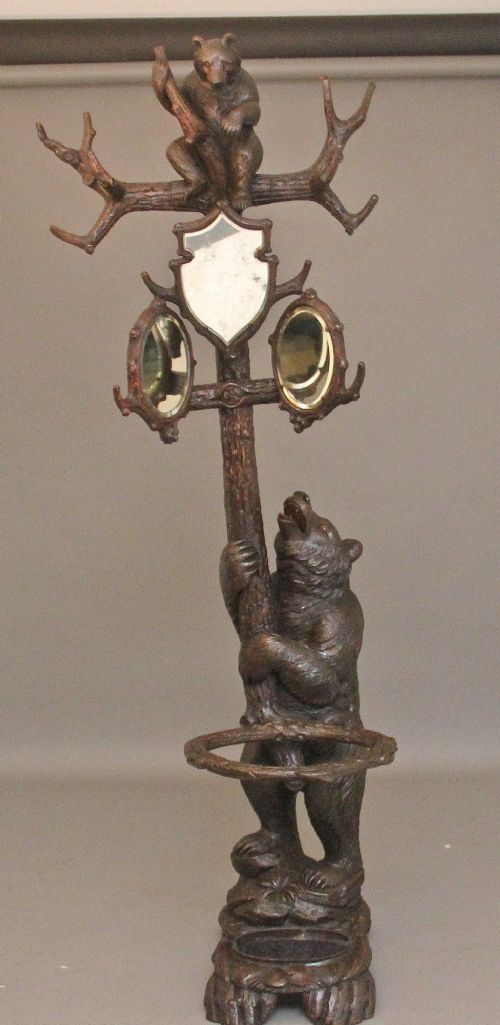
A rustic carved stick stand combines functional hallway storage with deeply sculptural woodwork, frequently taking the form of Black Forest bears or hollowed tree trunks. These pieces emerge predominantly from the nineteenth century and the early decades of the twentieth century, reflecting a Victorian appetite for naturalism and folk art in domestic interiors.
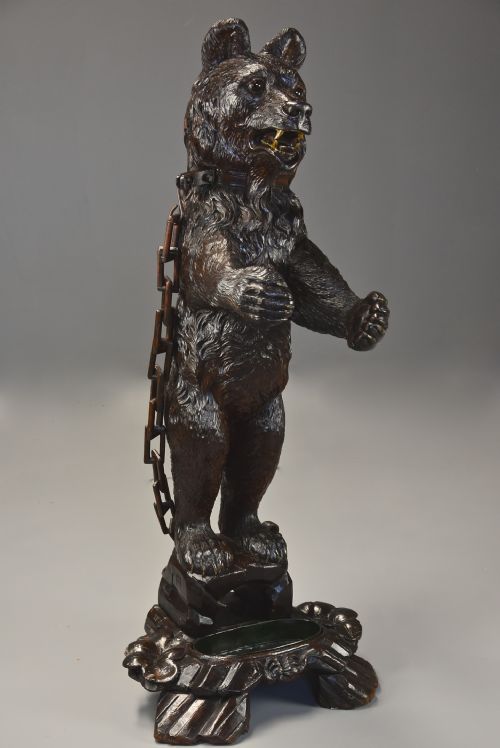
Most examples encountered on this page belong to the Black Forest tradition, where bears emerge from carved wooden branches and trunks to hold walking canes and umbrellas. Alongside these animal figures, buyers will find coopered oak barrels and dug-out tree trunks designed to catch rainwater from wet weather gear.
Forms range from compact umbrella stands to larger hall stands combining umbrella storage with hat and glove compartments. The predominant materials recorded in the evidence are oak, lindenwood, and carved hardwood, often paired with metal liners to protect the interior wood.
Judging quality in carved stands
Quality rests in the depth and animation of the carving, particularly in the rendering of animal anatomy and foliage. Superior pieces display crisp muscle definition and lifelike postures in the bear figures rather than stiff or generic shaping.
Proportion and structural integrity separate robust examples from simpler ones, with better pieces maintaining balanced weight distribution despite the organic irregularity of the timber. The integration of original metal drip pans also influences the completeness of a survival.
Several bears double as valets, standing ready with outstretched paws to guard your wet umbrellas.
The Rustic Carved Stick Stand Glossary
- Black Forest
- A style of wood carving originating from the mountainous region of central Europe during the nineteenth century. These items typically feature bears, foliage, and naturalistic forest motifs.
- Coopered
- A method of construction using curved wooden staves bound together with metal hoops, commonly seen in barrels and cylindrical stick stands. This technique ensures watertight joins for damp umbrellas.
- Dug-out
- A form created by hollowing out a single solid tree trunk to form a vessel or stand. This heavy construction method preserves the natural exterior bark and grain of the wood.
Rustic Carved Stick Stand: Frequently Asked Questions
What distinguishes Black Forest stands?
Black Forest stick stands are defined by their characteristic carved bear figures, woodland motifs, and organic tree branch structures. Originating in nineteenth-century Europe, they showcase skilled animalier carving combined with practical umbrella storage.
These pieces use softer timbers like lindenwood for intricate detail work alongside sturdier oaks for structural support. Their sculptural presence makes them distinct from standard Victorian hall furniture.
How do I care for antique wood?
Keep wooden stick stands away from direct heat sources and radiators to prevent the timber from splitting or warping over time. Dust regularly with a dry cloth and apply occasional light wax feeds appropriate for antique furniture.
Ensure that metal drip liners inside the stands are emptied and dried regularly to prevent moisture damage to the internal base wood. Proper humidity control in your hallway preserves both the carved details and the structural joints.
Where were these stands placed?
These pieces sat in the entrance halls or vestibules of period homes to greet visitors and store outdoor gear. Their primary function was holding walking sticks, umbrellas, and canes while keeping wet items off hallway floors.
Larger variations often incorporated hooks for hats and gloves alongside the lower stick wells, serving as multi-purpose furniture for guests. They acted as both practical utility items and decorative conversation pieces near the front door.
How do I date an old stand?
Dating relies on examining the tool marks, timber shrinkage, and stylistic indicators associated with nineteenth-century and early twentieth-century manufacturing. Hand-carved details and traditional coopered construction methods provide clues to the era of production.
Comparative analysis with documented Victorian and Edwardian catalogue pieces helps narrow down the manufacturing decade. The presence of nineteenth-century revival styles, such as Gothic or Jacobean influences, further assists in establishing a timeframe.