

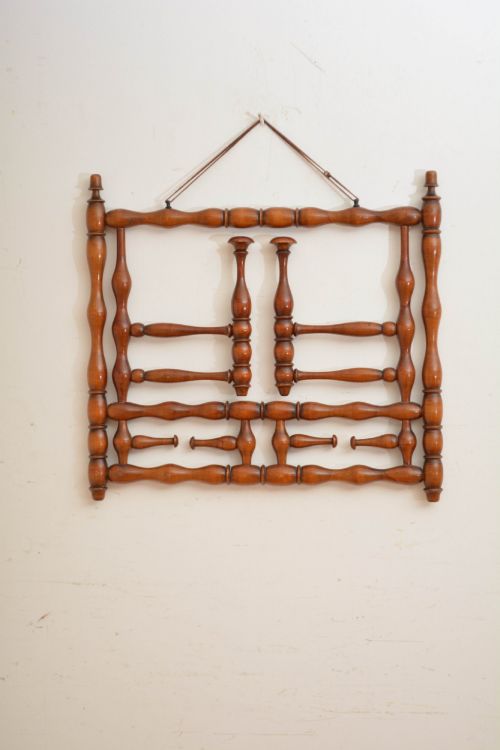


Carved Wooden Hall Tree
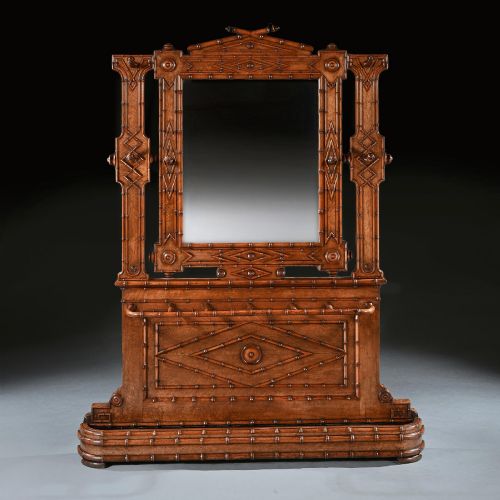
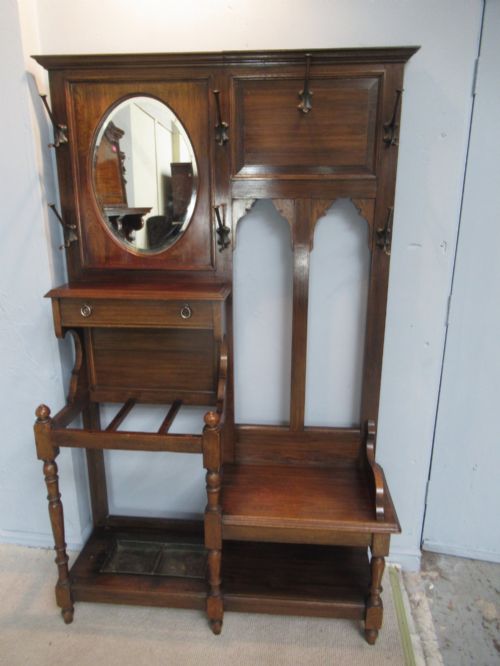
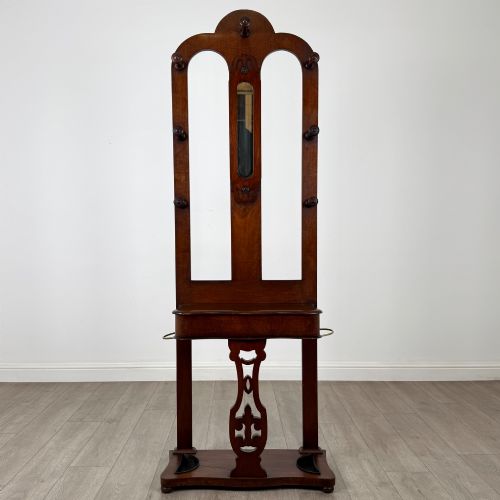
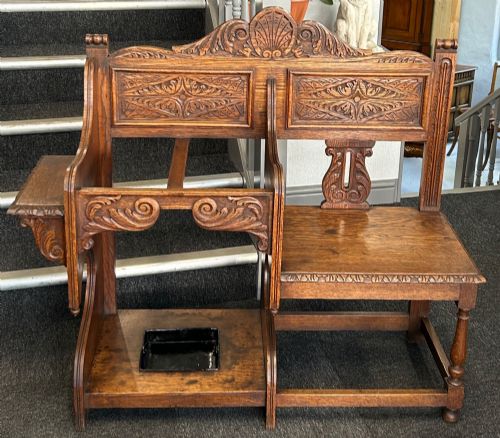
A carved wooden hall tree organises the entrance, bringing timber presence and practical hanging space to the hallway.
Carved Wooden Hall Tree
A carved wooden hall tree stands as a functional focal point in an entrance hall, designed to hold hats, coats, and walking sticks. These pieces belong predominantly to the Victorian, Edwardian, and Arts and Crafts periods, spanning from the nineteenth century into the early twentieth century.
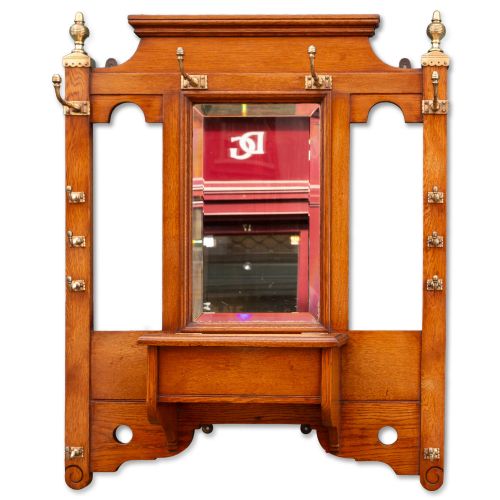
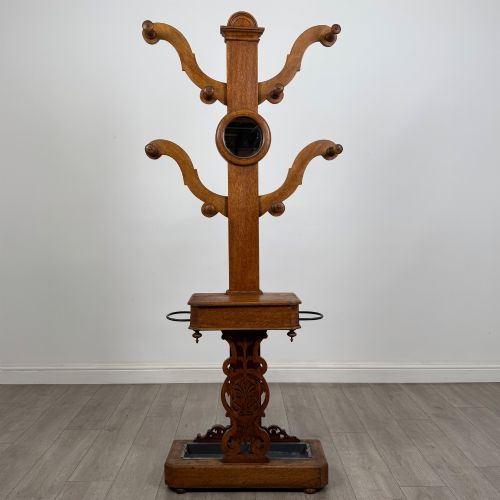
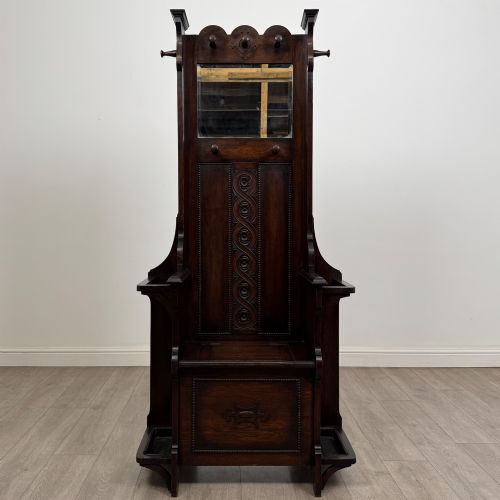
The form appears on this page under various designations, including hall stands, coat stands, and hall seats. Oak and mahogany serve as the primary timbers, frequently accompanied by integrated mirrors, brass hooks, and marble drip trays.
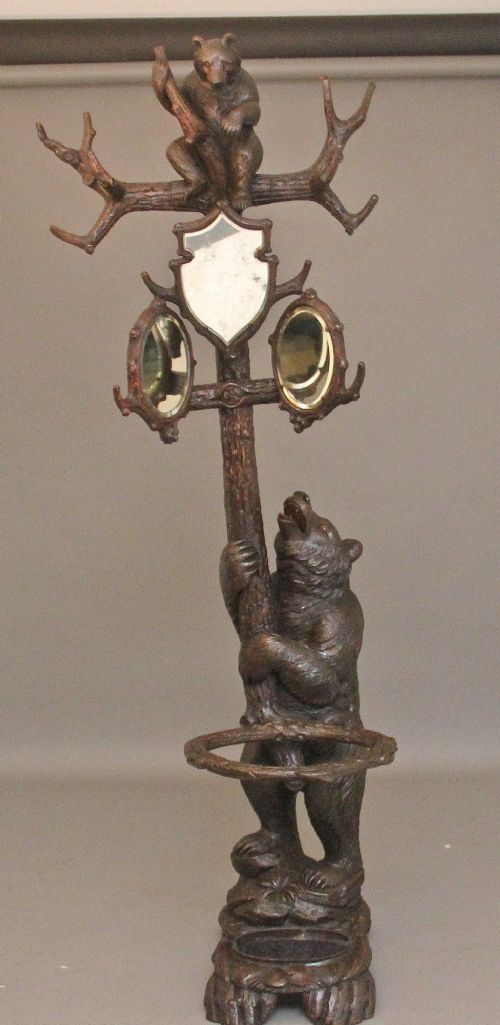
Buyers are most likely to encounter substantial oak or mahogany examples from the Victorian era, alongside expressive Black Forest carved bear and wildlife designs. Wall-mounted coat racks and compact hall seats also feature amongst the broader selection of hall stands.
How they were made
Cabinet makers utilised dense hardwoods such as oak, mahogany, walnut, and birdseye maple to construct these sturdy hallway items. Timber was shaped using traditional joinery methods, incorporating turned columns, fretted panels, and applied mouldings.
Carving defines the decorative character, ranging from linear Arts and Crafts motifs to elaborate three-dimensional Black Forest fauna and Greenman masks. Functional additions like cast brass hooks, bevelled mirror glass, and inset iron or marble trays were integrated directly into the wooden framework.
Carved Wooden Hall Tree Retail Price Guide 2026
Typical asking prices for carved wooden hall tree among the pieces listed under this phrase on Sellingantiques today, from the lower quarter to the upper quarter. They describe what is for sale here now, not the wider market.
Several pieces feature carved bears holding card trays, ensuring your post is received by a wooden beast.
What varies in quality
The depth and ambition of the carving separate standard production hall stands from exceptional works, particularly in Black Forest or Greenman pieces where anatomical detail and relief work demand high sculptural skill. The choice of timber grain, such as figured mahogany or golden oak, dictates the visual richness of the surface.
Integration of secondary materials marks the tier of quality, seen in heavy cast brass hardware, thick bevelled mirror glass, and solid marble bases for umbrella stands rather than thin veneers or plated metal replacements.
The Carved Wooden Hall Tree Glossary
- Hallstand
- A piece of entrance hall furniture combining coat hooks, a mirror, and umbrella storage. It serves as the primary formal term for a carved wooden hall tree.
- Black Forest
- A nineteenth-century Swiss and German style defined by naturalistic animal carvings, particularly bears and foxes. These works display detailed fur texturing and realistic glass eyes.
- Greenman
- A decorative architectural motif depicting a human face emerging from or entwined with foliage. It appears on late Victorian carved oak furniture to symbolise rebirth.
- Japonisme
- A late nineteenth-century European artistic aesthetic influenced by Japanese art. It manifests through asymmetrical compositions, faux bamboo turnings, and exotic subject matter.
Carved Wooden Hall Tree: Frequently Asked Questions
What is a hall tree?
A hall tree is a piece of entrance hall furniture designed to hold coats, hats, and umbrellas. It typically combines upright panels, hanging hooks, a mirror, and a base with stick stands.
In older homes, this item acted as the central drop zone for outdoor wear before guests entered the main reception rooms.
How do I date a hall stand?
Dating relies on timber choice, decorative style, and hardware construction. Heavy applied ornamentation and dark polished oak or walnut generally point to Victorian or Edwardian periods.
Lighter, simplified geometric lines often indicate later Arts and Crafts or Edwardian production around nineteen ten.
Are mirrors original to these pieces?
Most surviving Victorian and Edwardian hall stands retain their original bevelled mirror glass, often showing light foxing or age spots. Replacements are sometimes necessary if the original mercury backing degraded over time.
Examining the wooden retaining beads around the glass helps confirm whether the mirror has been disturbed.
How do I care for antique wood?
Maintain the timber by dusting regularly with a soft, dry cloth and applying occasional quality wax to nourish the polish. Avoid placing wooden hall stands near direct heat sources or damp exterior doors.
Protect marble inserts and brass hooks by wiping them clean with mild, non-abrasive solutions.