

Edwardian Hall Tree
An edwardian hall tree organises the entrance with timber, hooks and mirrors, offering practical hallway storage rooted in period craft.
Edwardian Hall Tree
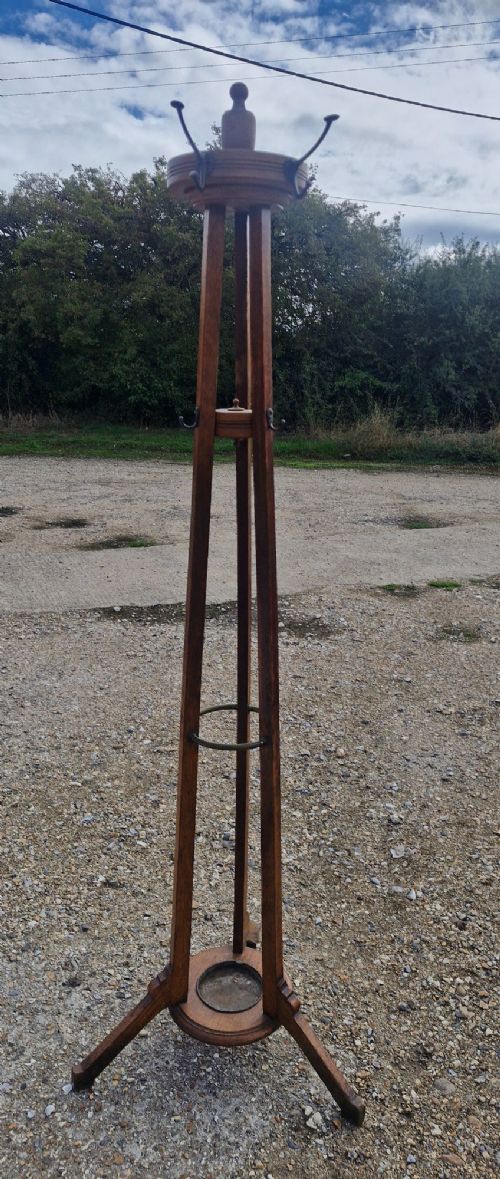
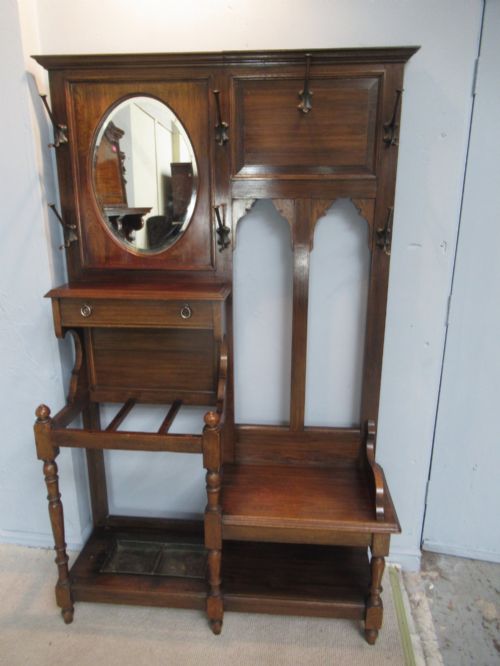
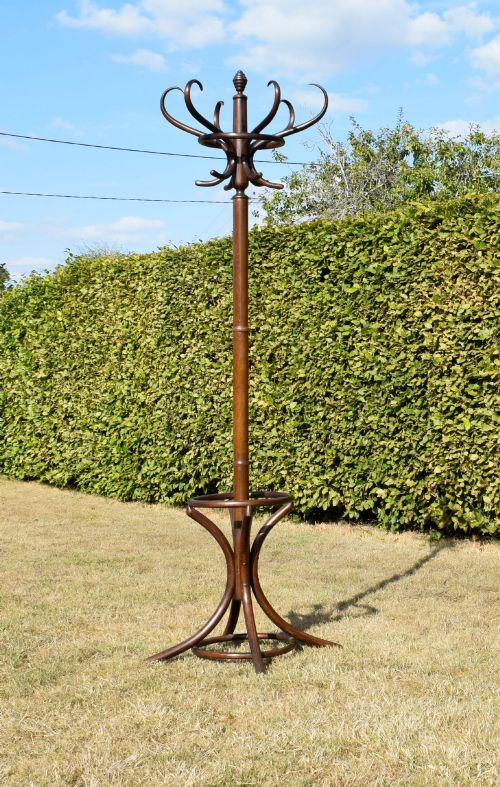
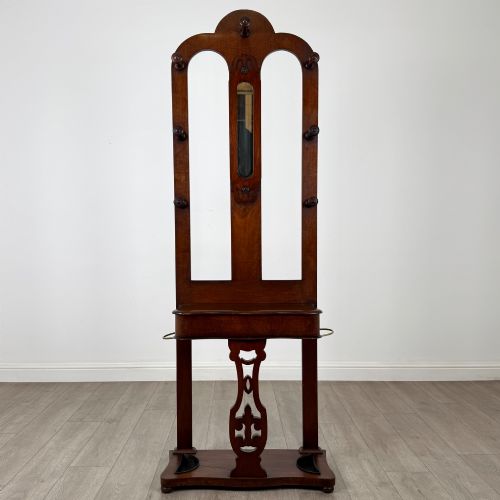
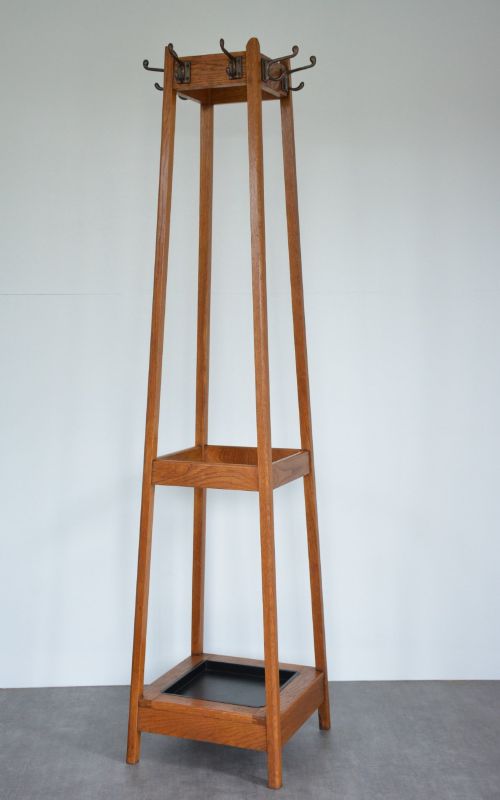
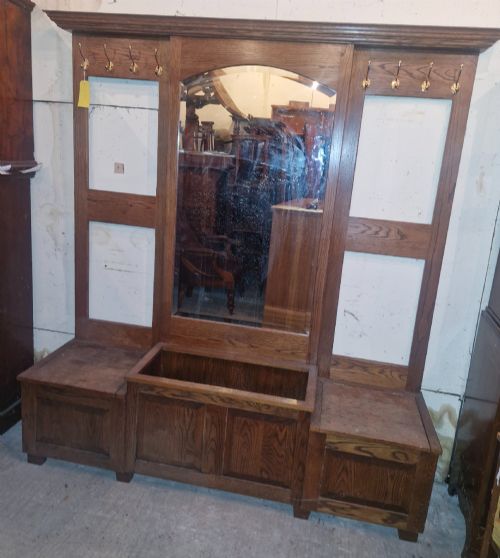
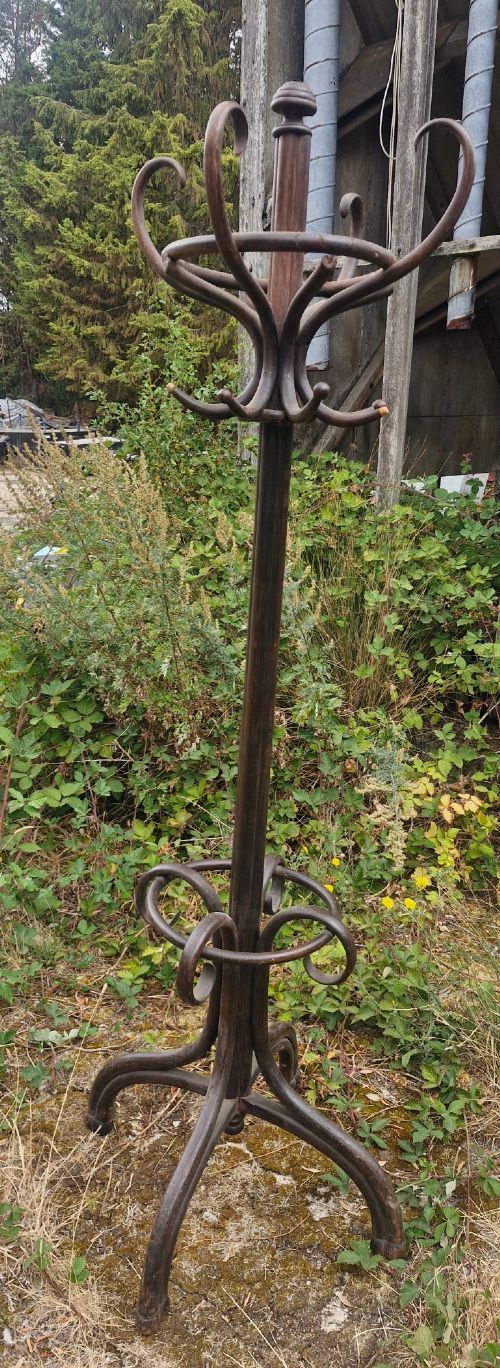
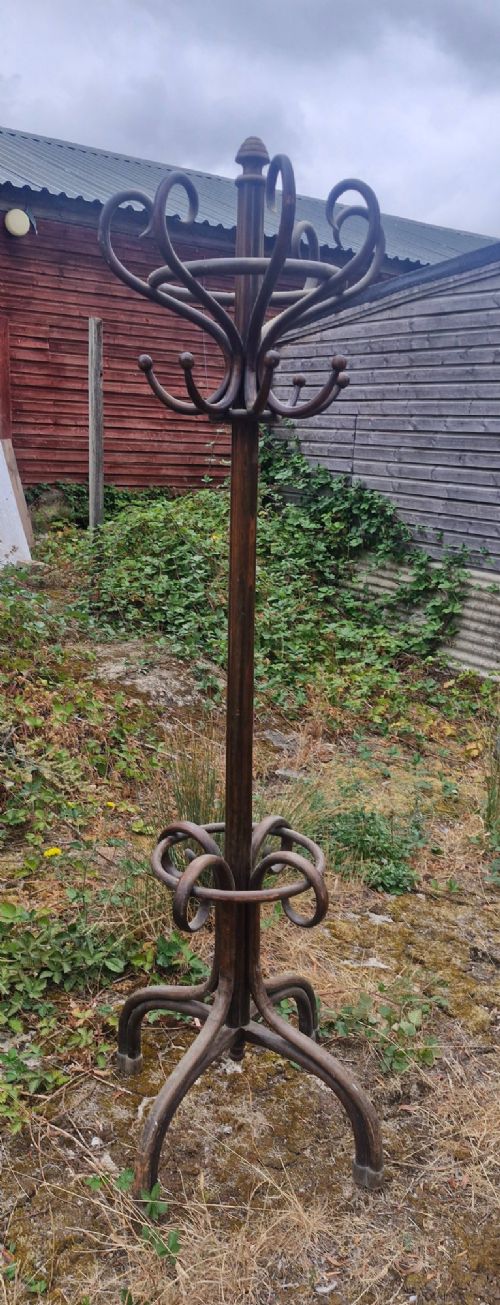
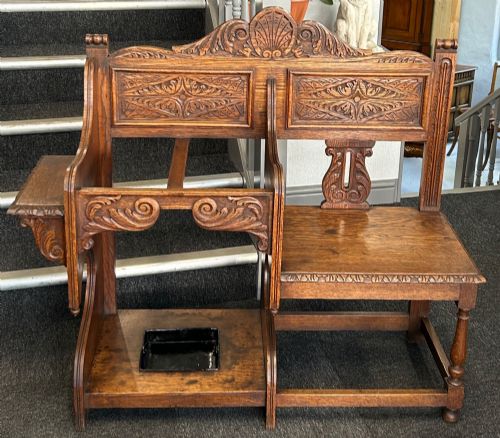
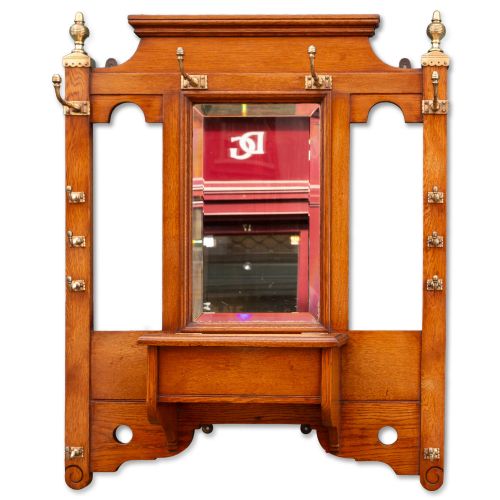
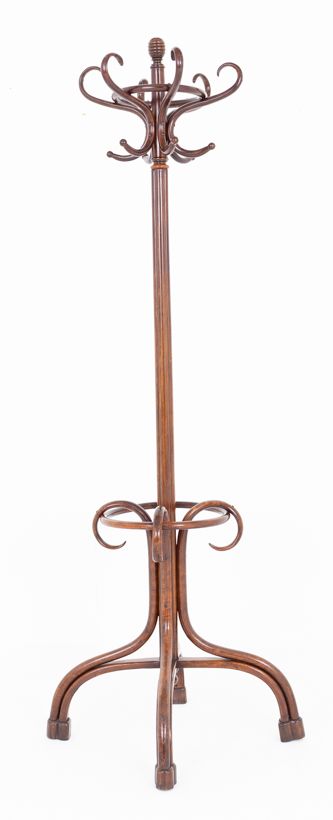
An edwardian hall tree serves as a multifunctional piece for entrance halls, combining coat hooks, hat racks and umbrella holders into a single unit. Buyers searching this phrase meet everything from compact bentwood frames to large carved timber structures incorporating seats and mirrors.
The material palette draws heavily on oak, mahogany and beech, often shaped through the steam-bent techniques associated with Thonet or constructed with the solid joinery of the Arts and Crafts movement. Many examples date from the early twentieth century, though nineteenth-century Victorian and transitional designs also appear frequently.
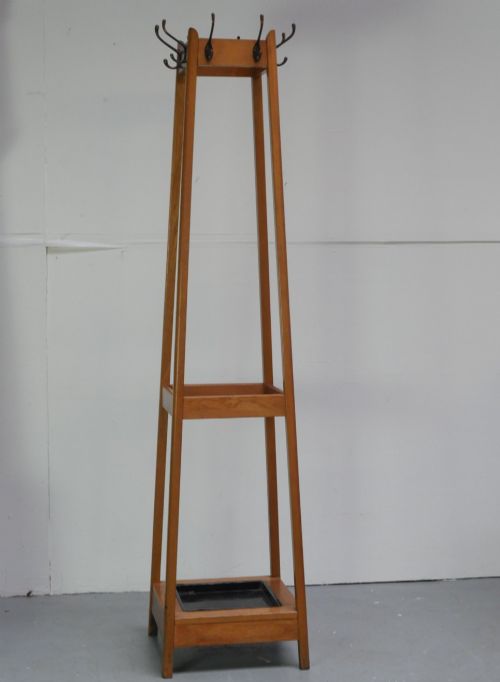
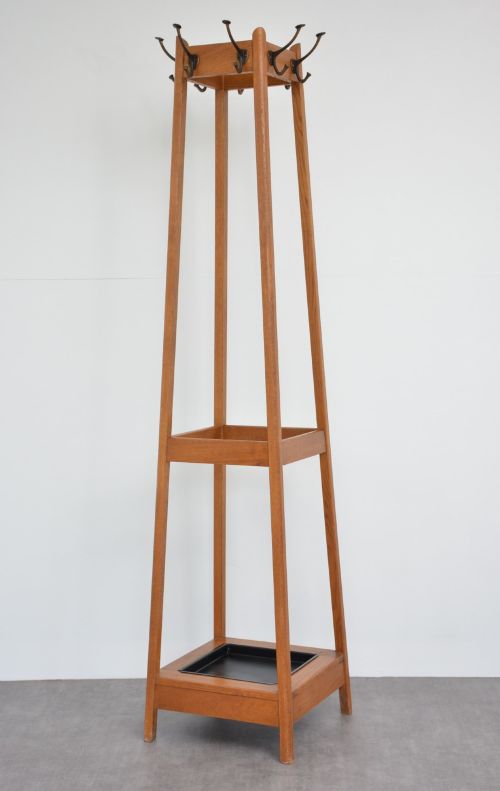
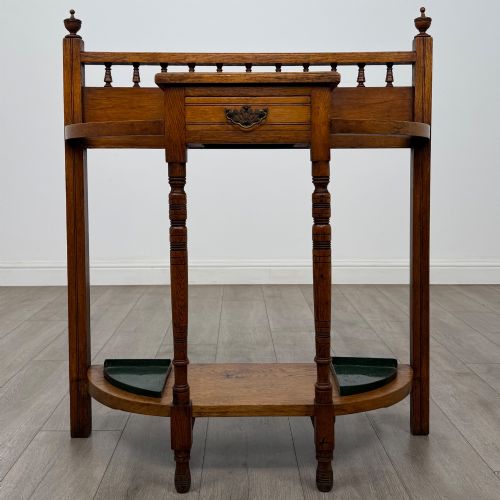
Forms vary from wall-mounted racks to heavy freestanding hall stands equipped with integrated drip trays for wet umbrellas. The practical purpose remains consistent across variations: managing outerwear and walking sticks efficiently in domestic entryways.
How they were made
Construction relies primarily on hardwoods such as oak and mahogany for rigid structural stands, alongside beech utilised for flexible bentwood components. Timber sections are joined using traditional methods, while metal elements like brass hooks and drip trays provide durable functional hardware.
Bentwood examples employ steam to soften beech rods before shaping them into curved profiles, a technique perfected by makers such as Thonet. Carved oak models feature hand-worked details, applied mouldings and integrated glass mirrors secured within wooden frames.
Listings feature oak, mahogany, beech, bamboo and brass across Edwardian, Victorian, and Arts and Crafts styles.
What varies in quality
Quality reveals itself in the weight and selection of the timber, distinguishing dense solid oak or mahogany from lighter utility woods. Superior examples display crisp hand-carving, well-fitted joinery and substantial brass hardware rather than stamped replacement fittings.
The complexity of the design alters the tier of the piece, moving from simple bentwood hat stands to multi-functional hall seats with integrated mirrors and storage compartments. Original elements such as matching drip trays and secure glass plates elevate the status of a piece within its period.
J. Parker of Woodstock·Thonet·Jas. Shoolbred
The Edwardian Hall Tree Glossary
- Bentwood
- Wood shaped by exposure to steam and pressure into curved structural components. This technique allows for lightweight yet resilient frames.
- Drip tray
- A metal receptacle placed at the base of a stand to catch water from umbrellas and walking sticks. These pans protect flooring from moisture.
- Hall seat
- An integrated bench incorporated into the framework of a stand. This feature provides a place to sit while removing footwear.
- Arts and Crafts
- A design movement valuing honest construction, visible joinery and handcrafted timber finishes. Pieces from this tradition avoid excessive factory ornamentation.
Edwardian Hall Tree: Frequently Asked Questions
What is an edwardian hall tree?
An edwardian hall tree is a piece of entrance hall furniture designed to hold coats, hats and umbrellas. It typically combines upright wooden posts with hooks, mirror panels and sometimes a seat.
These items emerged to keep entryways tidy in large and modest homes alike. They concentrate multiple hallway functions into a single floor-standing or wall-mounted unit.
How were bentwood stands made?
Bentwood stands were produced by placing straight lengths of beech into steam chambers until the timber became pliable. Craftsmen then bent the wood around metal or wooden forms to set the curved shapes.
Once cooled and dried, the bent sections retained their structural tension. This technique created lightweight stands with remarkable load-bearing strength.
How do I use a hall tree today?
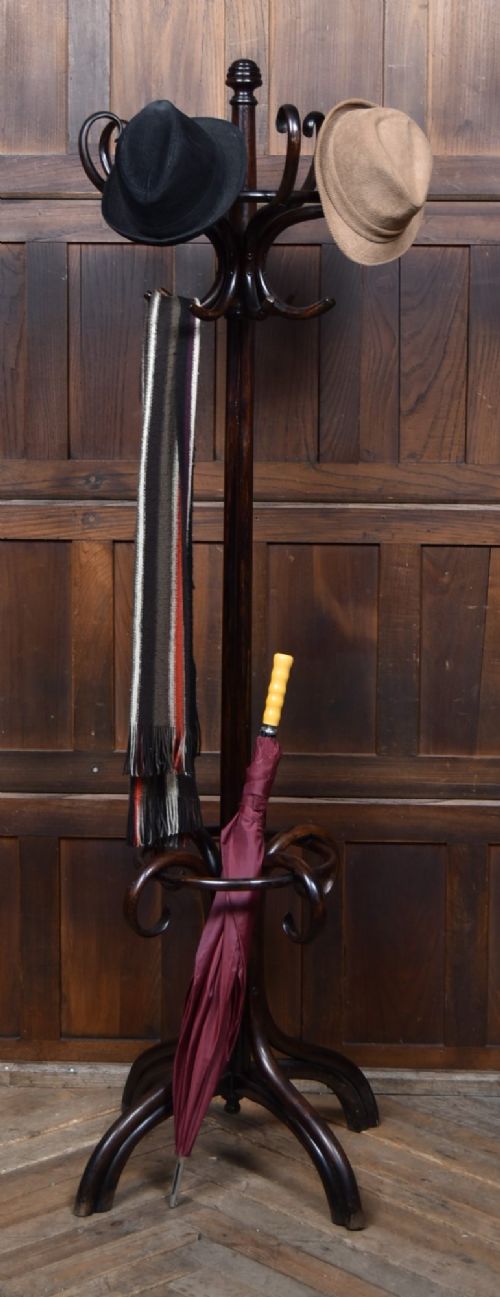
A hall tree functions in modern entryways much as it did originally, providing drop zones for daily outerwear. The hooks hold coats and scarves, while the base accommodates umbrellas and walking sticks.
Freestanding versions require sufficient floor space near an entrance door. Wall-mounted variants suit narrow corridors where floor space remains limited.
How do I date a hall stand?
Dating relies on stylistic clues, construction methods and materials recorded across different periods. Heavy carved oak and dark mahogany often point to nineteenth-century Victorian or Arts and Crafts origins, while lighter golden oak and bentwood align with the early twentieth century.
Hardware details like brass hooks and bevelled mirror glass provide additional chronological markers. Comparing the overall aesthetic to documented production eras helps confirm the decade of manufacture.