

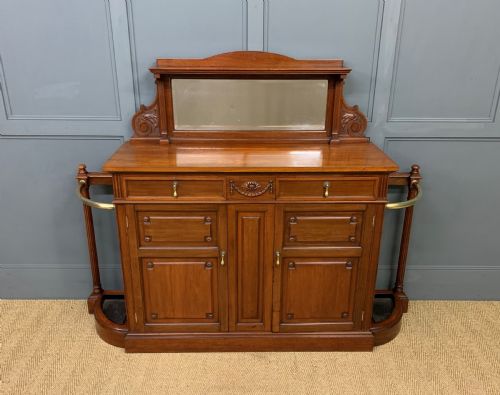


Walnut Umbrella Stand
A walnut umbrella stand brings rich, dark timber and practical utility to the hallway.
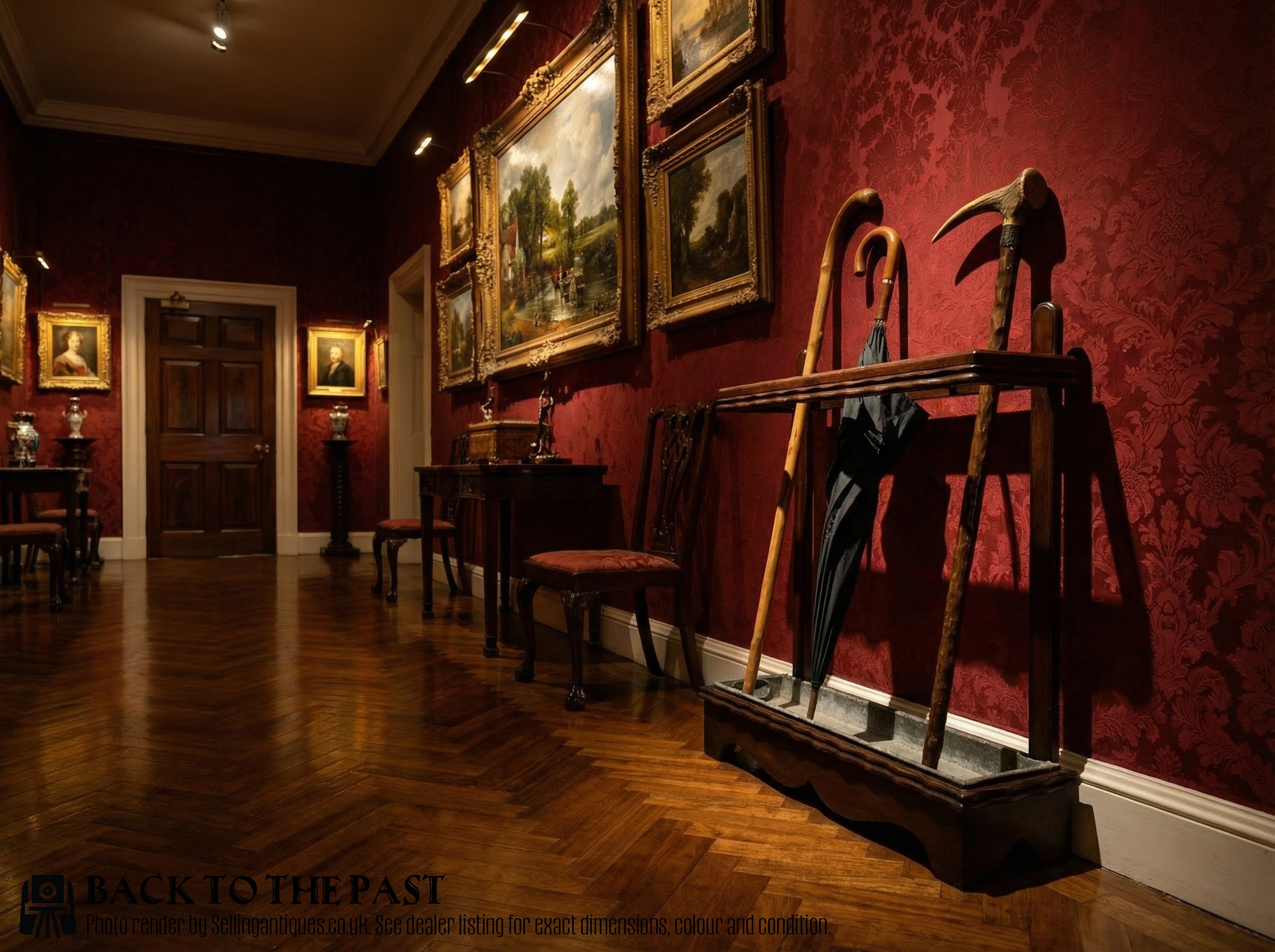
Walnut Umbrella Stand
A walnut umbrella stand serves as a sturdy domestic holder for walking sticks, parasols, and wet rain gear in the entrance hall. When you search for a walnut umbrella stand, you meet pieces configured specifically for hallway storage, often combining stick holders with coat hooks, mirrors, or small cupboards.
Most examples hail from the Victorian and late Victorian periods, alongside Edwardian designs and pieces carved in the Black Forest style. You also encounter Italian carved versions and country house furniture that integrate brass mounts, zinc liners, and cast iron elements.
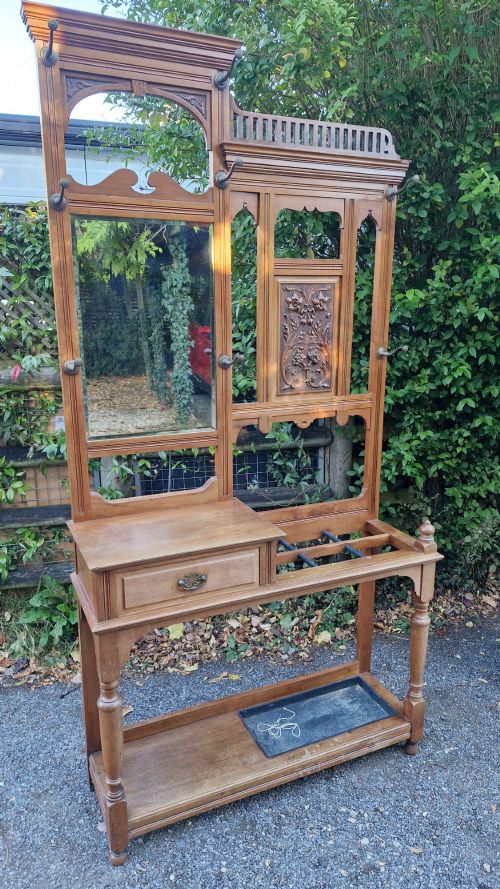
Forms range from dedicated stick stands to multi-functional hall stands that incorporate umbrella wells alongside hat racks and mirrors. These pieces bring domestic organisation together with the distinct decorative warmth of figured walnut timber.
Materials and construction
Cabinet makers utilised solid walnut and veneers, often pairing the timber with brass mounts, cast iron frames, and zinc or glass drip pans to catch water from wet umbrellas. Carved wood details, including lindenwood accents, appear frequently on Black Forest and continental pieces.
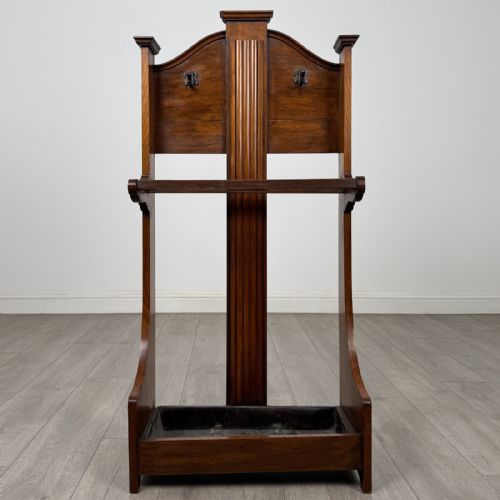
Makers constructed these hallway fixtures using robust joinery capable of withstanding heavy daily use, integrating metal components specifically designed to prevent water damage from damp sticks.
Walnut Umbrella Stand Retail Price Guide 2026
Typical asking prices for walnut umbrella stand among the pieces listed under this phrase on Sellingantiques today, from the lower quarter to the upper quarter. They describe what is for sale here now, not the wider market.
Listings feature walnut combined with brass, glass, cast iron, lindenwood, and zinc across the nineteenth and early twentieth centuries.
Judging quality in walnut umbrella stands
Quality rests on the depth of the timber grain, the crispness of any carved decoration, and the integrity of the original hardware such as brass fittings and metal drip trays. Finer examples display exhibition quality craftsmanship from recognised makers like Shoolbred, Heals, or Waring & Gillows.
Simpler provincial pieces rely on honest utility, whereas high-end Victorian and Italian examples feature elaborate figural carving, superior cabinet work, and integrated furniture combinations like cupboards and hall benches.
Shoolbred & Co.·Heals Of London·Waring & Gillows
The Walnut Umbrella Stand Glossary
- Walnut
- A dense, dark hardwood prized for its rich grain patterns and durability in Victorian and Edwardian cabinet making.
- Hall stand
- A multi-functional hallway furniture piece incorporating umbrella wells, coat hooks, mirrors, and sometimes small cupboards or seats.
- Stick stand
- A dedicated piece of furniture designed to hold walking sticks, canes, and umbrellas upright.
- Black Forest
- A nineteenth century decorative style originating in central Europe, known for highly detailed naturalistic animal and foliage carving.
- Drip tray
- A removable metal or glass pan placed at the base of a stand to catch water from damp umbrellas.
Walnut Umbrella Stand: Frequently Asked Questions
What is a walnut umbrella stand?
A walnut umbrella stand is a piece of hallway furniture made from walnut timber designed to hold wet umbrellas and walking sticks.
They range from simple dedicated stick holders to large combination hall stands with mirrors and coat hooks.
How do I care for walnut furniture?
Walnut furniture benefits from regular dusting with a soft cloth and occasional treatment with suitable natural waxes.
Keep wooden pieces away from direct heat sources and ensure metal drip trays are emptied and dried after holding wet items.
Where were these stands placed?
These pieces sat in the entrance hall or vestibule of a home to greet visitors and receive outdoor garments.
Their placement near the front door made them convenient for dropping off walking sticks and wet umbrellas upon entering the house.
How do I date a hall stand?
Dating relies on stylistic clues, construction methods, and the presence of specific design markers from the Victorian, Edwardian, or nineteenth century periods.
Makers' stamps, brass hardware styles, and carving techniques also help determine the age of an individual piece.
Did these stands include drip pans?
Many umbrella stands incorporated metal, zinc, or glass trays at the base to protect the wooden floor from moisture.
These removable trays prevented water from soaking into the wooden base of the stand during wet weather.