

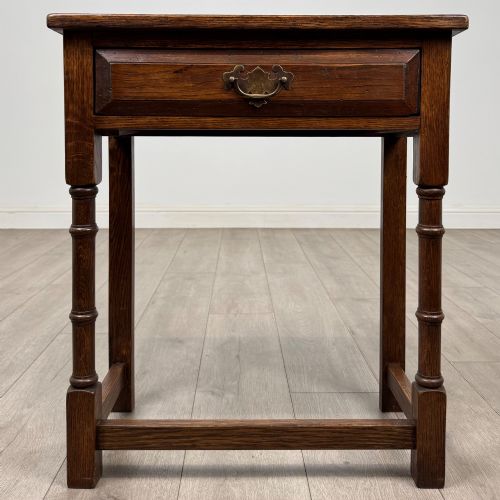
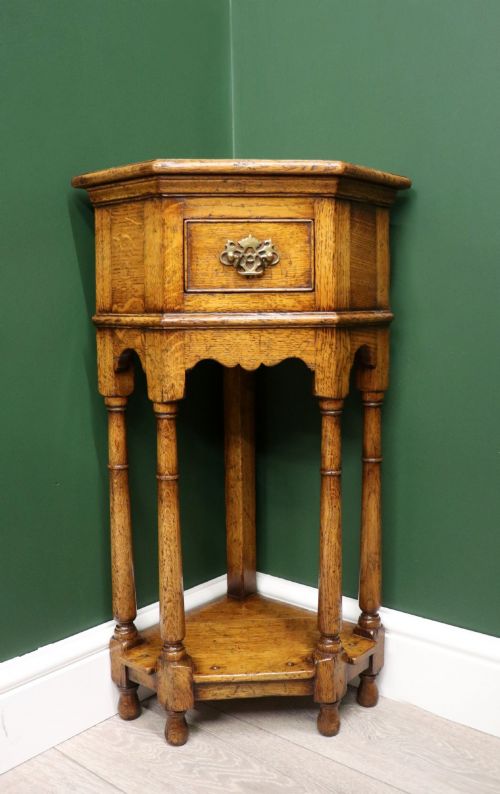
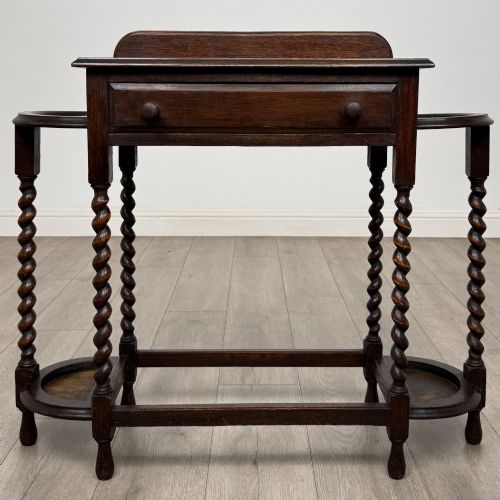
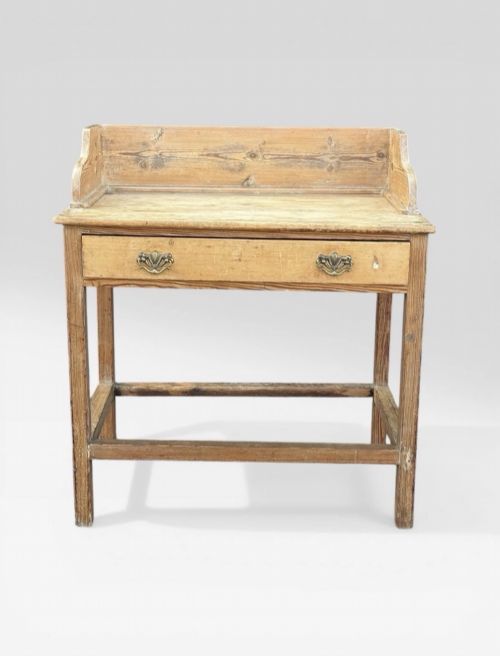


Hall Stand with Drawer
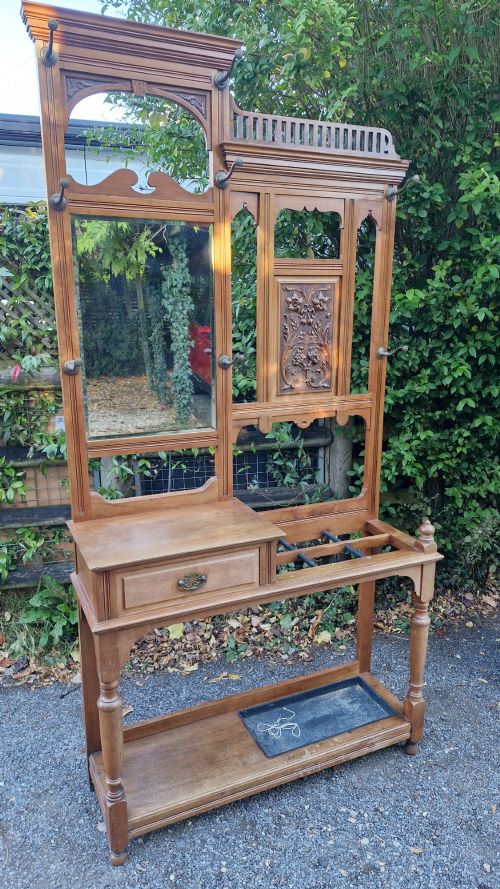
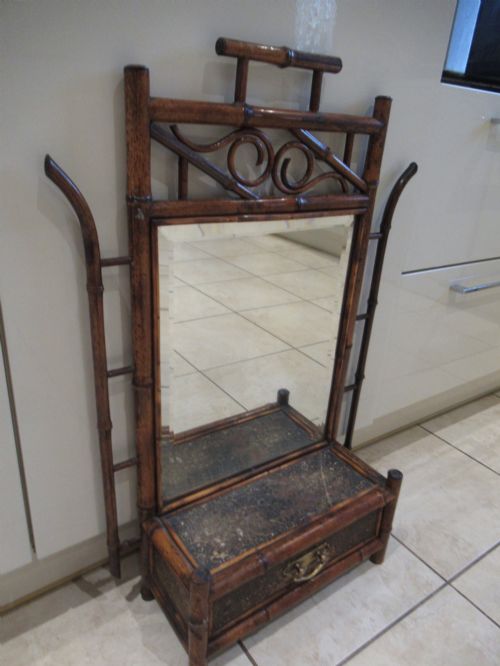
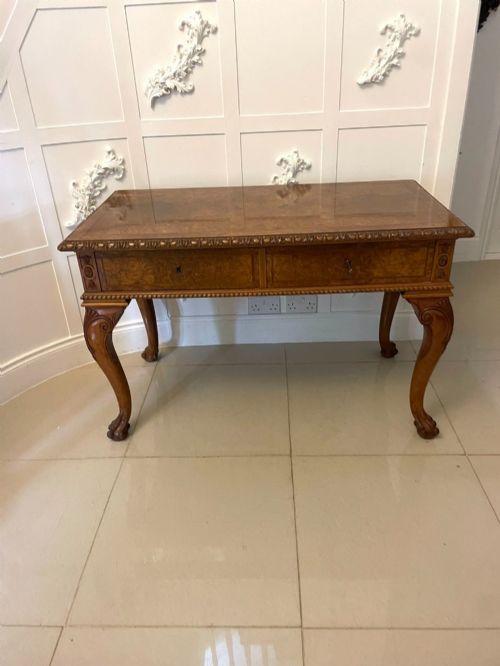
A hall stand with drawer brings practical storage and traditional presence to an entrance, offering a place for coats, hats, and small items.
Hall Stand with Drawer
A hall stand with drawer combines entryway utility with period craftsmanship, appearing across various 19th Century and 20th Century designs. Buyers seek these pieces to anchor a hallway with functional storage, utilising integrated hooks and compartments for daily use.
The pieces on this page span styles from Victorian and Edwardian to Arts and Crafts, alongside regional forms like English Country and Victorian Country. Alongside dedicated stands, related forms such as oak hat and coat stands, washstands, and settles with drawers share similar utilitarian roots.
Materials range from golden oak, mahogany, and burr walnut to painted pine and metal, often incorporating brass hardware and glass elements. These furnishings suit traditional interiors seeking period character combined with straightforward compartment storage.
Construction and Materials
Construction relies heavily on timbers such as oak, mahogany, pine, and burr walnut, shaped into structural frames, panels, and surfaces. Joinery methods support the weight of hanging garments while maintaining stability in narrow hallway spaces.
Metal components, notably brass for hooks or handles, provide durable functional hardware alongside painted pine finishes. Glass elements occasionally appear in related console or side table surfaces, complementing the primary wooden structures.
Hall Stand with Drawer Retail Price Guide 2026
Typical asking prices for hall stand with drawer among the pieces listed under this phrase on Sellingantiques today, from the lower quarter to the upper quarter. They describe what is for sale here now, not the wider market.
Some pine settles arrive with two drawers tucked beneath the seat, ready to hide away stray mittens.
Factors of Quality
Quality depends on the selection of timber, such as figured burr walnut or substantial golden oak, and the integrity of the original construction. Better examples display careful attention to joinery and proportion, ensuring the piece remains sturdy under daily use.
The condition of original surfaces, whether polished mahogany or period paintwork, distinguishes finer examples from heavily altered pieces. Intact brass hardware and well-fitted drawer construction further separate standard utility items from superior regional work.
The Hall Stand with Drawer Glossary
- Hall Stand
- A piece of furniture designed for an entryway, typically incorporating hooks for coats and hats, a stick or umbrella rack, and sometimes a drawer or mirror. These items organise hallway clutter while providing a decorative focal point.
- Arts and Crafts
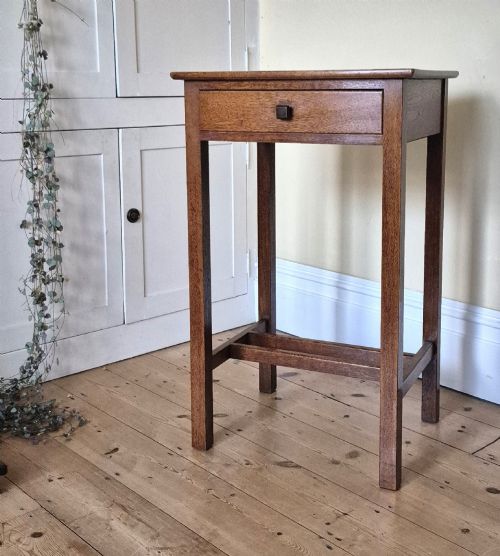
- A design movement valuing traditional craftsmanship, simple forms, and visible construction methods over mass-produced ornamentation. Pieces from this style often emphasise the natural grain of oak.
- Washstand
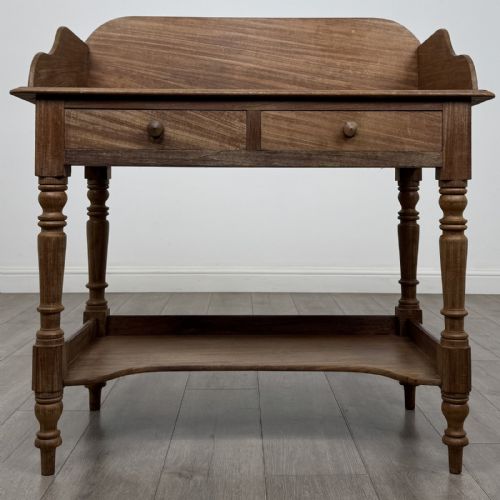
- A wooden piece of furniture originally intended for personal washing, frequently equipped with a drawer, marble or wooden top, and a splashback. They share similar forms with small tables and hall furniture.
- Settle
- A wooden wooden bench with a high back, solid arms, and often a storage compartment beneath the seat, such as drawers. These traditional seats suit hallways and large living spaces.
Hall Stand with Drawer: Frequently Asked Questions
What fits in a hall stand drawer?
The drawer typically accommodates small everyday items such as keys, gloves, post, and small accessories. This keeps hallway surfaces tidy and ensures essential items remain close to the door.
Depending on the specific dimensions of the piece, deeper drawers can also hold dog leads, scarves, or shoe care items.
How do I date an oak hall stand?
Dating relies on examining construction techniques, hardware, and stylistic indicators such as Edwardian or Victorian revival details. Oak selection, from early Victorian golden oak to later 1920s interpretations, also offers clues.
Comparing the joinery methods and any incorporated brass elements to known period standards helps narrow down the decade of manufacture.
Are painted pine stands original?
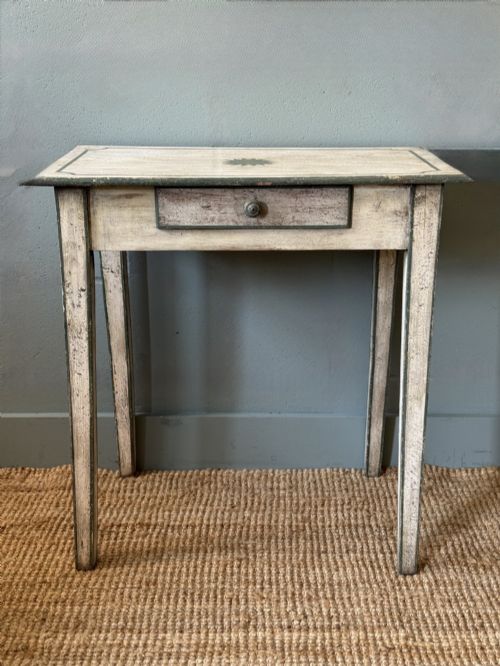
Many 19th Century pine pieces feature painted finishes that are either original or applied during a later period of use. Examining the wear patterns and underlying layers helps determine the history of the finish.
Rustic pine washstands and side tables frequently utilised paint to protect the wood and suit domestic interiors.
Where should I place a hall stand?
A hall stand belongs in an entryway, foyer, or passage where coats, hats, and umbrellas require convenient storage. Placing it against a sturdy wall ensures stability, especially for tall coat and hat stands.
Consider the clearance needed for doors and drawers when positioning the piece in a narrow hallway.