


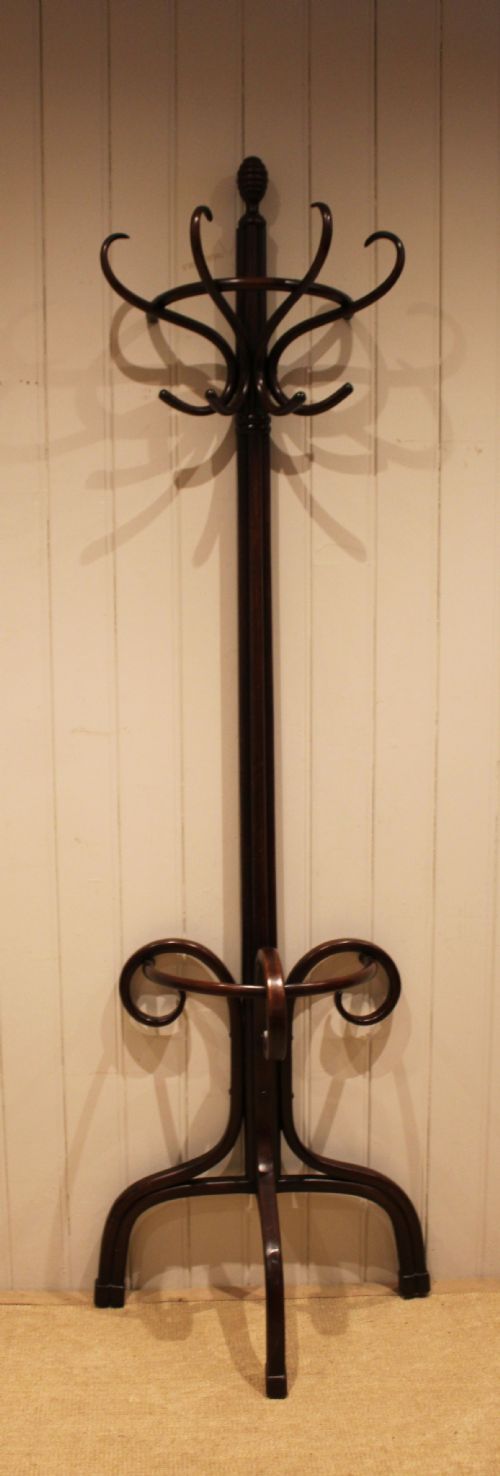


Mahogany Coat Tree
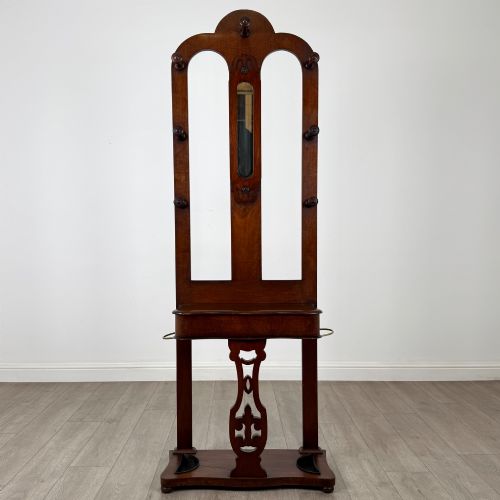
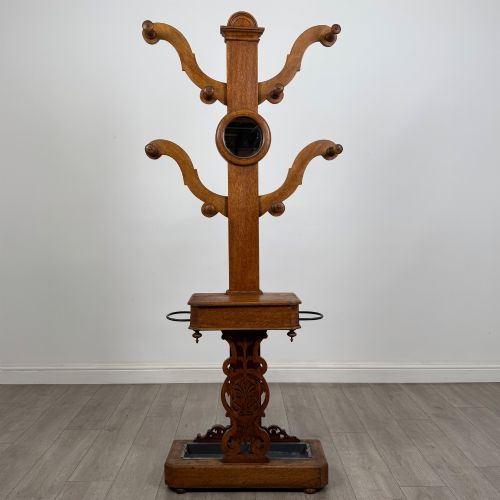
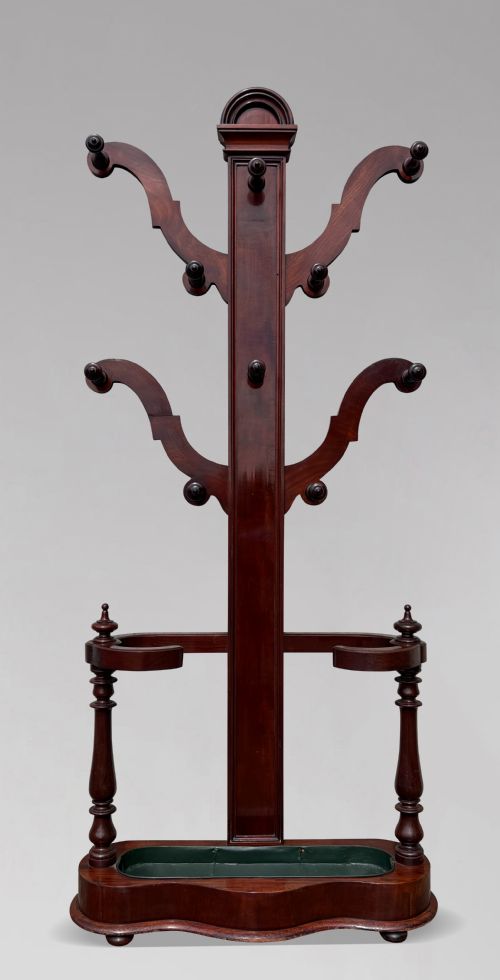
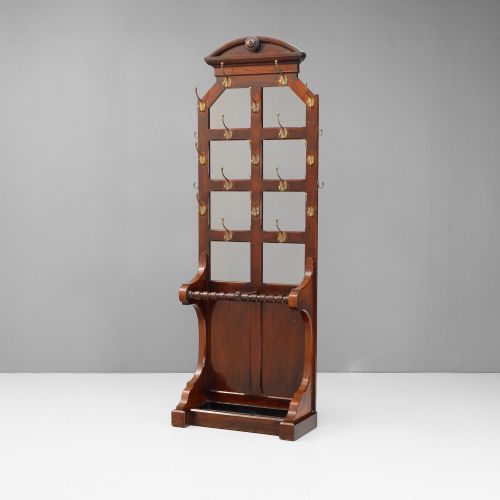
These mahogany coat tree pieces are heavy, upright pieces of hallway furniture designed to hold hats, coats and umbrellas.
Mahogany Coat Tree
A mahogany coat tree is a tall hallway furnishing designed to hold outdoor garments, hats and umbrellas near the entrance of a home. When searching this phrase, a buyer is looking at a functional piece of entrance furniture rather than a domestic seating item.
The version most commonly met on this page is the Victorian hall stand, constructed from mahogany and often incorporating a mirror, a marble shelf and umbrella wells. These examples typically date from the nineteenth century, spanning decades such as the 1850s, 1860s, 1870s, 1880s and 1890s.
Beyond standard upright hall stands, variations include hanging coat racks, folding clothes hanging racks, riding and boot racks, and Viennese bentwood hat racks. These forms share the primary purpose of garment storage while differing in how they mount to a wall or stand upon the floor.
Materials and construction
Mahogany forms the primary structural timber for these items, shaped through period joinery and cabinet-making techniques. Makers selected this dense wood for its durability and rich grain, often enhancing the surface with carved ornamentation.
Secondary materials such as brass, cast iron, iron, glass and ceramic appear frequently as hooks, drip pans, or decorative tile inserts. Marble frequently tops the central shelf or console area, providing a hard, moisture-resistant surface for keys or coins.
Mirrors set into the upper backboards of larger Victorian examples required secure framing and bevelling techniques. Hat and coat hooks were cast in brass or iron and screwed firmly into the wooden uprights to bear heavy winter garments.
Several Victorian hall stands include built-in key boxes and riding boot racks, proving that nineteenth-century households took losing their door keys and muddy footwear very seriously.
Judgements of quality
Quality in a mahogany coat tree rests on the integrity of the timber framing, the weight and casting finish of the metal hooks, and the integration of secondary elements like marble and tiles. Heavier, larger hall stands with structural carving represent the more ambitious end of nineteenth-century production.
The presence of fitted accessories, such as original brass drip pans, matching umbrella wells, bevelled mirror glass, and intact ceramic tiles, separates a complete piece from one that has lost its original components over time. The solidity of the central column or backboard determines how well the structure bears the weight of heavy coats.
Ellen E. Houghton of Minton
The Mahogany Coat Tree Glossary
- Hall stand
- A tall hallway piece combining coat hooks, a hat shelf, a mirror, and umbrella storage. This form dominates the nineteenth-century selection.
- Bentwood
- Wood softened by steam and bent into curved shapes, typical of lighter coat and hat racks from the late period. This technique produced fluid, light frames without traditional joinery.
- Drip pan
- A metal tray placed at the base of a stand to catch water from wet umbrellas. These are often removable for cleaning.
- Riding rack
- A specialised variant designed for equestrian boots, crops, and riding gear alongside standard coats. These items reflect the specific domestic requirements of nineteenth-century country houses.
- Arts and Crafts
- A design movement prioritising handcraftsmanship and simple construction, seen in inlaid mahogany hall stands from around 1900. Pieces in this style move away from heavy Victorian ornamentation towards honest material expression.
Mahogany Coat Tree: Frequently Asked Questions
What is a mahogany coat tree?
A mahogany coat tree is a tall hallway furnishing designed to hold outdoor garments, hats and umbrellas near the entrance of a home.
Most examples seen here date from the Victorian period and incorporate upright wooden framing with integrated metal hooks and umbrella storage.
How were these pieces used?
These items stood in the entrance hall or vestibule of a house to receive the hats, coats and walking sticks of residents and visitors upon arrival.
The marble shelf and small boxes or trays served as a convenient place to leave keys, coins or calling cards.
How do I live with a hall stand?
Living with a hall stand requires adequate vertical clearance in an entranceway or hallway, as these pieces are typically tall and command considerable visual weight.
Ensure the stand is placed on a level floor and positioned where its hooks can be accessed easily without obstructing doors or walkways.
How do I tell periods apart?
Periods are identified through decorative vocabulary, timber treatment and structural form, ranging from heavy Victorian carving to simpler Arts and Crafts inlay.
Earlier nineteenth-century pieces often feature solid mahogany columns and substantial cornices, while later examples incorporate bentwood or cleaner linear profiles.