
19th Century Coat Stand
Choosing a 19th century coat stand brings both practical hallway storage and striking historical craftsmanship into the home.
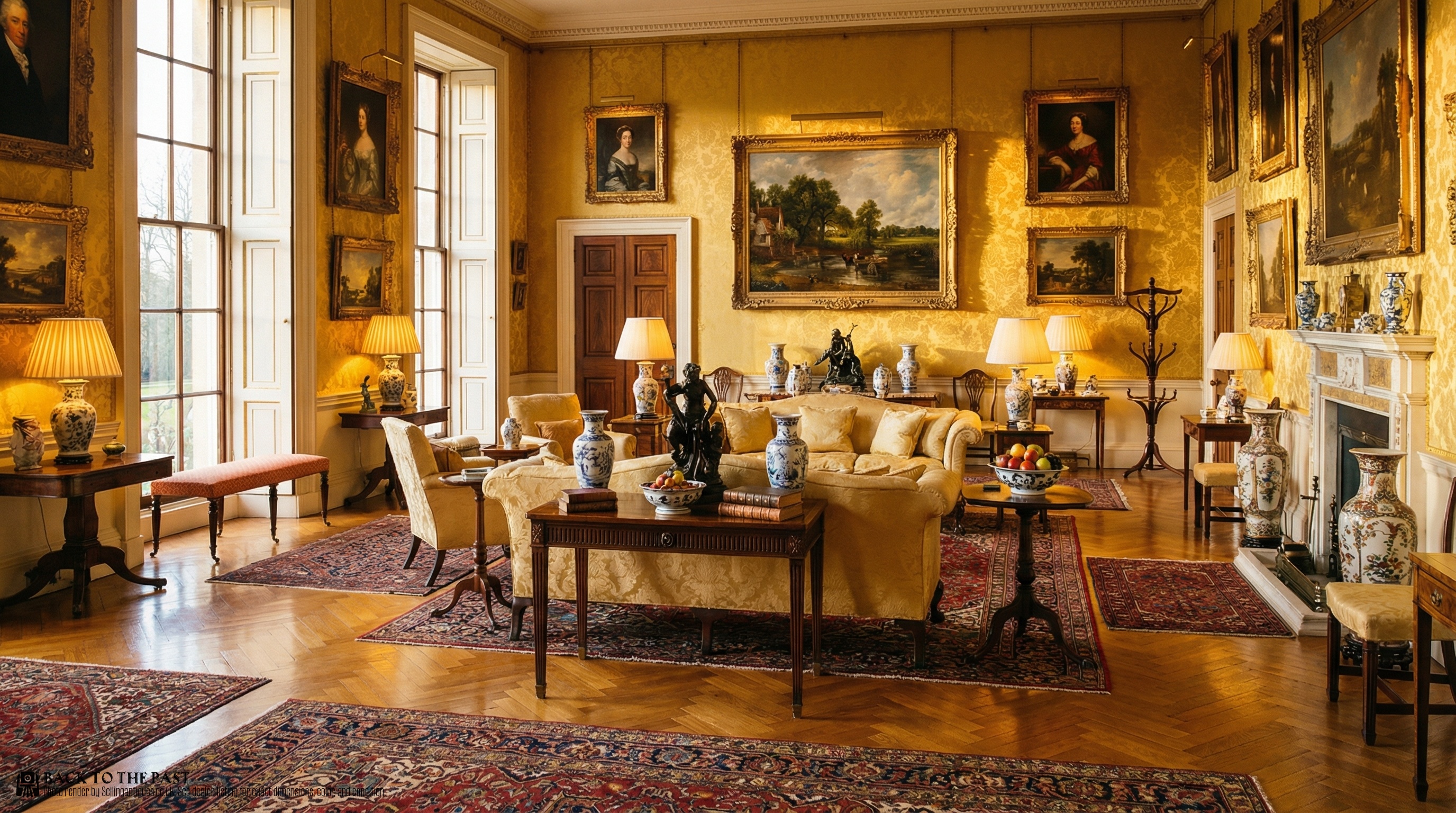
19th Century Coat Stand
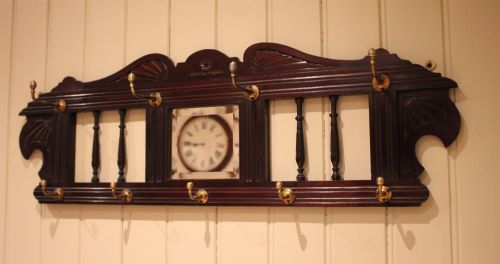
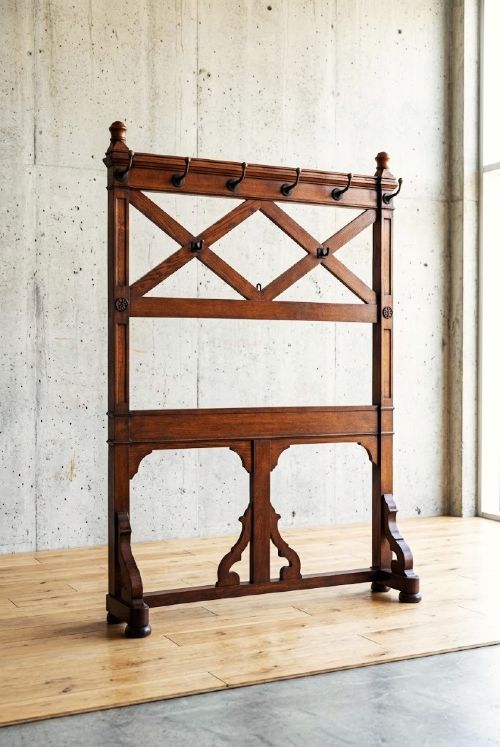
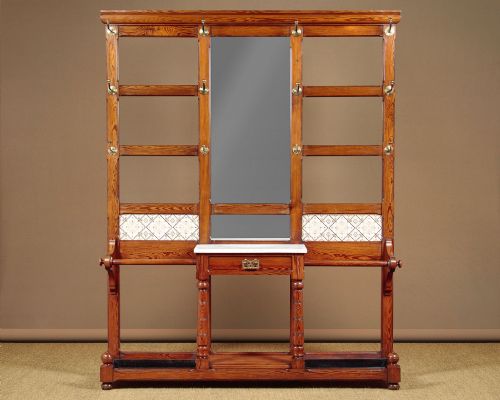
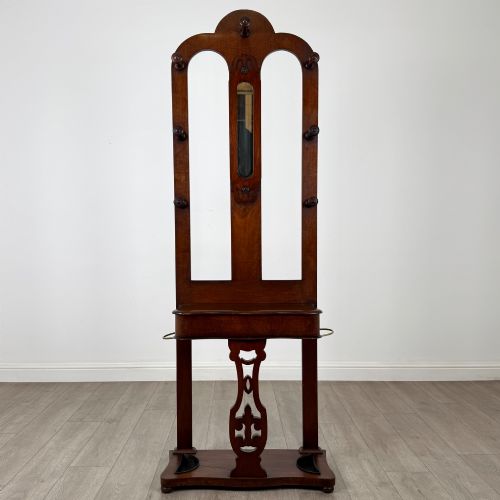
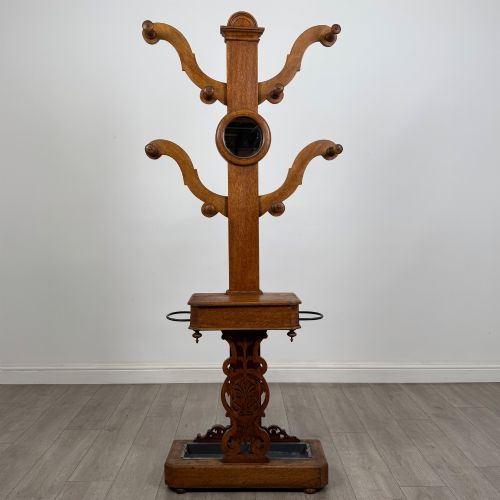
A 19th century coat stand serves as a traditional hallway fixture designed to hold outerwear, hats, and umbrellas. The selection spans robust freestanding pieces, wall-mounted racks, and combined hall stands featuring integrated mirrors and marble shelves.
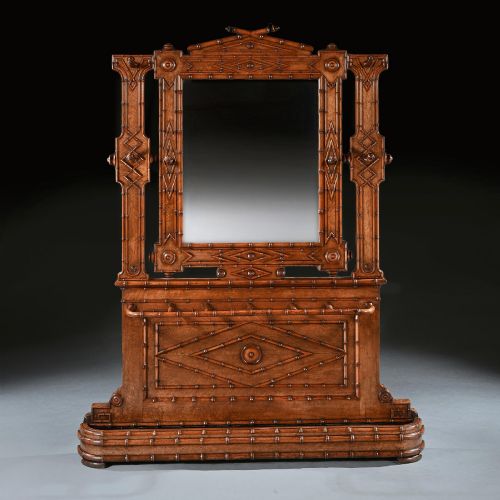
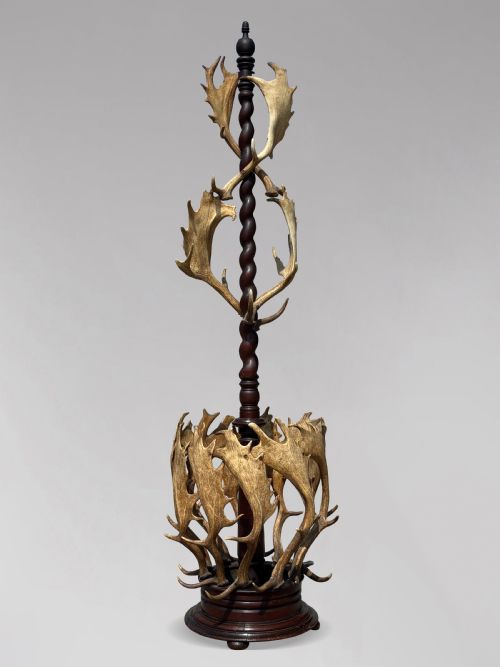
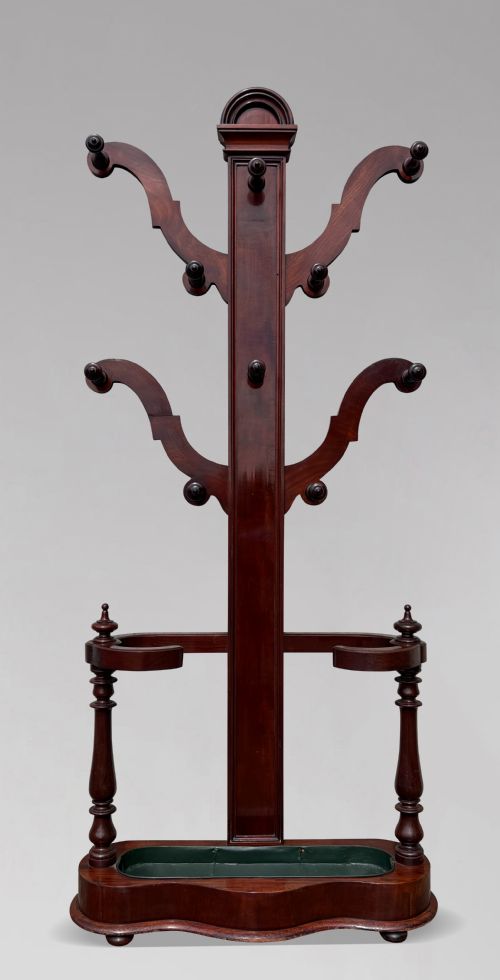
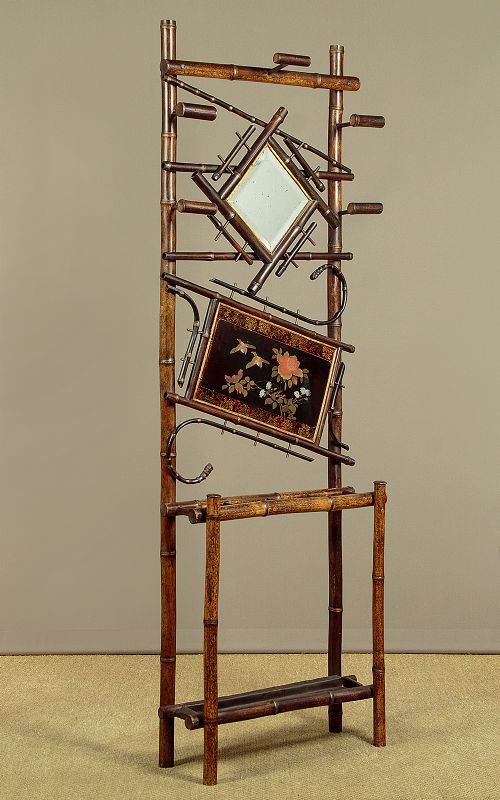
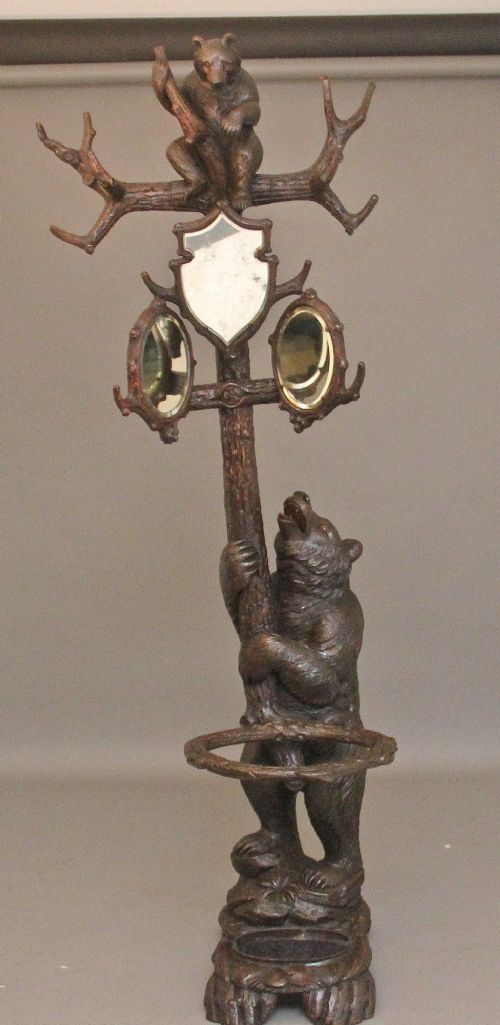
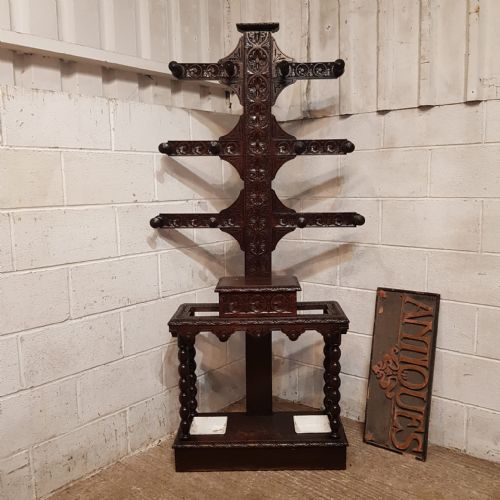
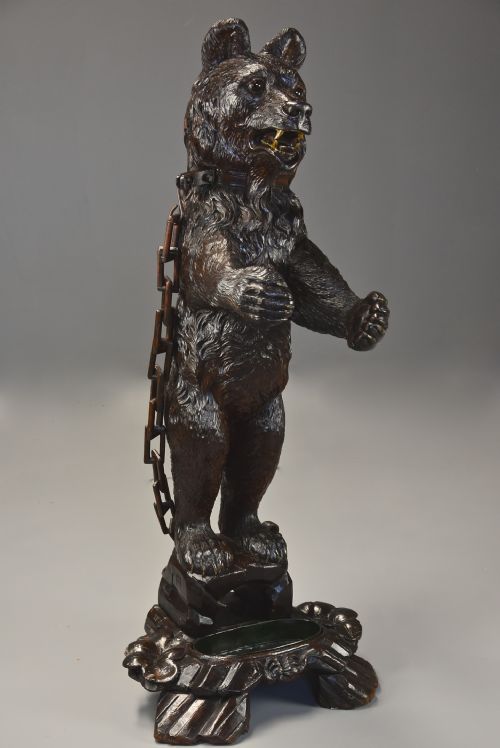
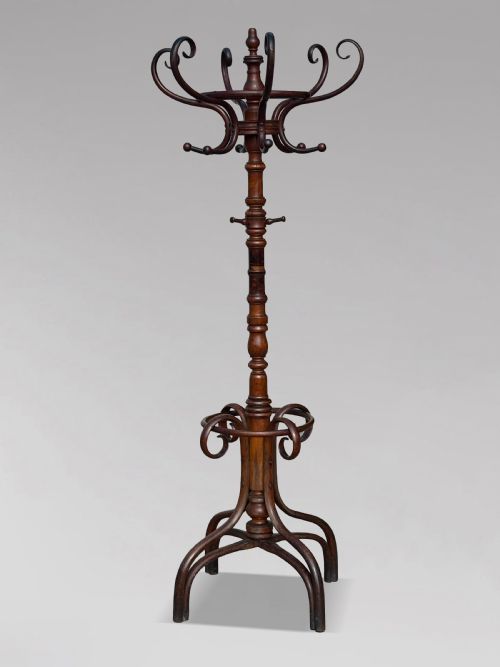
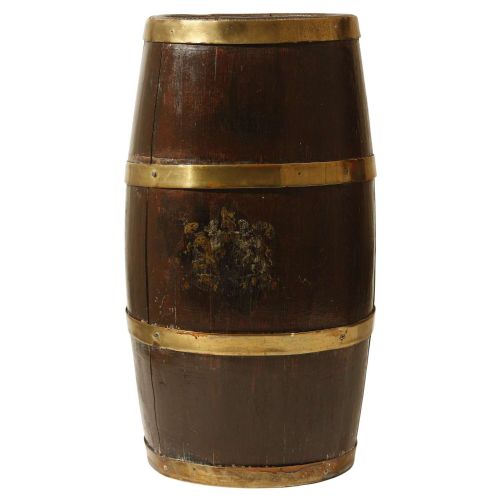
The objects frequently appear in styles such as Victorian, Gothic Revival, and Black Forest carvings, alongside bentwood designs and Aesthetic Movement faux bamboo. Common forms include hall trees, robe stands, and barrel-shaped umbrella holders originating from British, French, and Swiss workshops.
Materials and construction
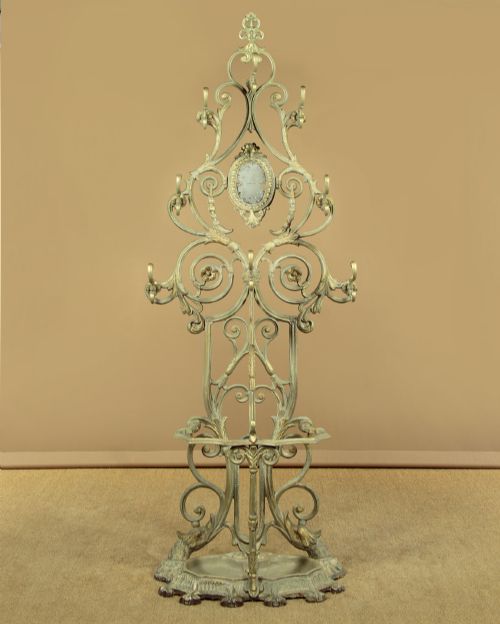
Cabinetmakers utilised dense timbers including solid oak and mahogany alongside birch, pine, and linden wood for carved elements. Bentwood construction involved steaming and curving wood into fluid shapes, while alternative models employed cast iron, brass, and taxidermy horns.
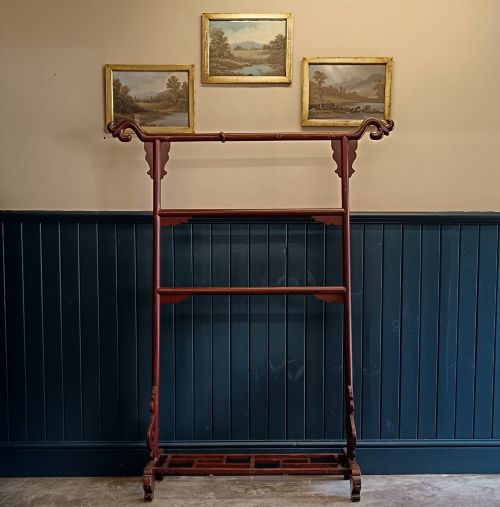
Surface treatments range from hand-carved animal figures in Black Forest pieces to lacquered finishes on Chinese clothes racks. Functional additions include fitted brass braces, metal drip trays for umbrellas, and inset bevelled mirrors.
Listings feature a wide range of materials, combining traditional hardwoods like mahogany and oak with cast iron, horn, and glass.
Indicators of quality
Quality shows in the depth and precision of the hand-carved details, particularly in figurative Black Forest works depicting bears or chamois heads. The choice of materials also dictates standard, separating standard pine or bentwood items from exhibition-grade carved oak and fine mahogany structures.
Structural integrity relies on the original joinery and the survival of integrated components such as mirror plates, marble shelves, and brass hardware. Labelling by known makers or foundries adds documented provenance to the construction.
J Parker of Woodstock·Fischel·Falkirk Foundry·Thonet
The 19th Century Coat Stand Glossary
- Bentwood
- Wood softened by steam and bent into curved forms. This technique created lightweight yet sturdy hat and coat stands during the Victorian era.
- Black Forest
- A regional style of intricate wood carving originating from Switzerland and Germany. These pieces typically feature realistic animals like bears, deer, and stags.
- Hall Stand
- A multi-functional hallway furnishing combining coat hooks, a hat shelf, an umbrella stand, and frequently a mirror or glove drawer.
- Faux Bamboo
- Wood turned and painted to imitate natural bamboo stalks. This finish became popular during the Aesthetic Movement and Japonisme period.
- Gothic Revival
- An architectural and decorative style inspired by medieval design. Pieces often feature pointed arches, heavy tracery, and solid oak construction.
19th Century Coat Stand: Frequently Asked Questions
How do I care for antique wood?
Keep wooden hallway pieces away from direct heat sources and sudden temperature shifts to prevent the timber from splitting. Apply a suitable wax polish periodically to nourish the surface.
Avoid using harsh chemical sprays or excess water when cleaning carved details or brass mounts. A soft cloth removes everyday dust effectively.
Are these stands suitable for modern hallways?
Many historical designs feature narrow footprints specifically intended for compact entrance spaces. Freestanding or wall-mounted versions offer practical hanging capacity without demanding extensive floor area.
Their varied materials allow them to complement both traditional interiors and contemporary minimalist hallways.
How do I distinguish between periods?
Early Victorian examples frequently use heavy mahogany or cast iron with formal architectural detailing. Later 19th century items often embrace lighter bentwood frames, bamboo styling, or playful Black Forest animal carvings.
Examining the construction methods and fastener types helps confirm the approximate decade of manufacture.