
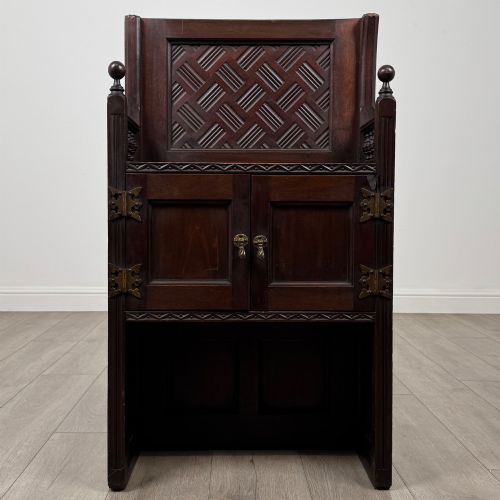
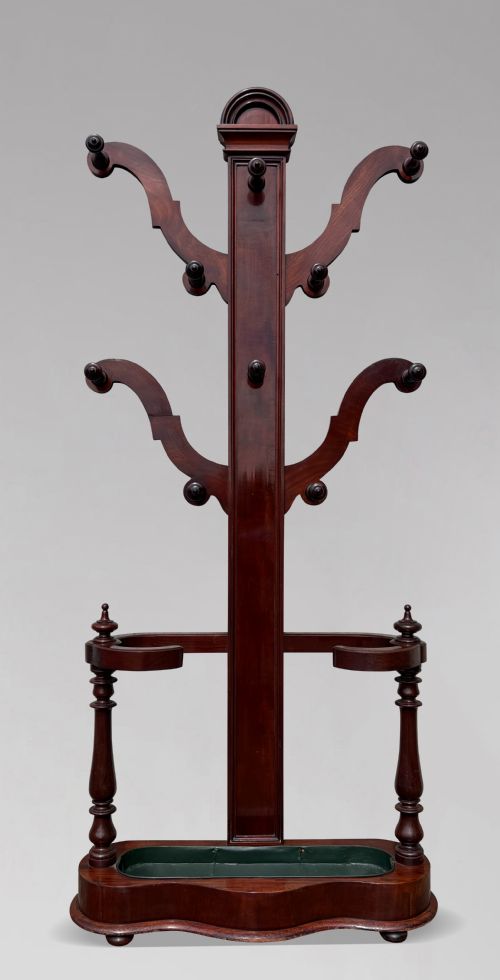
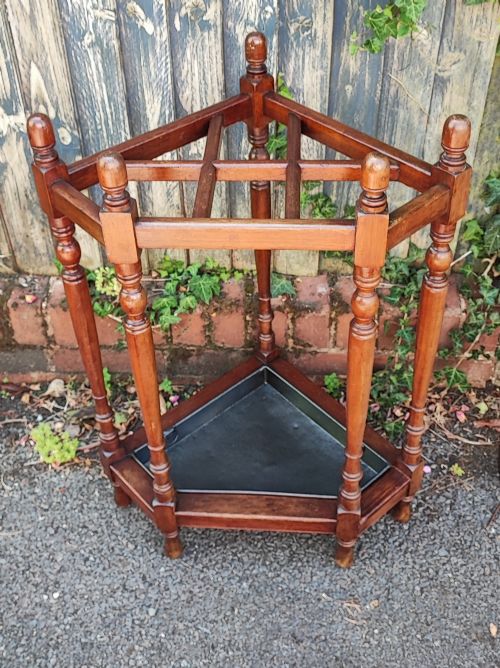
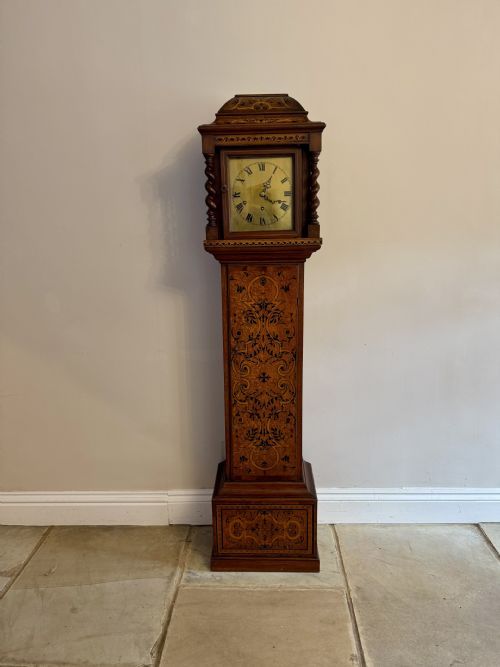

Edwardian Mahogany Hall Stand
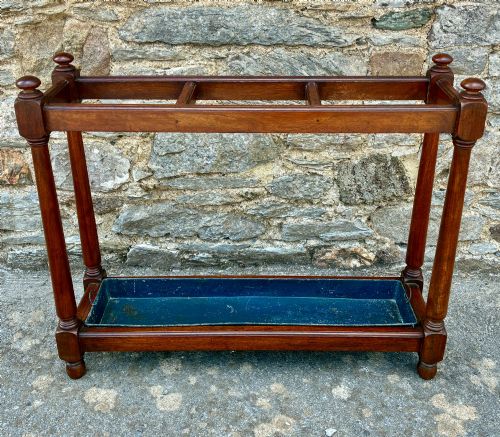
An edwardian mahogany hall stand brings practical elegance to an entrance hall, offering a structured place for hats, coats, sticks and umbrellas.
Edwardian Mahogany Hall Stand
When you search for an edwardian mahogany hall stand, you encounter substantial furniture pieces designed for the entranceways of homes. The pieces appearing here span from the late nineteenth century into the twentieth century, with Edwardian examples dominating the selection alongside late Victorian items.
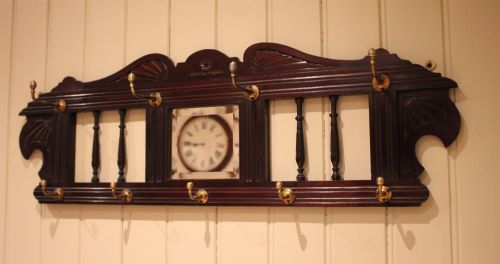
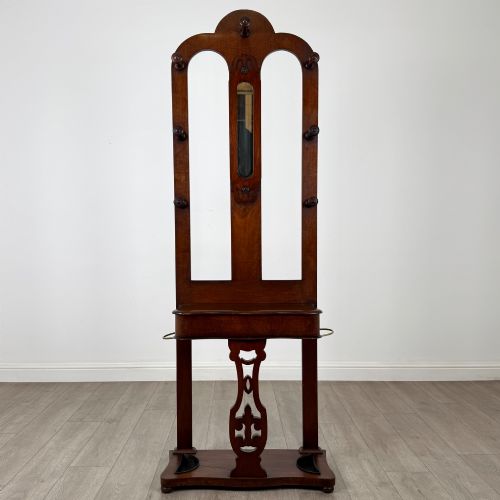
These functional items typically incorporate a vertical wooden frame, a central mirror, brass hooks for garments, and integrated drip pans or troughs at the base for wet umbrellas. Variants include Demi-Lune shapes, mirror-back designs, and pieces featuring Arts and Crafts or Art Nouveau style influences.
The selection demonstrates how makers combined utility with decorative presence in entrance spaces. Many examples incorporate subsidiary elements such as small glove boxes, tile backs, or revolving sections for hats and coats.
How They Were Made
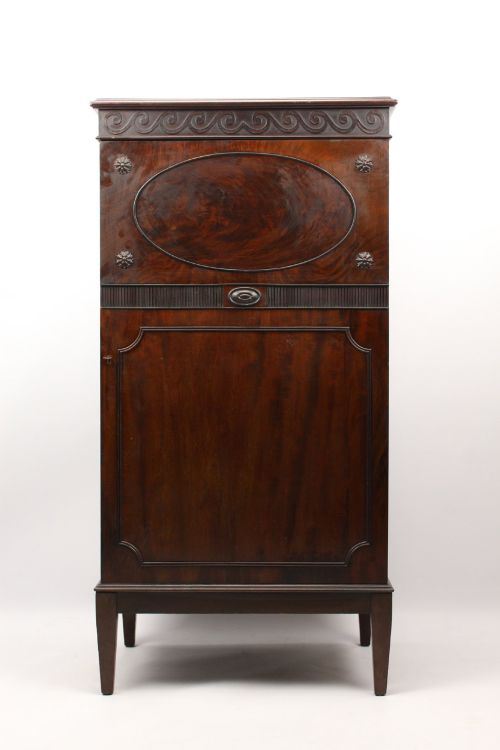
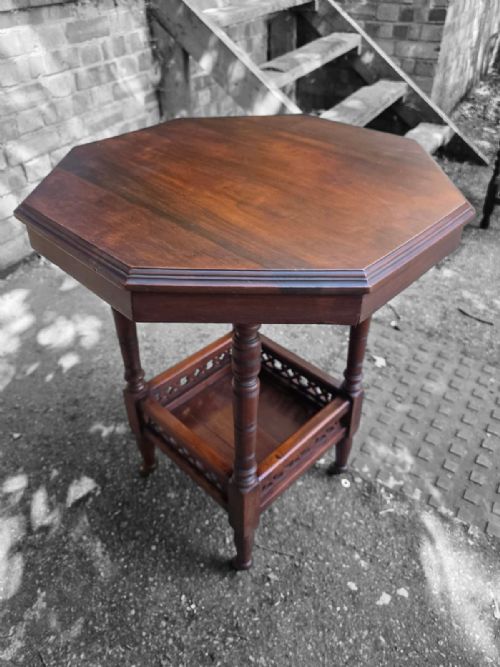
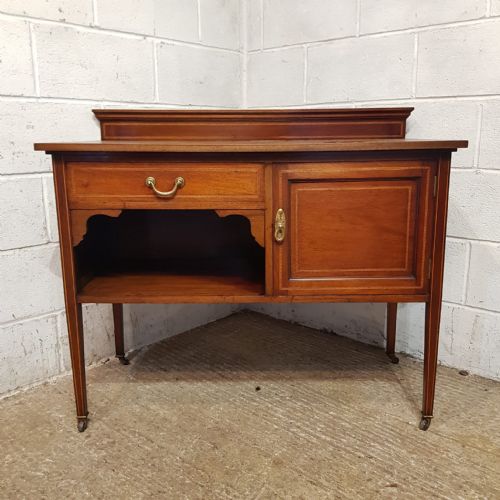
Construction relies primarily on mahogany timbers, frequently enhanced with contrasting inlay work in satinwood or marquetry details. Makers employed solid wood and veneers over structural carcases to achieve curved profiles and flat panel surfaces alike.
Hardware forms an integral part of the fabrication, utilising brass for coat hooks, hanging rails, and pivoting arms. Metal or cast iron components appear in the base structures and drip pans to withstand moisture from umbrellas and walking sticks.
Mirrors set into the upper wooden frames feature bevelled glass plates, secured with traditional wooden mouldings. Back panels occasionally incorporate decorative ceramic tiles alongside the woodwork to protect the wall from damp garments.
Recorded object forms range from traditional umbrella stands and coat racks to complex multi-function mirror-back hall trees.
What Varies in Quality
The sophistication of the timber selection and decorative detailing distinguishes finer examples from simpler utilitarian pieces. Superior items feature finely figured mahogany grain, intricate marquetry inlay, and carefully carved mouldings rather than plain veneered surfaces.
Hardware integrity and completeness define another tier of distinction within the range. Pieces retaining their original matching brass hooks, heavy cast metal drip trays, and unblemished bevelled mirror plates hold greater aesthetic and historical cohesion.
Structural complexity also alters the character of individual pieces, moving from straightforward coat and hat racks to elaborate multi-function furniture with integrated seats, umbrella wells, and pivoting storage compartments.
Denby & Spinks
The Edwardian Mahogany Hall Stand Glossary
- Edwardian
- A period spanning the reign of King Edward VII from 1901 to 1910, though the style extends slightly either side. Furniture from this era often lighter in proportion than Victorian output, favouring refined inlay and neoclassical or Art Nouveau influences.
- Mahogany
- A durable tropical hardwood prized for its reddish-brown colour and stable working properties. It takes a high polish and forms the primary structural and visual material across these entrance pieces.
- Demi-Lune
- A half-moon shape used for the footprint and top surfaces of specific hall stand variants. This curved design allows the furniture to sit flush against an entrance wall while occupying minimal floor depth.
- Marquetry
- A decorative technique of applying thin veneers of different woods to a structure to form pictorial or geometric patterns. It appears frequently on the panels of finer period furniture.
- Bevelled plate
- A mirror glass edge cut and polished at an angle to create a decorative sloping border. This detail reflects light effectively and indicates careful finishing on mirror-back frames.
Edwardian Mahogany Hall Stand: Frequently Asked Questions
What is an edwardian mahogany hall stand used for?
These pieces served as the central storage hub in a home's entrance hallway. They provided a designated location for visitors and residents to hang outdoor garments, hats, and scarves.
Lower sections incorporated specific holders and metal trays to store walking sticks, canes, and wet umbrellas safely off the floor. Many examples also included small compartments for gloves, keys, or calling cards.
How do I care for mahogany hall furniture?
Maintenance requires regular dusting with a soft, dry cloth to prevent the accumulation of particles on carved surfaces and mouldings. Periodic application of quality beeswax helps nourish the timber and maintain its natural lustre.
Keep the furniture away from direct heat sources and strong sunlight to prevent the mahogany finish and wood veneers from drying out or fading over time.
Are the hooks and drip trays usually original?
Many surviving pieces retain their original brass hooks and metal drip pans, which often exhibit matching patination to the frame. Brass components were frequently stamped or cast with specific floral or geometric motifs typical of the period.
Replacement hardware does appear on some examples due to heavy everyday wear in busy hallways. Examining the screw fittings and mounting marks helps determine whether the hardware has remained unchanged since manufacture.
How can I tell Edwardian from Victorian hall stands?
Victorian examples generally present heavier proportions, darker timber finishes, and more robust, formal ornamentation. They frequently lean towards Gothic revival or substantial architectural styling.
Edwardian pieces tend to appear lighter and more graceful, incorporating brighter mahogany tones, delicate stringing, satinwood inlay, and flowing Art Nouveau or Arts and Crafts decorative elements.