
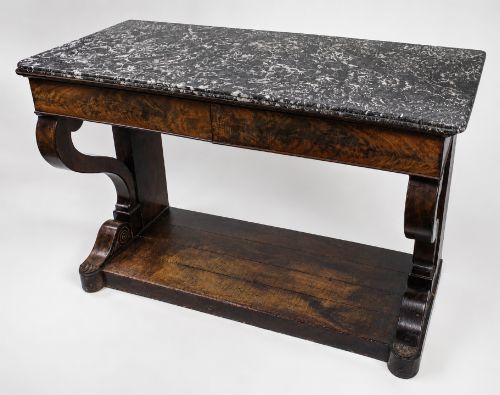
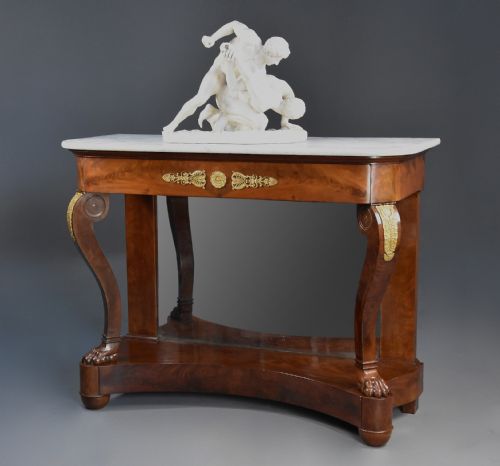

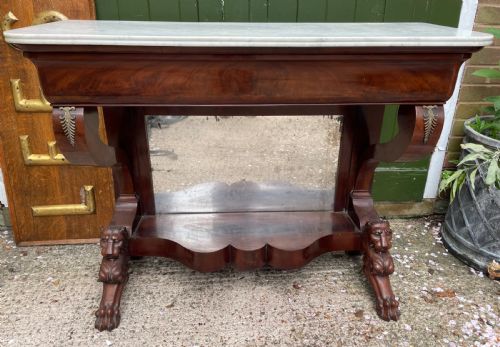


French Restoration Console Table
A French restoration console table is a striking nineteenth-century centrepiece defined by rich mahogany, walnut, or satinwood timbers and cool marble tops.

French Restoration Console Table
A french restoration console table represents nineteenth-century cabinet-making, often found paired with matching trumeau mirrors or topped with smooth marble and fossil surfaces. These pieces emerge from the French Empire, Restoration, and Charles X styles, serving as grand wall-mounted or pier tables within traditional interiors.
The versions most commonly met on this page are mahogany console tables dating from the early nineteenth century, frequently incorporating figured timbers and satinwood alongside classic marble tops. Such furniture brings architectural presence and formal proportion to a hallway or drawing room.
How they were made
Cabinet-makers of the nineteenth century constructed these console tables using solid and veneered mahogany, walnut, and satinwood over sturdy wood carcases. Wood inlay techniques added decorative contrast to the timber surfaces, while cast or gilt ormolu and bronze mounts provided structural highlights.
Heavy slabs of marble, including carrara and fossil varieties, were meticulously fitted to the upper surface to create a durable and cool display area. Glass was also integrated, particularly within matching trumeau mirror sets designed to sit above the table base.
Listings feature nineteenth-century French console tables incorporating mahogany, walnut, satinwood, marble, glass, ormolu, bronze, and wood inlay.
What varies in quality
The selection of timber grain largely dictates the visual merit of each piece, with highly figured mahogany and rich satinwood elevating the cabinet-work above plain woods. Superior examples display precise wood inlay and finely cast ormolu and bronze mounts that integrate harmoniously with the primary structure.
The choice and thickness of the marble top also mark the distinction between standard and finer workshop output, alongside the architectural ambition of associated elements like a trumeau mirror. Cohesion in proportion across the timber base and the stone surface separates the more accomplished nineteenth-century creations.
The French Restoration Console Table Glossary
- Console table
- A table designed to stand against a wall, traditionally supported by two front legs or brackets with the rear secured to the wall.
- Trumeau mirror
- A decorative wall mirror featuring an upper panel of painted or carved artwork, frequently designed to sit directly above a matching console table.
- Ormolu
- Gilded bronze ornamentation applied to furniture, popular in nineteenth-century French cabinet-making for architectural accents and mounts.
- Carrara marble
- A type of white or blue-grey marble sourced from Italy, frequently utilised for classical table tops during the nineteenth century.
- Satinwood
- A durable, lustrous timber with a natural golden sheen, often used as a veneer in nineteenth-century decorative furniture.
French Restoration Console Table: Frequently Asked Questions
Where should I place a console table?
These nineteenth-century tables suit entrance halls, reception rooms, and grand living spaces where wall space allows them to anchor the room. Their flat backs mean they sit flush against a wall, often beneath a large mirror or painting.
Because many examples feature delicate marble tops and fine mahogany or satinwood finishes, placement away from direct heat sources and heavy traffic areas helps preserve the timber and stone.
How do I care for the marble top?
Marble requires gentle cleaning with a soft, damp cloth and neutral soap to avoid scratching the polished surface or dulling the natural stone. Acidic liquids like wine or citrus should be wiped away immediately to prevent permanent etching.
Polishing is rarely necessary for antique stone; maintaining a clean, dry surface ensures the marble retains its nineteenth-century character without artificial chemical treatments.
What is a trumeau mirror set?
A trumeau set combines a wall mirror with a matching console table, creating a unified architectural feature designed for nineteenth-century interiors. The mirror often incorporates decorative woodwork or panels above the glass that echo the design of the table below.
Keeping the paired pieces together preserves their decorative intent and historical context, offering a complete furnishing scheme for a principal room.
How do I distinguish Charles X from Empire style?
Charles X and Restoration period pieces often soften the severe military austerity of earlier French Empire designs by embracing lighter woods like satinwood and figured mahogany. Ormolu mounts became more restrained, allowing the natural grain of walnut and mahogany to take visual precedence.
Both styles belong to the nineteenth century, but Charles X furniture tends toward warmer domestic elegance while retaining classical proportions and marble surfaces.