





Carved Lion Foot Table
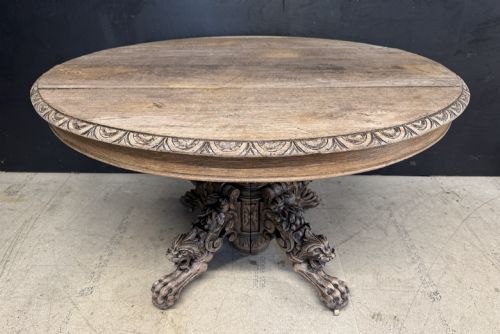
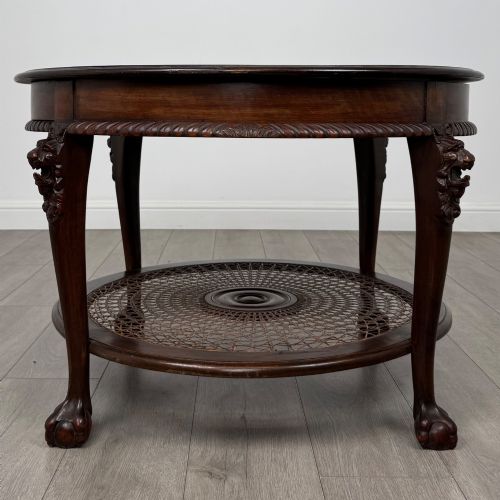
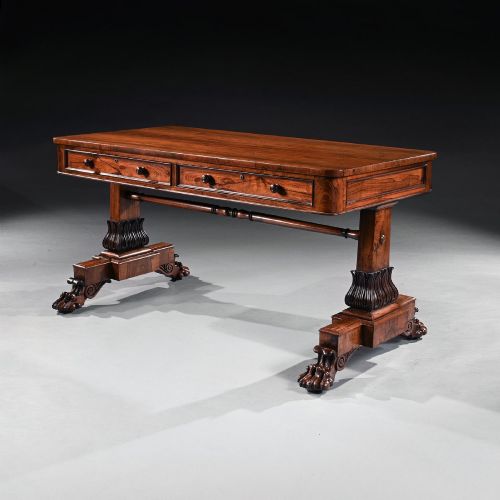
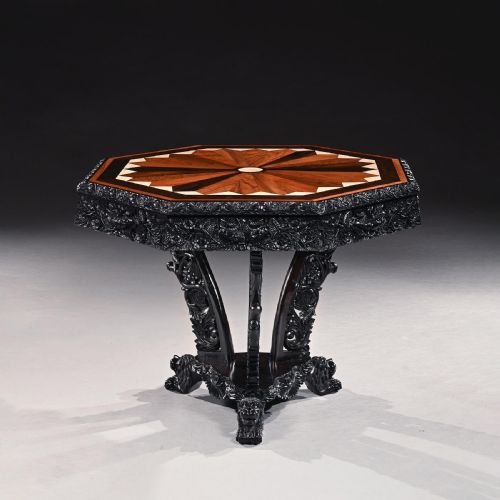
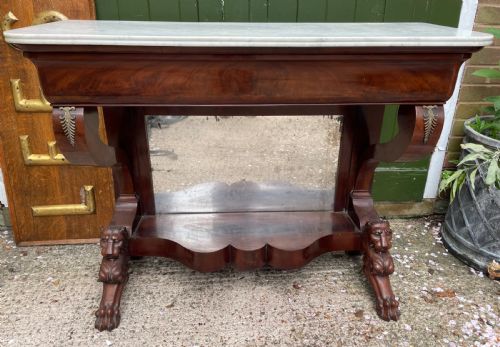
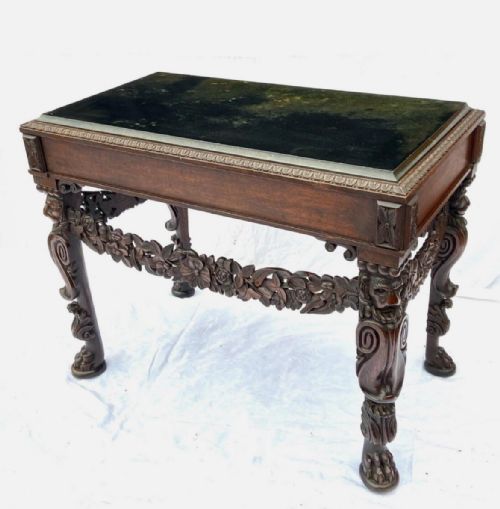
A carved lion foot table brings heavy classical presence to a room, offering robust support through carved timber paws.

Carved Lion Foot Table
When you search for a carved lion foot table, you are looking at substantial antique furniture grounded by animalistic pedestals and supports. These pieces emerge across several periods, including Regency, George IV, Victorian, and Charles X eras.
The versions you are most likely to meet on this page span diverse forms such as centre tables, console tables, dining tables, writing desks, library tables, and side tables. They appear in formats ranging from circular breakfast tables to hexagonal centre tables and marble-topped console pieces.
Origins stretch from British workshops to French Restauration and Ceylonese rooms, showing how widely makers adopted the powerful paw motif. Woods like mahogany, oak, rosewood, and ebony dominate the selections available to collectors.
How they were made
Cabinet makers utilised dense timbers like mahogany, oak, ebony, and rosewood, often selecting flame grain veneers to cover core structures. Some regional pieces incorporate bone inlay and specimen wood details to enrich the primary surface.
Carvers shaped the timber feet by hand, articulating claws and fur to anchor heavy pedestals or legs. Certain circular and console tables integrate heavy carrara marble tops, resting directly upon the wooden frames.
Periods represented include the 18th century, Regency, George IV, and Victorian eras.
What varies in quality
The standard of carving defines the upper tier of these pieces, distinguishing sharp, deep relief work on the lion paws from softer, more generic moulding. Depth and anatomical definition in the wooden claws show the hand of a skilled artisan.
Choice of materials also dictates the grade of the piece, with figured flame mahogany, rich ebony, and inset specimen woods elevating the overall presence. Integrated marble slabs and firm structural joinery further separate standard production from exceptional examples.
Gillows
The Carved Lion Foot Table Glossary
- Centre table
- A freestanding piece designed to be viewed from all sides, placed in the middle of a room rather than against a wall.
- Console table
- A table fixed to a wall or supported by front legs, frequently topped with marble and positioned in hallways or formal reception rooms.
- Library table
- A large sturdy table intended for the storage and consultation of books, often fitted with drawers beneath the top.
- Specimen wood
- Furniture decoration using small geometric pieces of various contrasting timbers to create decorative patterns.
- Gilt wood
- Timber coated with a thin layer of gold leaf or gold paint to produce a bright metallic finish.
Carved Lion Foot Table: Frequently Asked Questions
Where should I place a centre table?
A centre table works best when given open space in the middle of a room, allowing access from all sides.
Because these pieces feature finished detail around the entire perimeter, they function well as focal points in large reception spaces.
How do I care for a marble top?
Wipe marble surfaces gently with a damp cloth and avoid acidic liquids that can etch the polished stone.
Use coasters and placestats to protect the natural material from stains while maintaining the original sheen.
What defines a George IV table?
George IV furniture leans heavily into classical revival aesthetics, displaying bold proportions and dark tropical timbers.
Carved details during this era often showcase heavy animalistic supports like lion paws to project strength and stability.
Are these tables suitable for dining?
Certain forms like breakfast and dining tables are built specifically for seated meals and daily use.
Console and centre tables serve different purposes, acting primarily as display surfaces rather than dining furniture.