



Art Deco Sofa Table
An art deco sofa table brings geometric clarity and rich timber figure directly to a modern sitting room.
Art Deco Sofa Table
An art deco sofa table combines the linear forms of the interwar period with practical occasional surfaces designed to sit alongside seating. The selection ranges from console tables and side tables to low lounge and coffee formats.
Most examples date from the 1920s and 1930s, displaying characteristic symmetry and streamlined shapes. Pieces originate from British, French, and German workshops, including makers such as Hille.
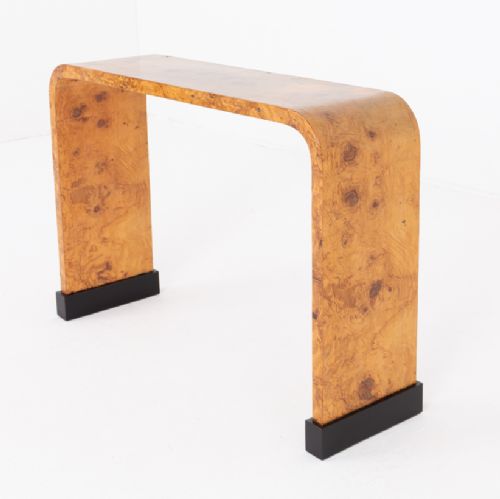
The primary forms include narrow console tables meant for walls or the backs of seating, alongside two tier occasional tables. These are suited for holding lamps, books, or decorative objects within a reception room.
Materials and Construction
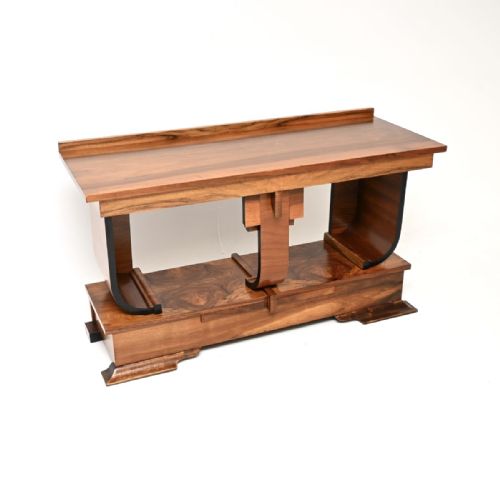
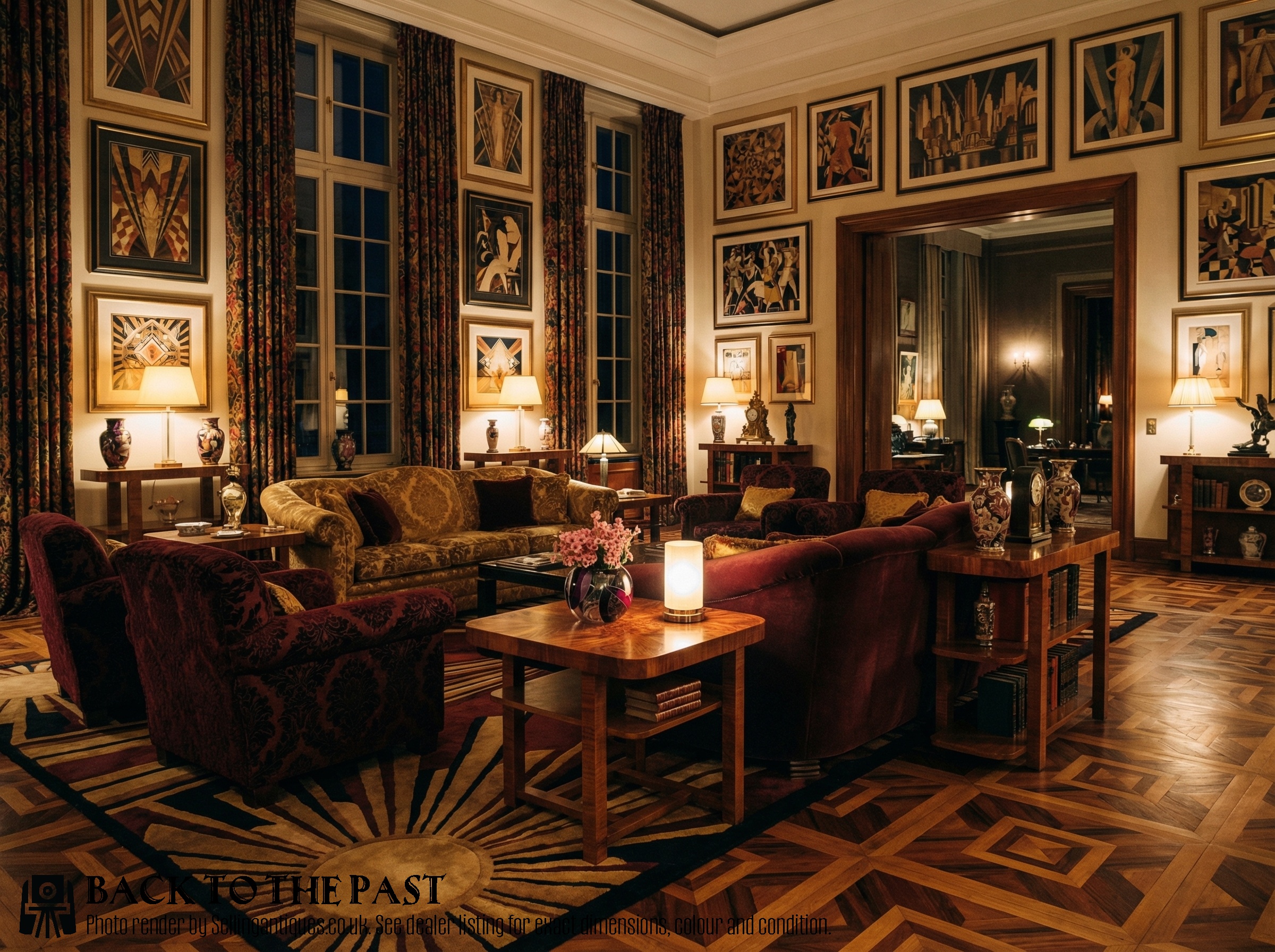
Makers utilised solid woods and applied elaborate veneers to achieve striking visual patterns across the tops and sides. Walnut, burr walnut, figured walnut, and bird's eye maple appear frequently alongside ebonised wood.
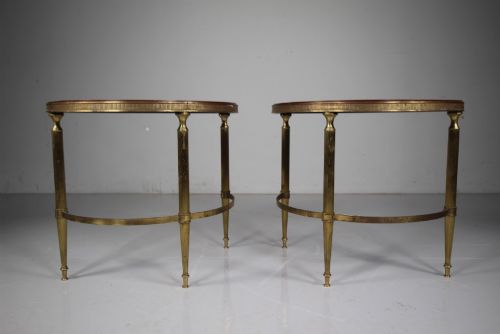
Metal and chrome elements provide contrast against the polished timber surfaces. Some Asian-influenced pieces incorporate glass and teak into the structure.
Art Deco Sofa Table Retail Price Guide 2026
Typical asking prices for art deco sofa table among the pieces listed under this phrase on Sellingantiques today, from the lower quarter to the upper quarter. They describe what is for sale here now, not the wider market.
German workshops once gave bird's eye maple the floor, letting tiny swirling knots steal the show from walnut.
Assessing Quality
The hierarchy of these pieces rests upon the choice of veneer and the skill of its bookmatching. Highly figured burr walnut and complex grain arrangements distinguish the finer items from plain timber variants.
Attribution to known workshops or specific regions like France adds distinction to the construction. The integration of contrasting ebonised details and polished metal accents further elevates the design.
Hille
The Art Deco Sofa Table Glossary
- Veneer
- A thin slice of superior wood applied over a stable secondary timber to display decorative grain. Highly figured veneers define the surface aesthetic of interwar furniture.
- Console Table
- A narrow table designed to stand against a wall or the back of a sofa. These surfaces provide a shallow footprint for display.
- Ebonised Wood
- Timber treated to resemble ebony through staining or painting. This dark finish creates sharp geometric contrasts on art deco pieces.
- Two Tier
- A furniture format featuring an upper display surface and a secondary lower shelf. This provides additional storage space within a compact frame.
- Bird's Eye Maple
- A figured timber showing small swirling dots that resemble bird eyes. It appears on German pieces from the period.
Art Deco Sofa Table: Frequently Asked Questions
How do I style an art deco table?
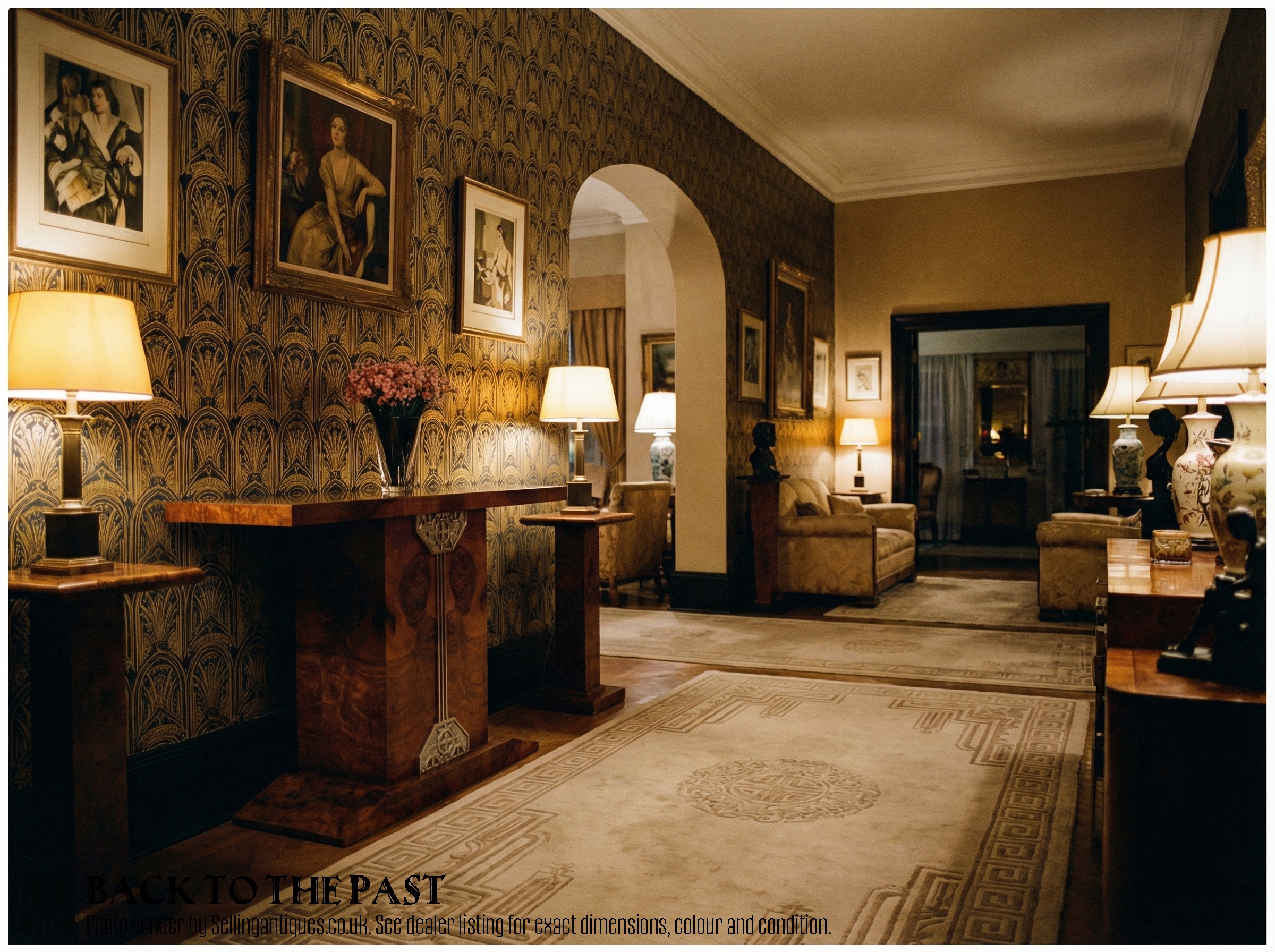
Place the table against a wall or directly behind a sofa to display lamps and decorative objects. The narrow footprint allows it to fit into smaller reception spaces.
Pair the piece with neutral backgrounds to let the figured walnut and chrome details stand out clearly.
What woods were used?
Walnut is the predominant timber seen across these pieces, often utilised in burr or highly figured veneer forms. Ebonised wood and bird's eye maple also appear on specific regional examples.
Makers occasionally incorporated teak and glass into low lounge formats.
How do I date an art deco table?
Most pieces originate from the 1920s and 1930s, aligning with the height of the Art Deco movement. Stylistic indicators include symmetrical geometric forms and streamlined silhouettes.
Makers and origins, such as French workshops or British firms, help contextualise the production period.