




Art Deco Hallway Table
An art deco hallway table brings striking geometric presence into an entrance, offering a surface that anchors the space.
Art Deco Hallway Table
An art deco hallway table takes the form of a console table designed to fit narrow spaces like corridors and entryways. These pieces typically date from the 1920 and 1930 periods, capturing the modernist momentum of the era.
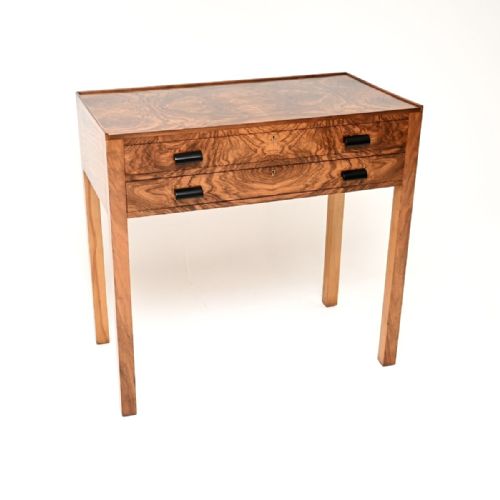
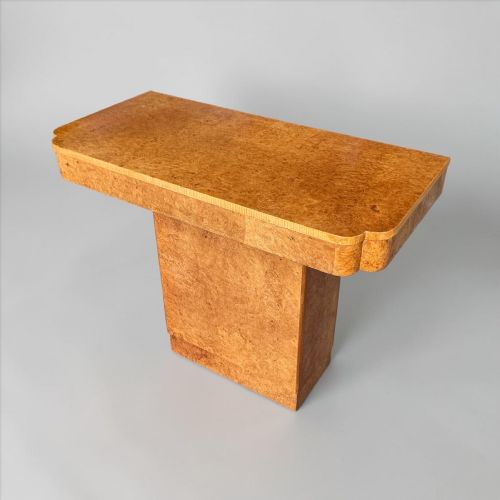
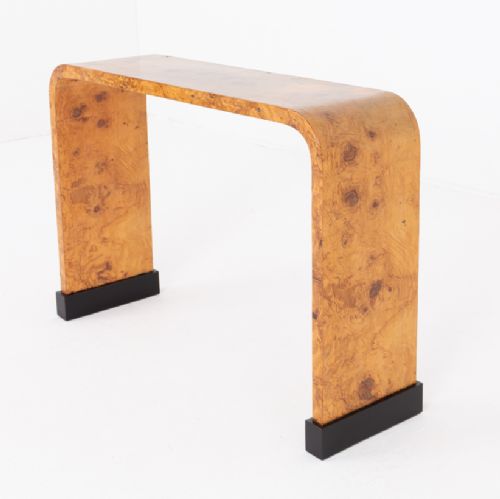
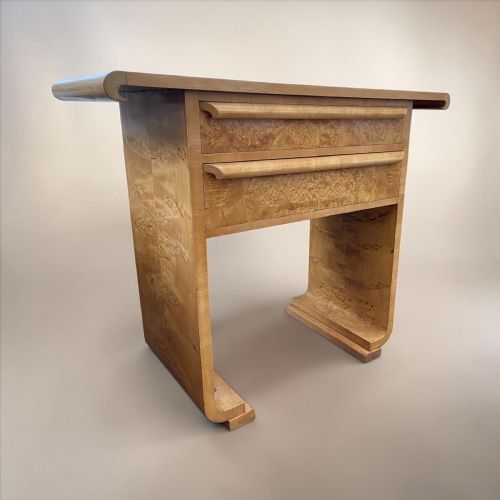
The selections available here include distinguished pieces such as an art deco burr walnut console table by Hille, alongside other console tables from the nineteen-thirties. Each example demonstrates the characteristic architectural lines and bold silhouettes associated with the style.
How They Were Made
Cabinetmakers utilised wood as the primary structural medium, employing solid timbers for frames and supports. Selected cuts provided the foundational strength required for narrow, freestanding furniture.
Surface finish relied heavily on burr walnut and walnut veneers, chosen for their rich, swirling grain patterns. Craftsmen laid these veneers with precision to create symmetrical decorative effects across the tabletop.
Art Deco Hallway Table Retail Price Guide 2026
Typical asking prices for art deco hallway table among the pieces listed under this phrase on Sellingantiques today, from the lower quarter to the upper quarter. They describe what is for sale here now, not the wider market.
Burr walnut forms hypnotic, swirling wooden landscapes across tabletops, giving stationary hallway furniture the wild illusion of movement.
What Varies in Quality
The distinction between standard production and exceptional craftsmanship lies in the selection and application of veneer. Highly figured burr walnut demands expert matching, whereas simpler walnut surfaces display more uniform grain.
Attribution plays a significant role in distinction, marked by documented maker attribution such as Hille compared against unmarked workshop pieces. Structural proportion and the integration of geometric form also separate baseline examples from the finest productions.
Hille
The Art Deco Hallway Table Glossary
- Console table
- A long, narrow table designed to stand against a wall, frequently utilised in hallways and entrance spaces. These pieces provide surface utility without obstructing narrow walkways.
- Burr walnut
- A specialised timber cut from the abnormal growth of a walnut tree, yielding intricate, swirling grain patterns. Cabinetmakers prize this material for decorative veneer work on tabletops.
- Veneer
- A thin layer of superior wood adhered to a secondary timber base to create decorative surfaces. This technique allows makers to display striking grain patterns economically.
- Art Deco
- A design style emerging in the early twentieth century, characterised by streamlined forms, geometric symmetry, and modern materials. It rejects Victorian ornamentation in favour of sleek modernity.
Art Deco Hallway Table: Frequently Asked Questions
What is an art deco hallway table?
An art deco hallway table is a narrow console table designed specifically for entryways and corridors during the 1920 and 1930 eras.
These pieces combine functional surface space with the distinct geometric lines and rich wood veneers characteristic of the period.
Where should I place a console table?
Console tables fit best against flat walls in narrow circulation spaces such as hallways, corridors, and entrance lobbies.
Their shallow depth ensures they remain practical for drop zones without blocking movement through the room.
What materials define these tables?
These tables are constructed primarily from wood, with a strong emphasis on walnut and highly figured burr walnut.
Cabinetmakers used these timbers to showcase dramatic grain patterns across the primary surfaces.
How do I date an art deco table?
Dating relies on stylistic markers from the 1920 and 1930 periods, including streamlined silhouettes and specific veneer techniques.
Maker attribution, such as pieces by Hille, also helps establish the precise era of production.