

1930s Walnut Side Table
A 1930s walnut side table brings warmth and geometric rhythm to a room through rich timber figure and practical tiered design.
1930s Walnut Side Table
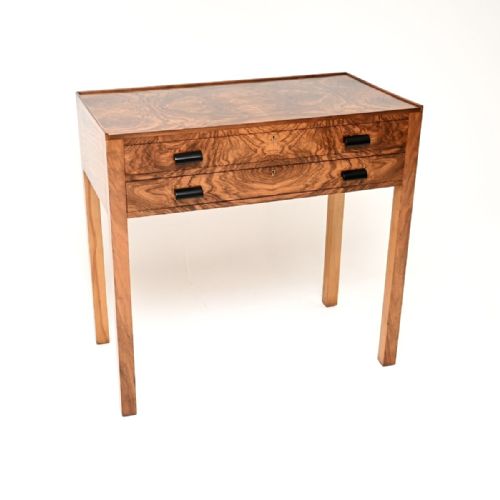
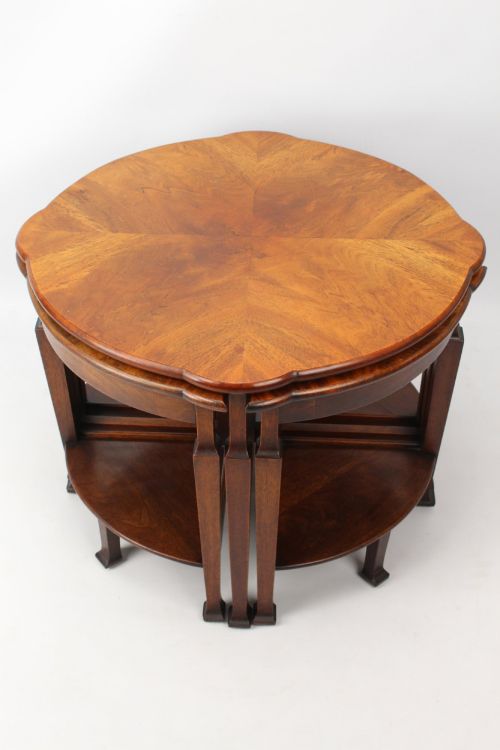
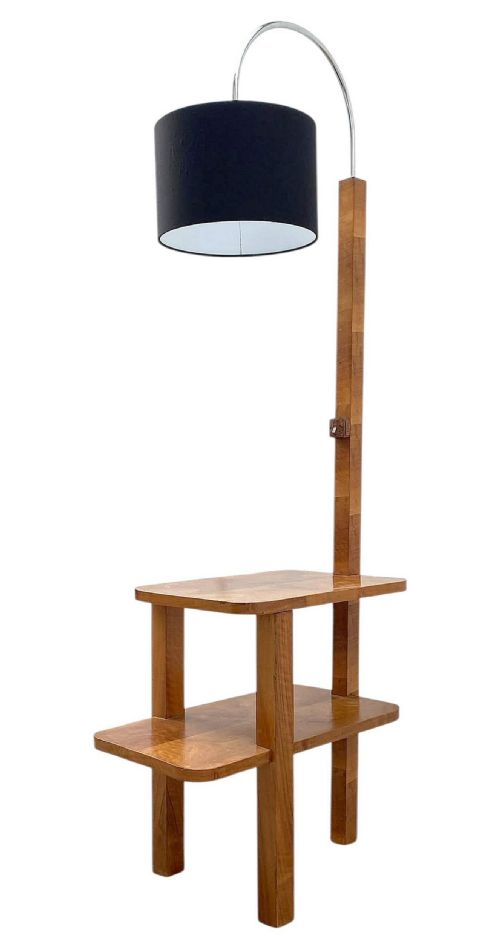
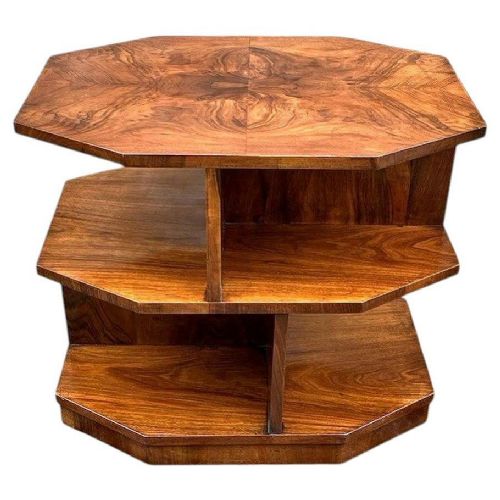
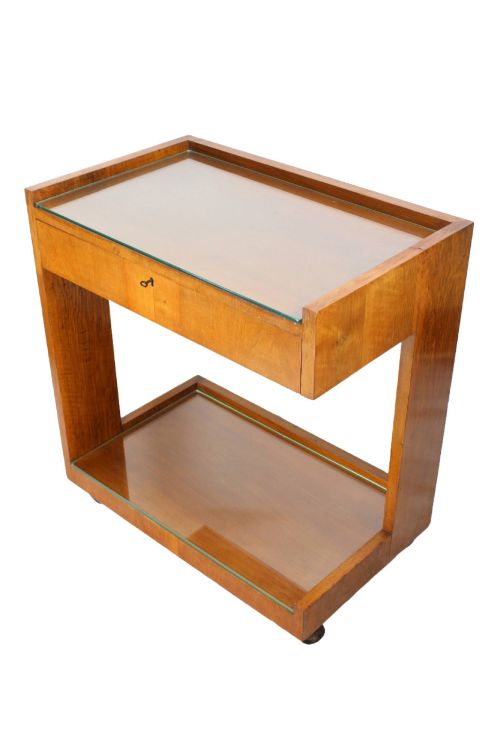
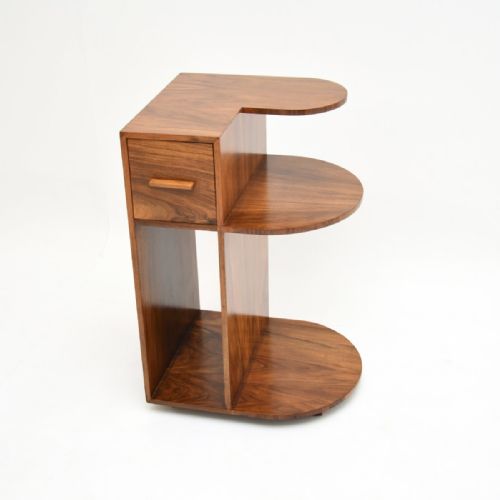
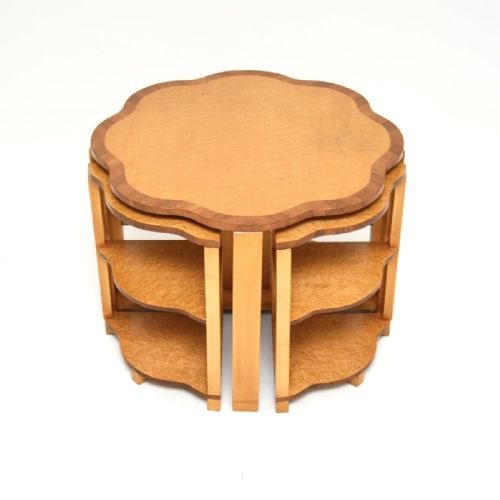
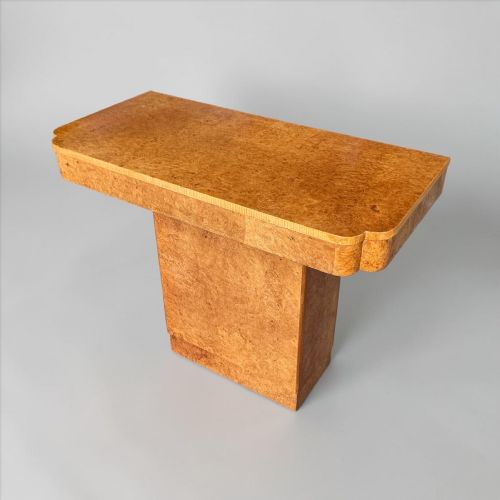
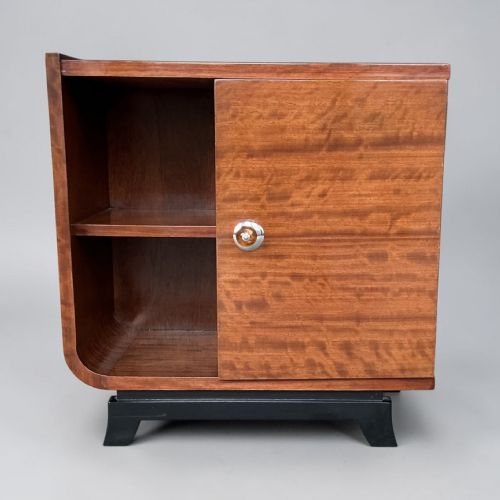
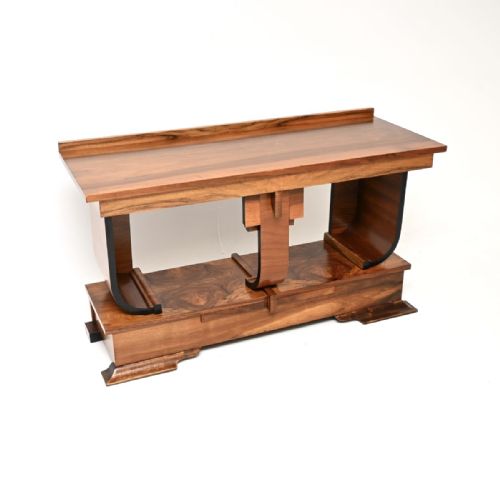
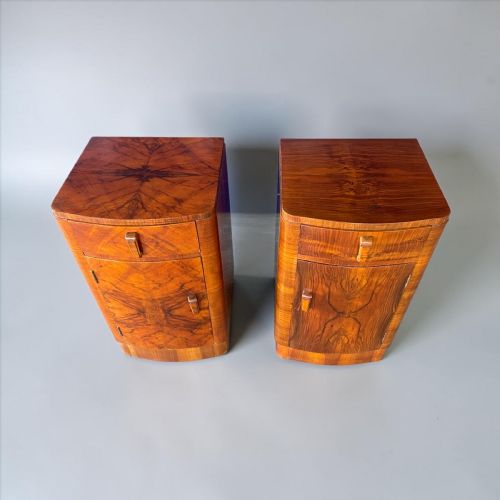
A 1930s walnut side table typically presents itself within the Art Deco style, favouring clean architectural lines, figured grains and occasional contrasting maple or birds eye maple details. The pieces range from single-tier occasional tables to complex nests of five and two-tier coffee trolleys.
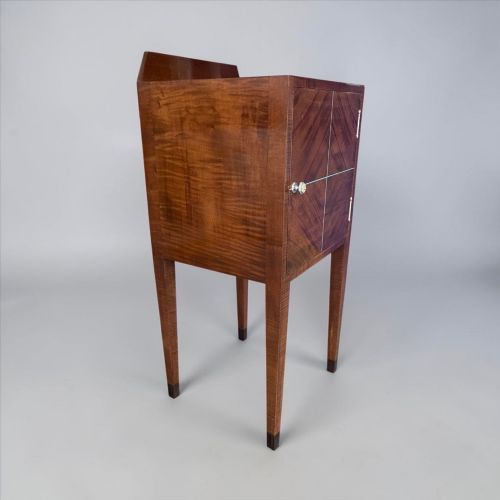
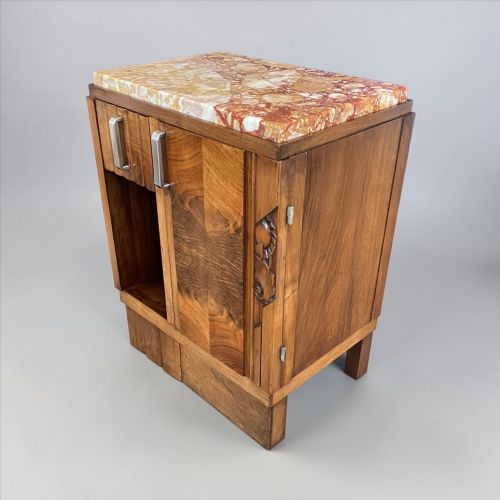
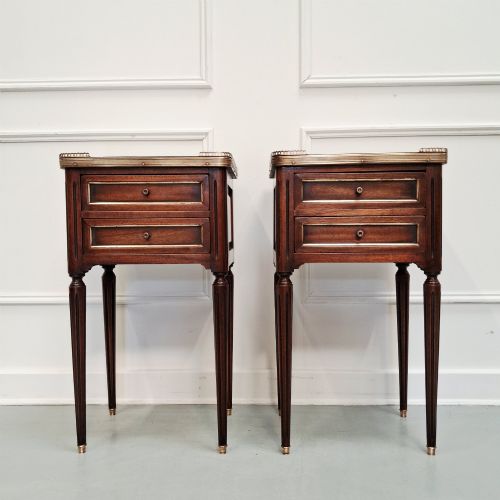
Makers and workshops of the period utilised walnut veneer and burr walnut to create striking optical patterns across flat tops and curved aprons. English and continental examples dominate, often appearing as bedside cabinets, console tables or compact libraries alongside standard side tables.
Materials and construction methods
Cabinet makers applied thin layers of walnut and burr walnut veneer over solid secondary timbers to display dramatic natural grain patterns. Brass and chrome hardware occasionally provide structural contrast or trim along table edges and tiers.
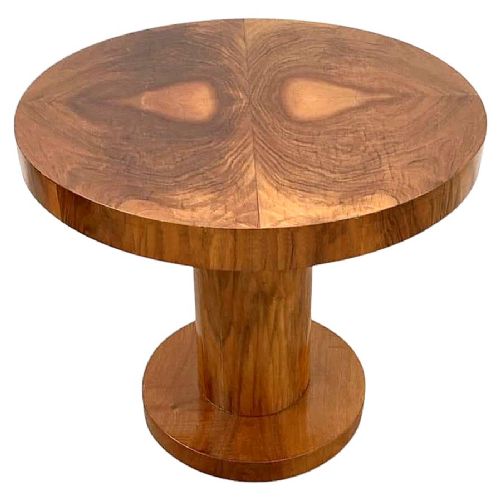
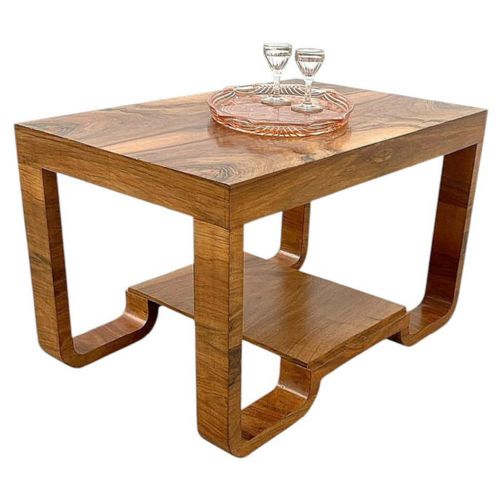
Multi-tiered occasional tables and nests rely on sturdy columnar supports or interlocking frames to maintain stability without heavy aprons. French and English workshops balanced curvilinear serpentine fronts with precise geometric veneers during this decade.
1930s Walnut Side Table Retail Price Guide 2026
Typical asking prices for 1930s walnut side table among the pieces listed under this phrase on Sellingantiques today, from the lower quarter to the upper quarter. They describe what is for sale here now, not the wider market.
The site archives show forms ranging from single-tier occasional surfaces to complex nests of five and tiered library trolleys.
Factors of distinction
The sophistication of the veneer matching dictates visual success, with book-matched burr walnut creating symmetrical movement across a table top. Superior examples display seamless transitions around curved edges and integrated secondary woods like satinwood or maple.
Structural complexity sets tiered tables, nests and trolley designs apart from basic occasional forms. Maker attribution also plays a role, as documented pieces from prominent London workshops command greater recognition than anonymous production.
Walter Carter Harrods·Hille·Harry and Lou Epstein
The 1930s Walnut Side Table Glossary
- Burr walnut
- A growth deformity on the walnut tree that yields intricate, swirling grain patterns when sliced into veneer. Cabinet makers prized this wood for its decorative impact on table tops.
- Art Deco
- A design movement spanning the interwar years characterised by stylised motifs, geometric forms and streamlined shapes. It dominates the aesthetic of these tables.
- Veneer
- A thin slice of superior timber applied to a stable core wood to produce decorative surfaces. This technique allowed makers to utilise expensive burr walnut efficiently.
- Nesting tables
- A set of graduated tables designed to fit neatly beneath one another when not in use. They became particularly popular space-saving furniture items in the period.
1930s Walnut Side Table: Frequently Asked Questions
What defines a 1930s walnut side table?
These tables are defined by their interwar Art Deco aesthetic, featuring rich walnut and burr walnut veneers shaped into round, octagonal, or tiered occasional forms. They combine utility with decorative grain patterns.
Most examples rely on geometric symmetry, sometimes accented with contrasting maple or chrome details, reflecting the design priorities of the era.
How do I care for a walnut veneer surface?
Walnut veneer requires protection from direct sunlight and excessive moisture to prevent fading and lifting of the timber. Regular dusting with a soft, dry cloth maintains the polished finish.
Avoid placing hot cups or damp items directly on the bare wood, using coasters or mats to preserve the integrity of the antique polish.
Where were these tables typically placed?
Original domestic placement included sitting rooms beside armchairs as lamp or wine tables, and in bedrooms acting as bedside cabinets. Nests of tables served living spaces where surface area needed to expand during gatherings.
Console tables and tiered trolleys found placement in hallways or dining rooms for serving drinks and displaying decorative objects.
How do I distinguish English and French styles?
English pieces often lean towards architectural clarity and straightforward geometric walnut figurations, frequently taking the form of nests or octagonal occasional tables. French variants more commonly embrace curves, serpentine fronts, and elaborate side cabinets.
Both national traditions share an enthusiasm for figured walnut and brass or chrome accents, though continental workshops often integrated bolder silhouette curves.