


1930s Floor Lamp
These 1930s floor lamp pieces bring period lighting and architectural presence into a room, spanning styles from Art Deco to Neoclassical Revival.
1930s Floor Lamp
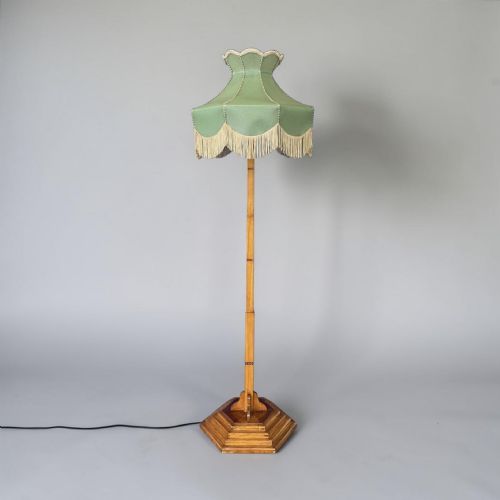
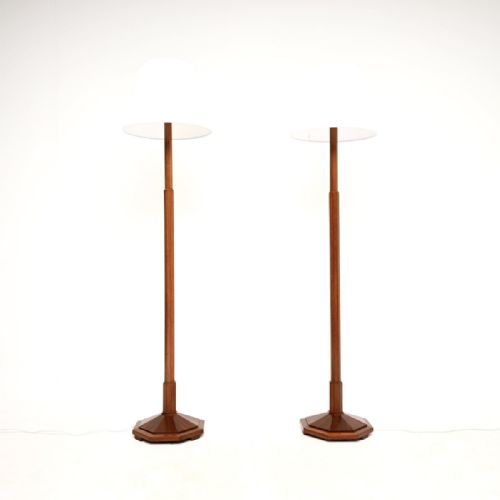
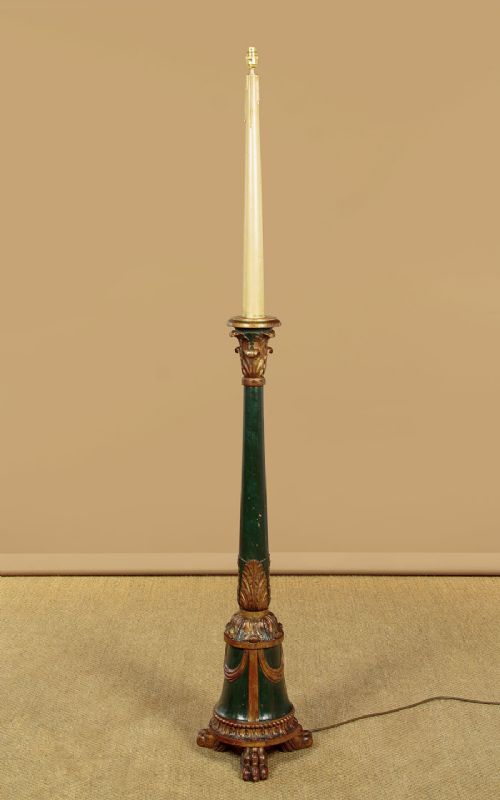
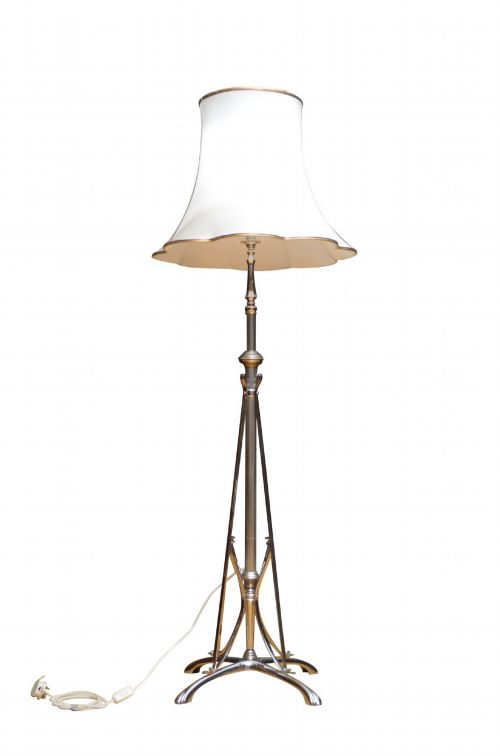
A 1930s floor lamp brings functional upright lighting and distinct period form into a space, most commonly appearing in Art Deco designs alongside Neoclassical Revival and traditional variations. These tall standards serve to illuminate corners or reading areas while acting as prominent sculptural objects within an interior.
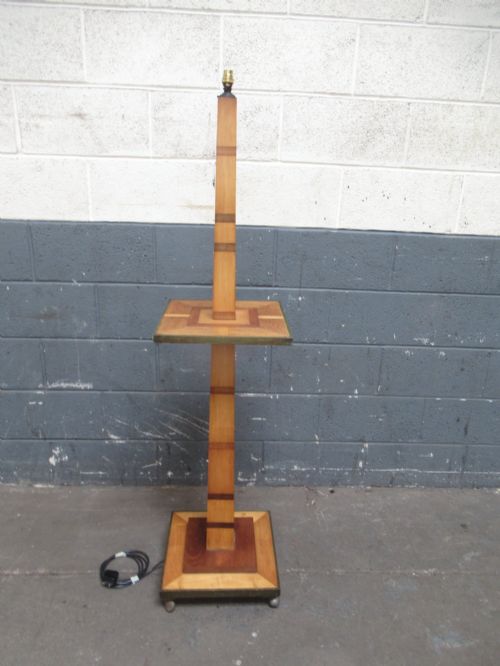
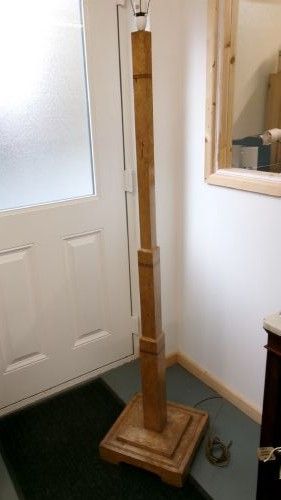
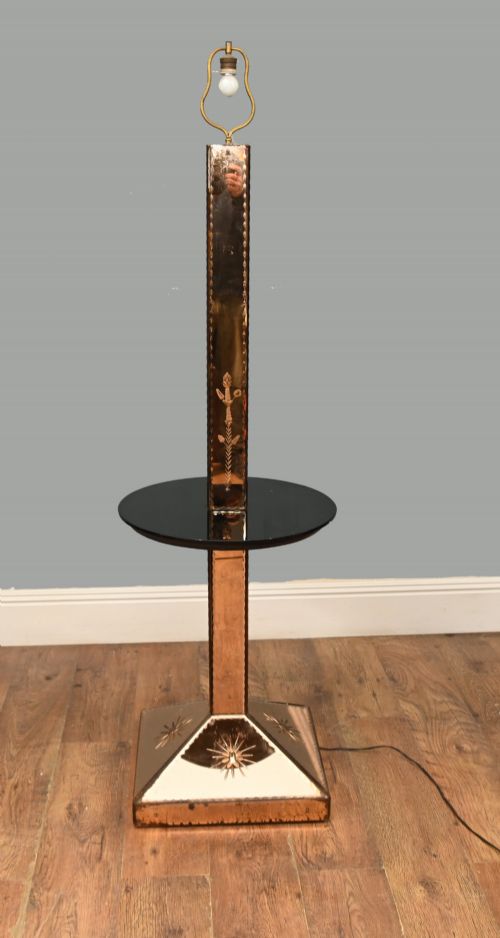
The selection ranges from standard lamps with fabric shades to torcheres, uplighters, and lamp tables that incorporate glass cocktail surfaces or multi-tier wooden construction. Oak, walnut, mahogany, and giltwood provide the primary vertical structures, often paired with metal components.
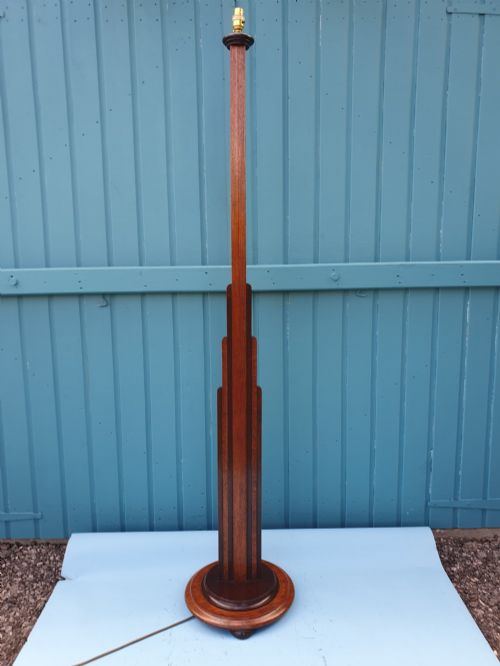
Makers and designers of the period utilise specific architectural motifs, including the skyscraper or Odeon style, to give these pieces their characteristic vertical emphasis. Brass, chrome, and painted finishes add metallic or tonal contrast to the timber and glass elements.
How they were made
Makers construct these floor standards using solid and veneered timbers such as oak, walnut, and mahogany, shaped into stepped columns or turned shafts. Metal elements in brass and chrome provide structural support and decorative contrast, frequently paired with glass shades or integrated table surfaces.
Finishes include polished wood grains, giltwood, and painted surfaces that highlight the geometric lines characteristic of the era. Silk and fabric shades complete the construction, often designed to diffuse light from single or multiple bulbs.
1930s Floor Lamp Retail Price Guide 2026
Typical asking prices for 1930s floor lamp among the pieces listed under this phrase on Sellingantiques today, from the lower quarter to the upper quarter. They describe what is for sale here now, not the wider market.
Some floor lamps doubled as cocktail tables, proving that 1930s designers understood the vital intersection of illumination and a gin and tonic.
What varies in quality
Quality in a 1930s floor lamp rests on the selection of timber, such as golden walnut or figured oak, and the precision of the joinery in stepped or reeded columns. Superior examples integrate functional elements like glass cocktail tables or heavy metal bases with greater architectural coherence.
The sophistication of the design dictates the standing of the piece, distinguishing standard turned timber shafts from sculptural Odeon or skyscraper configurations. Material combinations involving brass, chrome, and triple glass shades further elevate the distinction of the work.
Harry and Lou Epstein
The 1930s Floor Lamp Glossary
- Standard Lamp
- A tall freestanding floor lamp designed to hold a shade and illuminate a room from a vertical position. These pieces form the majority of the lighting options in this period.
- Torchiere
- An ornate floor lamp directing light upwards towards the ceiling, frequently associated with Art Deco interior schemes. They often feature uplighter configurations.
- Standard Lamp Table
- A dual-purpose floor lamp that incorporates a small wooden or glass tabletop into its vertical structure. This form allows the piece to function as both lighting and surface furniture.
- Odeon Style
- An architectural and decorative style characterised by stepped, skyscraper-like tiers that echo cinema design of the period. This aesthetic defines several oak and walnut floor standards.
- Uplighter
- A lighting fixture designed to cast illumination upward, commonly utilised in chrome and metal floor standards from the period. These project light against ceilings for ambient room illumination.
1930s Floor Lamp: Frequently Asked Questions
How do I choose the right shade?
Selecting a shade involves matching the proportions of the fabric or glass to the height and weight of the wooden or metal standard. Silk and fabric options offer a traditional diffused glow, while multi-shade glass configurations direct light across specific zones.
Consider the placement of the lamp within the room to ensure the shade complements surrounding furniture heights and architectural lines. Period styles benefit from simple tailored forms that do not distract from the stepped or turned geometry of the base.
Where should I place a floor lamp?
These tall standards suit corners, reading areas, and spaces beside seating where they provide both ambient and task lighting. Versions featuring integrated glass cocktail tables work particularly well beside armchairs or sofas.
Ensure the placement allows the vertical form and materials, whether oak, walnut, or chrome, to remain visible as a decorative element. Adequate clearance prevents the wide bases or torchiere profiles from obstructing room traffic.
Are these lamps wired for modern use?
Many surviving pieces retain historic wiring or have undergone rewiring to meet contemporary safety standards. Buyers should inspect the electrical components upon acquisition to ensure compatibility with current fittings.
Professional rewiring preserves the vintage standard lamp or torchire while ensuring safe daily operation in a modern home.