


1920s Wooden Standard Lamp
A 1920s wooden standard lamp brings height and architectural warmth to a room, offering a commanding focal point with period character.
1920s Wooden Standard Lamp
A 1920s wooden standard lamp is a tall floor-standing lighting fixture designed to illuminate a room from a fixed corner or beside seating. When you search for this phrase, you meet tall timber columns, turned shafts, and column supports dating from the interwar decades.
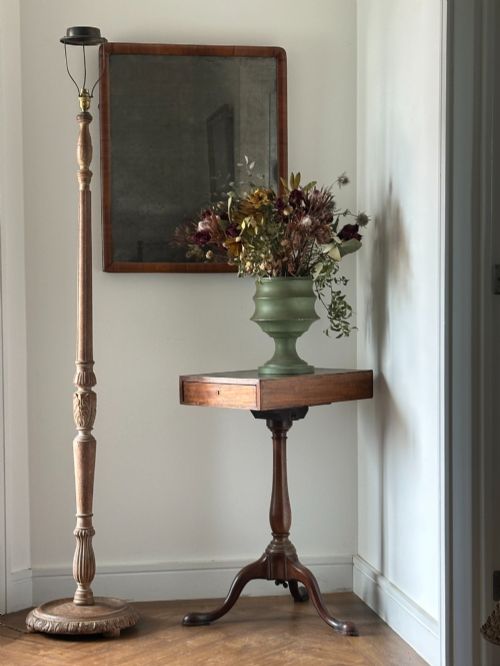
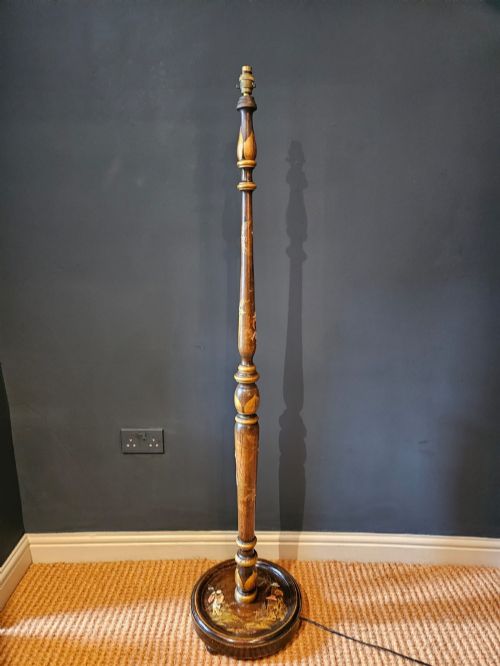
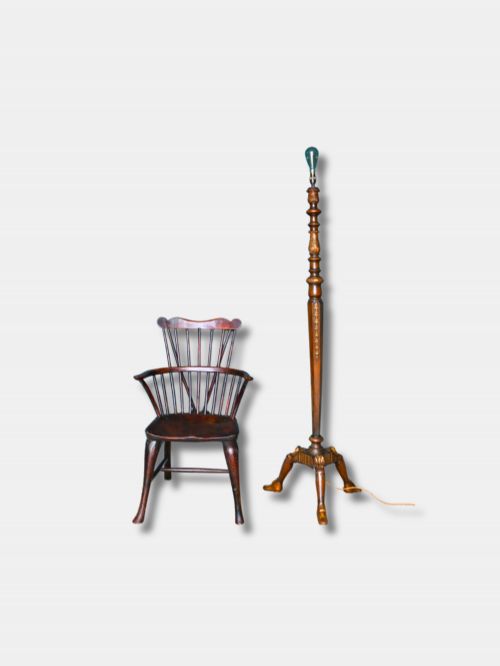
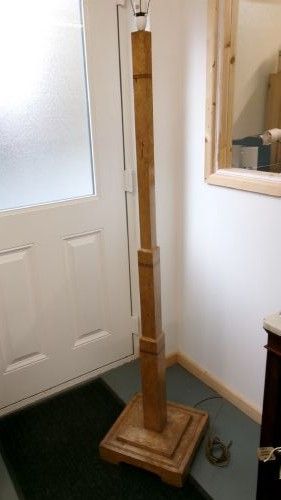
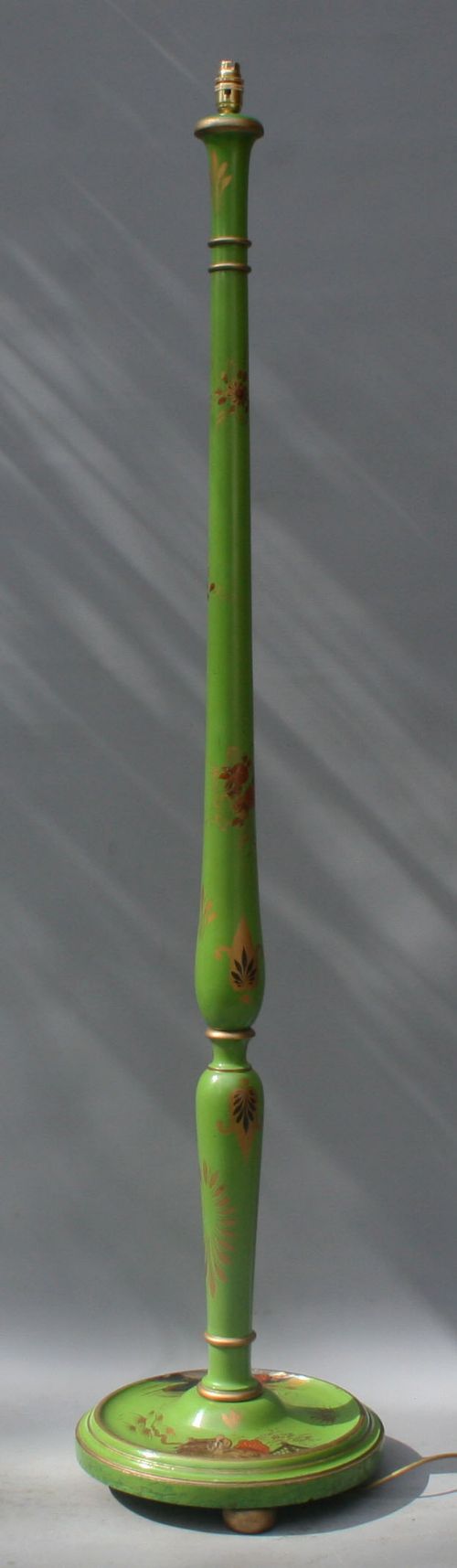
The versions most commonly met on this page range from plain oak and walnut columns to more decorative interpretations involving ebonised finishes or lacquer work. Many examples incorporate circular bases, tripod supports, or even small attached tables designed to hold small objects.
Makers and designers of the period drew upon diverse influences, resulting in objects that span straightforward domestic utility and bolder stylistic statements. You encounter Georgian Revival proportions alongside the geometric lines of the Art Deco movement and orientalist Chinoiserie decoration.
How they were made
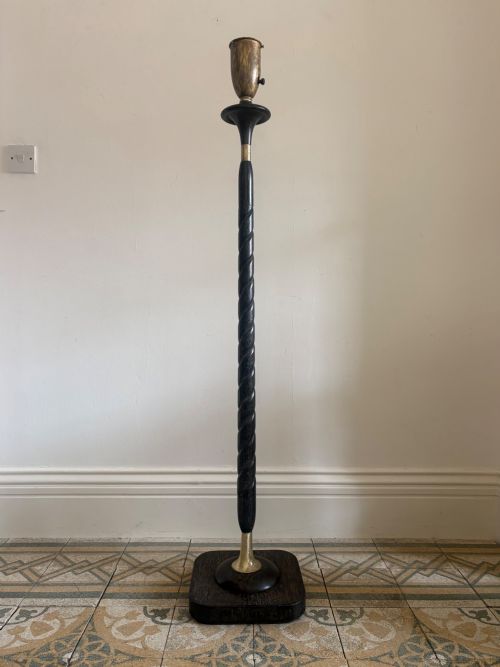
Construction relies upon solid timbers such as oak, walnut, padouk, and ebonised wood, shaped on lathes into barley twist columns or carved with foliage and geometric patterns. Woodworkers employed traditional joinery techniques to mount central shafts securely onto heavy tripod or circular bases for stability.
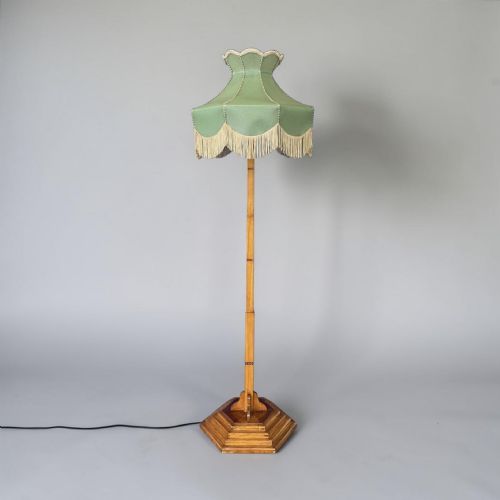
Surface treatment often involves polishing, liming, or applying lacquer and gilt details to enhance the natural grain and decorative schemes. Metal components in brass frequently appear as mounts, fittings, or adjustable collars, while fabric shades and fringe trims complete the upper assembly.
Design styles represented in the current selection range from Art Deco and Chinoiserie to Georgian Revival and 1920s French aesthetics.
What varies in quality
Quality separates simple utility pieces from ambitious decorative works through the choice of timber and the ambition of the carving. Dense hardwoods like padouk and figured walnut mark the upper end of the range, whereas plain oak represents more standard domestic production.
The sophistication of the turning and the execution of surface decoration determine distinction within the field. Finely detailed barley twists, crisp hand-carving, and complex Chinoiserie lacquer work demand greater artisan skill than straightforward turned shafts.
The 1920s Wooden Standard Lamp Glossary
- Standard Lamp
- A floor-standing lamp designed to provide ambient room lighting at height. These tall fixtures typically stand beside armchairs or sofas.
- Barley Twist
- A cylindrical furniture leg or column carved into a helical screw shape. This decorative turning technique appears frequently on interwar timber shafts.
- Chinoiserie
- European artistic style reflecting Chinese motifs and decorative techniques. It often involves painted lacquer scenes applied to wooden furniture.
- Torchere
- A tall ornamental stand originally designed to carry a candle or torch. The term also describes floor lamp standards with vase-like turned upper sections.
- Ebonised Wood
- Timber treated with a dark stain or finish to imitate ebony. This process provides a sleek, dark surface popular in interwar design.
1920s Wooden Standard Lamp: Frequently Asked Questions
Where should I place a standard lamp?
These tall floor fixtures suit corners of reception rooms or positions beside reading chairs where they cast light downward.
Their height allows them to anchor empty spaces without requiring surface furniture like tables or sideboards.
How do I identify a 1920s standard lamp?
Examine the timber choices, turning profiles, and decorative finishes such as lacquer or limed oak characteristic of the interwar period.
Common styles span geometric Art Deco lines, heavy barley twists, and revivalist proportions typical of the era.
Did these lamps always have tables attached?
Not all examples feature built-in surfaces, though some incorporate small circular platforms designed as lamp tables.
The majority rely purely on a central column rising from a tripod or weighted base.
What materials were used for these lamps?
Wood forms the primary body, utilising oak, walnut, padouk, and ebonised timber alongside brass fittings and fabric shades.
Some pieces add gilt highlights or intricate hand-painted Chinoiserie decoration across the wooden surfaces.