
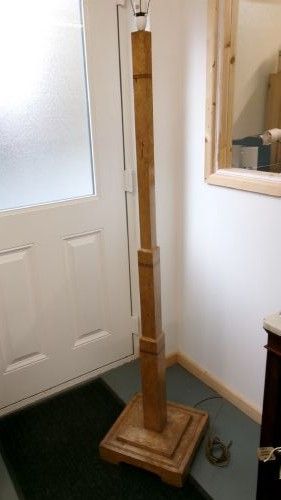


Walnut Standard Lamp
A walnut standard lamp brings architectural height and rich grain to a room, drawing the eye upward with upright presence.
What these walnut standard lamps are
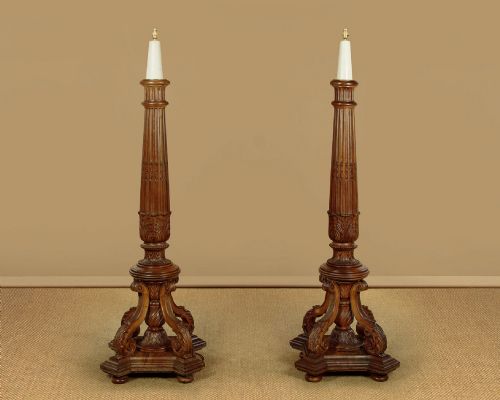
A walnut standard lamp provides tall floor-standing illumination using rich timber bodies from the Edwardian period through to the 1930s. These pieces stand upright to illuminate dark corners or sit beside seating furniture, serving as both functional lighting and substantial furniture forms.
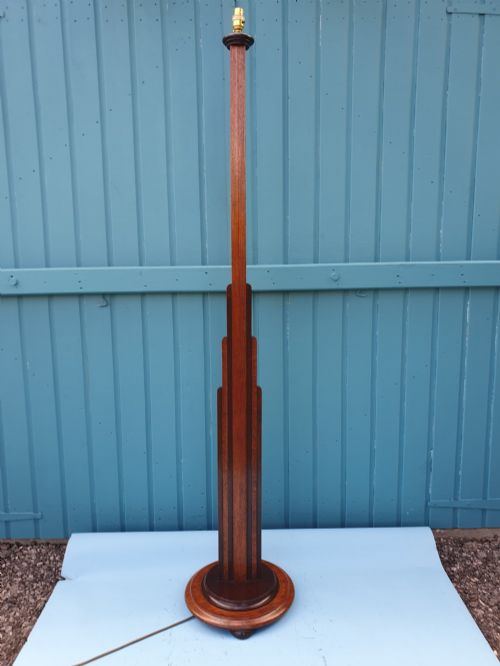
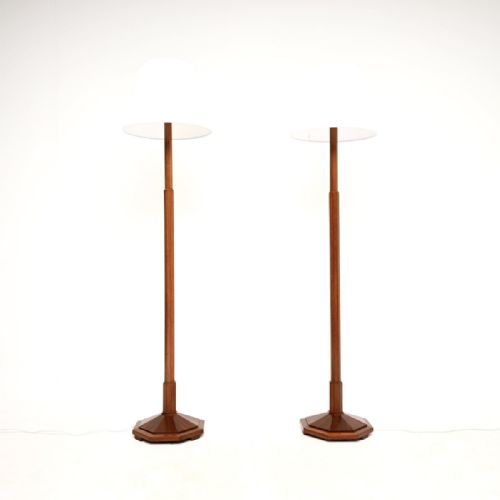
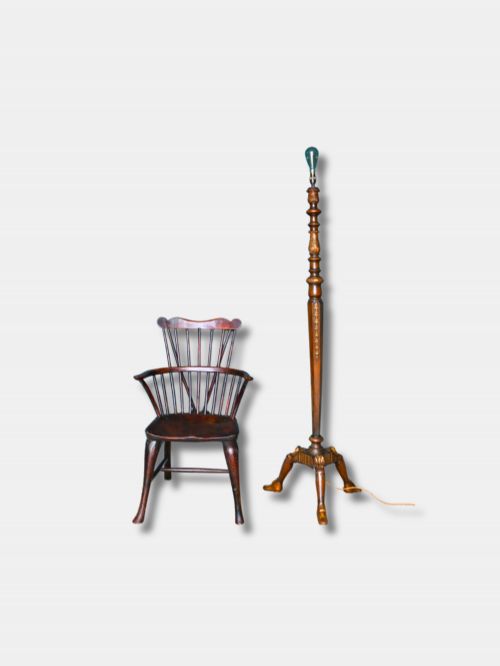
Art Deco examples dominate the selection, showing geometric lines, pale tones, and burr veneers alongside earlier Edwardian turned columns. Collectors meet everything from hexagonal shafts to twist columns, occasional lamp tables, and height-adjustable formats.
Origins span English workshops, notable makers such as Heals, and imported examples including Kashmiri and Italian work. The core material remains walnut, frequently paired with brass hardware, satinwood details, and fabric shades.
How they were made
Craftsmen built these lamp standards using solid walnut timbers and applied veneers, shaping the wood through turning, carving, and fluting. Columns incorporate hexagonal cuts, twist profiles, and smooth cylindrical sections joined to stable circular or stepped bases.
Makers integrated brass fittings and sometimes incorporated small lamp tables into the structural design. Surface enrichment relies on the natural figure of the wood, enhanced by burr walnut sections and occasional satinwood or oak elements.
Retail Price Guide 2026
Typical UK retail prices for walnut standard lamp, calculated from the Sellingantiques database of over a million retail prices indexed since 2003. This retail price guide relies exclusively on Sellingantiques data; no external sources or auction records are used, so the figures do not describe the wider market.
Listings show walnut standard lamps spanning the Edwardian period and the 1930s, utilising brass, oak, satinwood, and extensive burr veneers.
What varies in quality
Quality rests in the choice of timber figure, distinguishing plain dark walnut from striking burr veneers and pale blonde selections. The sophistication of the turning, the presence of hand-carved detail, and the integrity of the joinery set finer workshop pieces apart from standard production.
Proportion and stability define the superior examples, where heavy weighted bases support tall shafts without lean. Designer attribution, such as pieces originating from Heals, elevates the standing of an individual lamp.
Heals of London·Harry and Lou Epstein
The Walnut Standard Lamp Glossary
- Burr walnut
- Timber featuring swirling, knotty grain patterns harvested from tree growths. It provides decorative patterning on lamp shafts and bases.
- Standard lamp
- A traditional British term for a floor-standing lamp. These tall fixtures hold a light source above seated height.
- Twist column
- A structural shaft carved or turned with a spiral twist. This decorative technique appears on Arts and Crafts and later standard lamps.
- Hexagonal
- Having six sides. This geometric form appears in the shafts and bases of specific Art Deco lamp designs.
- Satinwood
- A durable, pale yellow exotic timber used for contrasting inlay and stringing. It accents darker walnut bodies on select pieces.
Frequently Asked Questions
How do I date a walnut standard lamp?
Dating relies on stylistic markers and construction methods recorded across Edwardian and Art Deco periods. Edwardian examples often display traditional carving and turned columns, whereas 1930s pieces favour streamlined geometric shapes and pale burr veneers.
Makers' stamps, metal switches, and wiring channels also offer clues to the decade of manufacture. Comparing the silhouette against documented workshop designs helps narrow the production window.
Were these lamps originally paired with tables?
Certain standard lamps incorporated small circular or hexagonal tables fixed midway up the shaft. These hybrid pieces served to hold books, drinks, or smoking accessories beside a reading chair.
Makers produced both standalone upright columns and table-combined variants during the early twentieth century. The added surface provided functional convenience in compact drawing rooms.
How do I place a standard lamp in a room?
These tall fixtures suit placement beside armchairs, sofas, or within dark architectural corners. Their vertical presence draws the eye upward and balances low seating arrangements.
Ensure the base sits on level flooring and pair the lamp with an appropriately proportioned fabric shade. The timber grain works well alongside other brown furniture and period interiors.
What is the difference between Edwardian and Art Deco lamps?
Edwardian standard lamps tend to feature traditional turned timber, carved foliage, and darker polished walnut surfaces. They reflect a heavier, more classical aesthetic drawn from earlier revival styles.
Art Deco lamps embrace clean vertical lines, blonde walnut, burr veneers, and geometric shaping like hexagonal columns. These later pieces emphasise the natural figure of the wood over applied ornament.