


Vintage Timber Floor Lamp
A vintage timber floor lamp brings height and warmth to a room, offering practical illumination through solid oak, walnut, and carved wood.
Vintage Timber Floor Lamp
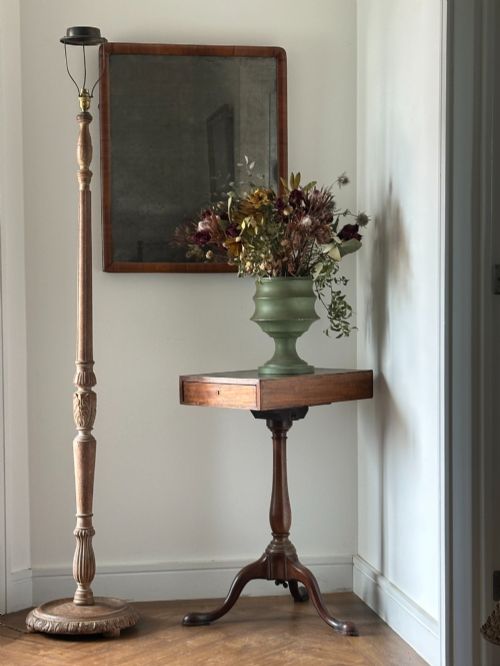
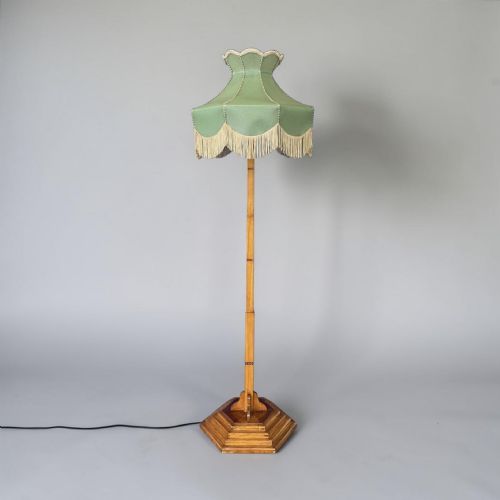
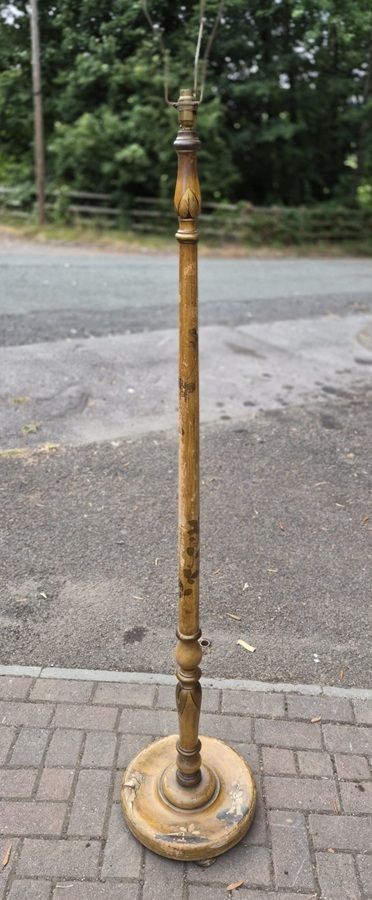
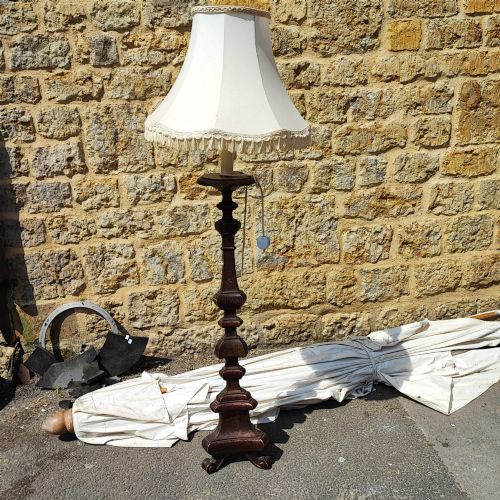
A vintage timber floor lamp provides ambient lighting through tall wooden columns designed to stand directly on the floor. These upright fixtures appear in forms ranging from plain turned posts to elaborately carved standards.
Buyers browsing this selection encounter standard lamps originating from the Victorian era through the interwar period. Oak and walnut form the backbone of these offerings, supplemented by regional timber varieties.
The assortment includes regional styles such as Anglo-Indian and European folk art, alongside distinct periods like Edwardian and Art Deco. Standard lamp and floor lamp appear interchangeably across these listings to describe the same tall lighting form.
How they were made
Carpenters and cabinetmakers constructed these uprights from solid hardwoods including oak, walnut, mahogany, and padauk. Turning on a lathe created symmetrical columns, while specialist carvers added detailed ornamentation by hand.
Makers integrated brass and other metals for weighted bases and switch housings to ensure stability at height. Fabric shades traditionally crowned the timber columns, diffusing light downward across the living space.
The listings show materials spanning brass, oak, walnut, satinwood, and padauk, alongside styles from Art Deco to European folk art.
What varies in quality
The standard of carving distinguishes standard lamps, moving from simple turned wooden posts to deeply sculpted figures and foliage. Timber selection also dictates grade, with figured walnut and dense padauk standing apart from utility softwoods.
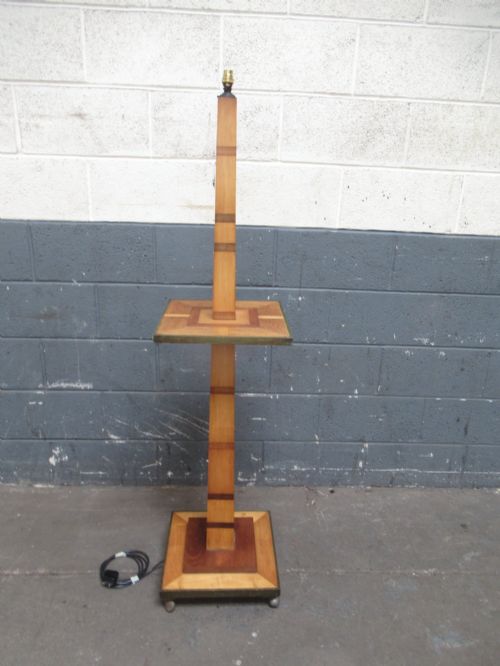
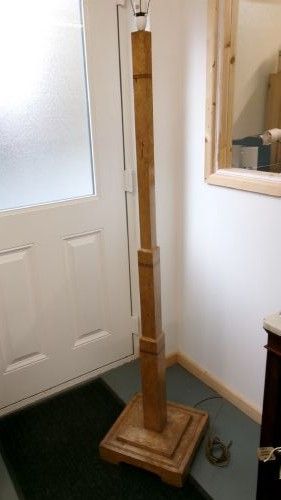
Construction methods reveal the maker's hand through stable tripod bases and tight joinery along the vertical shaft. Stepped platforms and contrasting woods like ebony inlay show deliberate design choices rather than mass production.
Whytock and Reid
The Vintage Timber Floor Lamp Glossary
- Standard lamp
- A British term for a floor lamp, describing a tall vertical light fitting designed to stand independently in a room. These fixtures often support fabric shades and heavy weighted bases.
- Padauk
- A dense tropical hardwood prized for its deep reddish colour and durability, seen in export pieces from the early twentieth century. This timber takes a fine carved finish.
- Standard
- The vertical wooden column or post of a floor lamp that rises from the base to hold the bulb holder. This main shaft provides the structural height.
- Limed oak
- Timber treated with a specialised white finish that settles into the open grain, highlighting the natural texture of the wood. This technique appears on decorative pieces from the early twentieth century.
Vintage Timber Floor Lamp: Frequently Asked Questions
How tall are standard lamps?
These tall lighting fixtures generally rise between five and six feet from the floor to the top of the bulb holder. This height allows the light to cast downward over furniture and seating areas.
Adding a fabric shade increases the total height further. Positioning depends on the reach of the flex and the weight of the base.
What woods were used?
Cabinetmakers utilised a range of domestic and exotic timbers including oak, walnut, mahogany, and padauk. Golden oak and blond walnut appear frequently among interwar designs.
Carved examples often showcase dense hardwoods that hold sharp sculptural detail. Contrasting elements like ebony inlay added visual depth to the columns.
Where should I place one?
A floor lamp fits naturally beside armchairs, in dark corners, or framing a sofa to create pools of warm light. The vertical form occupies minimal floor space while delivering significant illumination.
Pairs of floor lamps work well balanced on either side of a fireplace or sideboard. Ensure the heavy timber base sits level on solid flooring.
How do I date a timber lamp?
Stylistic cues such as stepped Art Deco bases, Edwardian Chinoiserie decoration, or Victorian turning indicate the period of manufacture. The choice of timber and carving technique also align with prevailing furniture eras.
Original wiring methods, where present, offer further clues to age. Most pieces have been safely rewired for modern domestic use.