

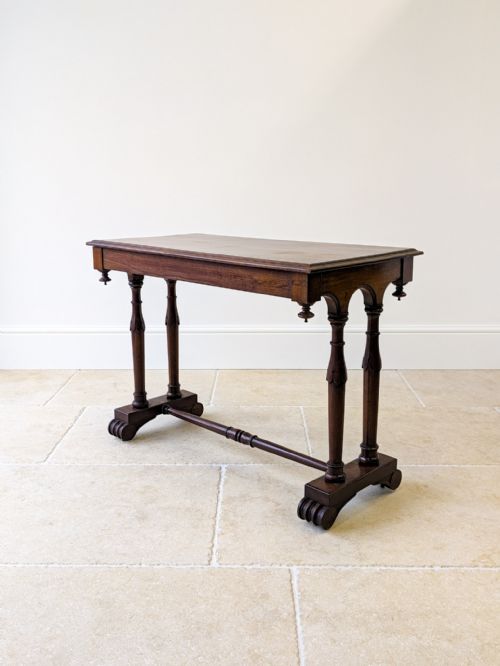
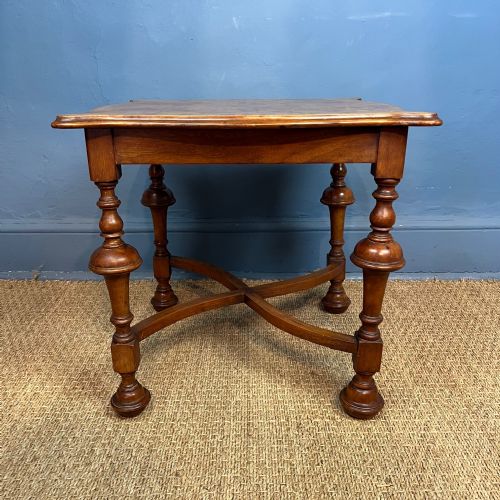
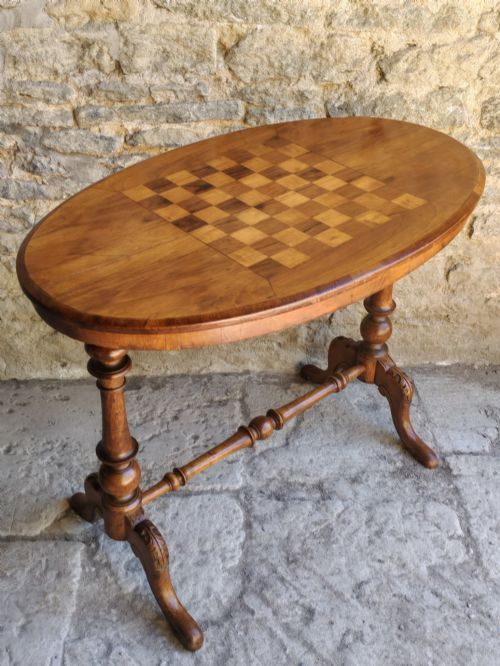
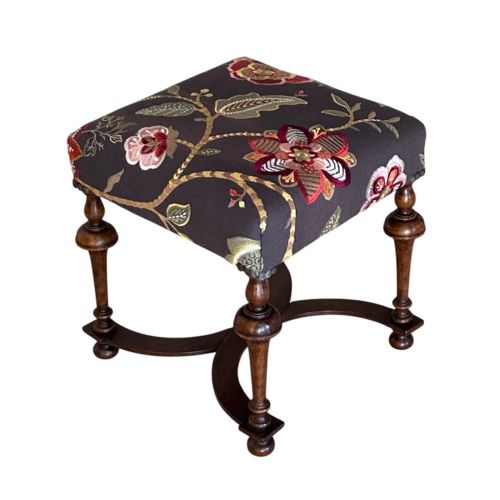
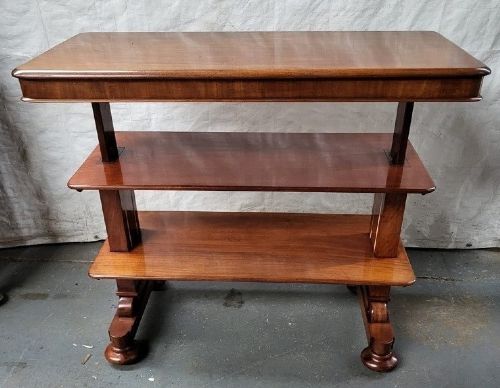
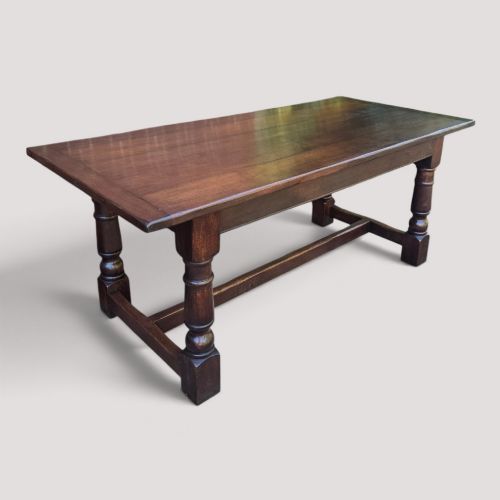
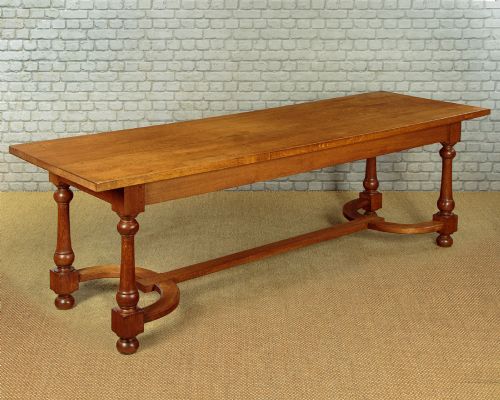
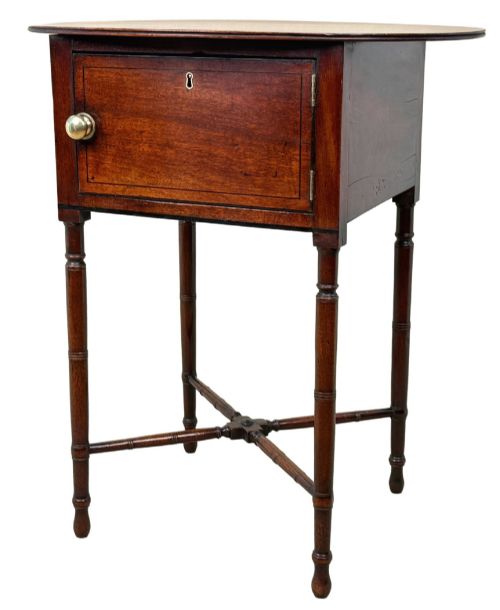
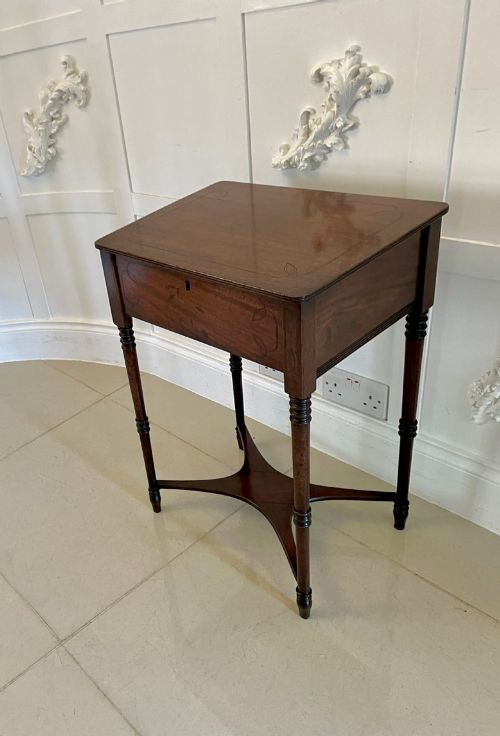
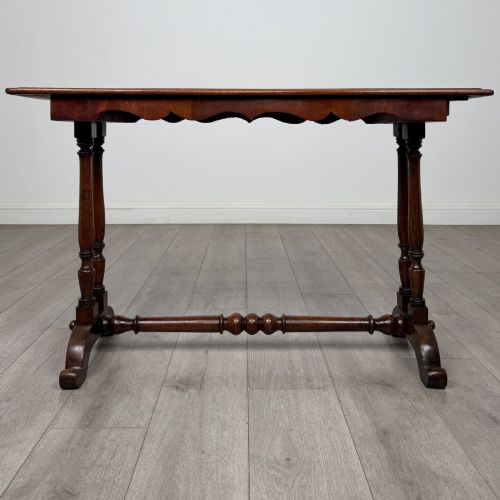
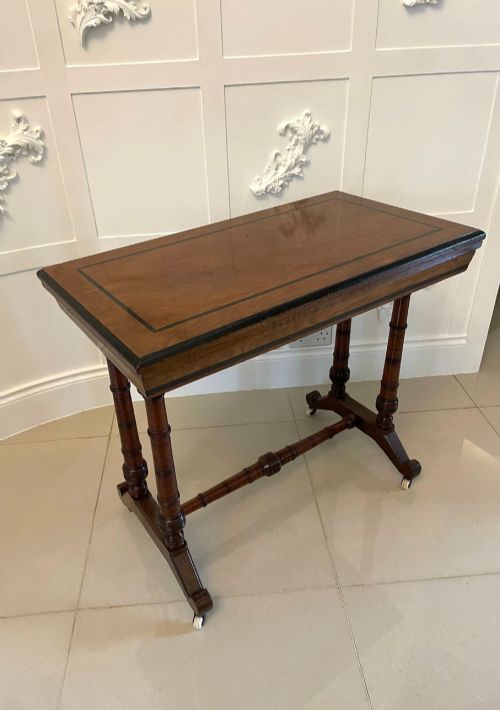
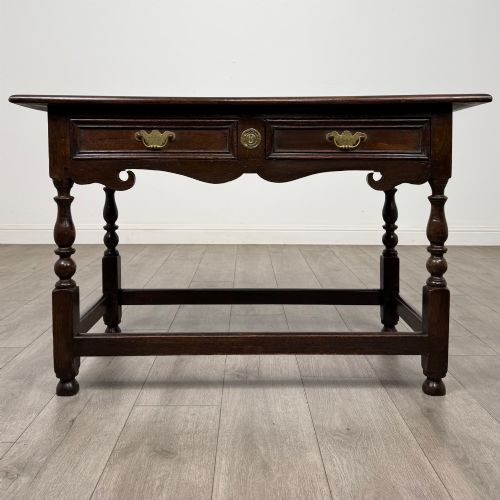
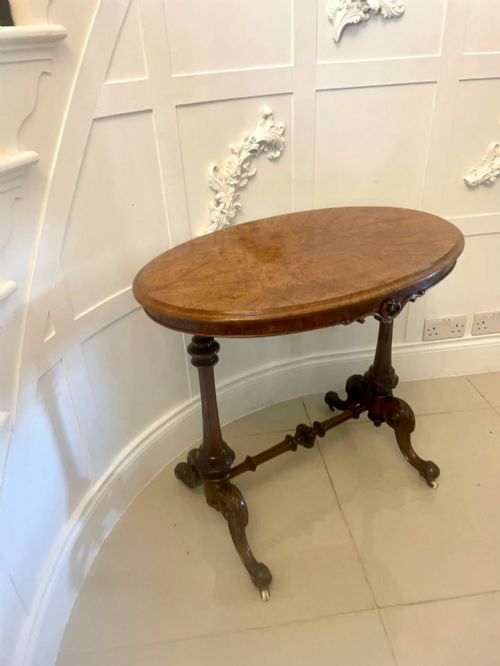

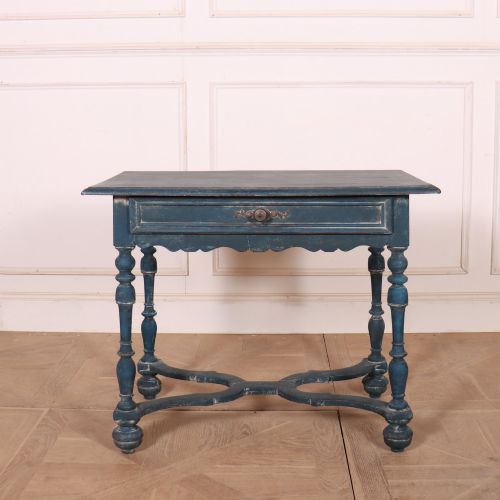
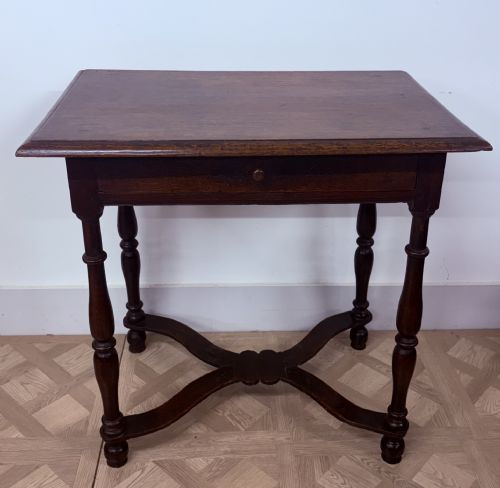
Turned Stretcher Table
A turned stretcher table brings sturdy timber and historic joinery into a room, offering a solid surface grounded by architectural underframing.
Materials and construction methods
Cabinet makers utilised dense hardwoods like oak, walnut, and mahogany, sawing and planing solid planks for table tops and structural frames. Turned elements such as bobbin legs and cylindrical stretchers were shaped on lathes before being pegged or mortised into position.
Joinery relied on traditional pegging and mortise and tenon joints to secure the legs to the upper frame and lower stretchers, ensuring lateral stability under heavy weight. Surface finishes typically involved applied wax, polish, or historic painted layers that protected the timber while revealing its grain.
Factors separating grades of quality
Quality rests upon the crispness of the lathe turning on the legs and stretchers, where sharply defined profiles signal skilled handwork rather than softened machine cutting. Timber selection also divides the range, with well-figured grain, quarter-sawn oak rays, and solid timber planks marking superior examples.
Structural integrity and the retention of original components determine the standing of each piece, as replacements to stretchers or tops alter the historic balance. The refinement of the joinery and the harmonious proportion between the top and the underframing separate standard utility furniture from finer workshop output.
Turned Stretcher Table Retail Price Guide 2026
Typical asking prices for turned stretcher table among the pieces listed under this phrase on Sellingantiques today, from the lower quarter to the upper quarter. They describe what is for sale here now, not the wider market.
Listings on this site span oak, walnut, mahogany, elm, pine, and brass, stretching from the seventeenth century through the Victorian period and into twentieth-century revivals.
Johnstone and Jeanes·Hindley and Sons·Gillows
The Turned Stretcher Table Glossary
- Stretcher
- A horizontal timber connecting the legs of a table near the floor to provide lateral rigidity and strength. It prevents the legs from bowing outward under heavy loads.
- Bobbin turning
- A form of lathe turning that produces a series of rounded, spool-like shapes along the length of a leg or stretcher. This decorative technique is particularly common on seventeenth-century pieces.
- Refectory table
- A long, narrow dining table historically used in communal dining halls and later adopted in domestic rustic settings. These tables typically feature prominent stretcher systems.
- Barley twist
- A spiral carving resembling a twisted rope, turned onto table legs and uprights during the seventeenth century and later revival periods. It catches the light to create deep diagonal shadows.
- Gate leg table
- A table featuring hinged leaves supported by swing-out legs that pivot like a gate. When open, the legs engage with the underframing for stability.
Turned Stretcher Table: Frequently Asked Questions
What is a turned stretcher table?
A turned stretcher table is a piece of furniture featuring legs shaped on a lathe and joined near the base by horizontal timber bracing. This construction method adds structural rigidity while introducing decorative turned profiles.
Such tables appear in forms ranging from small oak side tables to large refectory dining boards across several centuries of cabinet making.
How do I date a turned stretcher table?
Dating relies on examining the timber species, tool marks, joinery methods, and the specific style of the lathe turning. Early pieces from the seventeenth century often show hand-riven oak and simple pegged joints, while revival pieces from the Victorian and Edwardian eras display machine-sawn uniformity.
Comparing the turning profile against documented periods helps establish whether a table originates from its primary era or a later nineteenth-century revival.
Where were these tables used?
Historically, these tables served utilitarian purposes in kitchens, refectories, libraries, and hallways as working surfaces or side boards. Refectory and farmhouse variants accommodated communal dining, while smaller side and lamp tables populated domestic living spaces.
Today, they function as practical dining surfaces, writing desks, or accent tables in both traditional and contemporary interiors.
How do I care for an antique wooden table?
Antique wooden tables require stable indoor humidity away from direct heat sources and strong sunlight to prevent the timber from warping or splitting. Regular application of suitable furniture wax preserves the finish and nourishes dry grain.
Avoid using harsh chemical cleaners or excess moisture, wiping surfaces simply with a soft, dry cloth to maintain the historic patina.