




Satinwood Sewing Box
A satinwood sewing box brings golden timber and clever compartments into a room, serving as both a practical desk tidy and a decorative focal point.
Satinwood Sewing Box
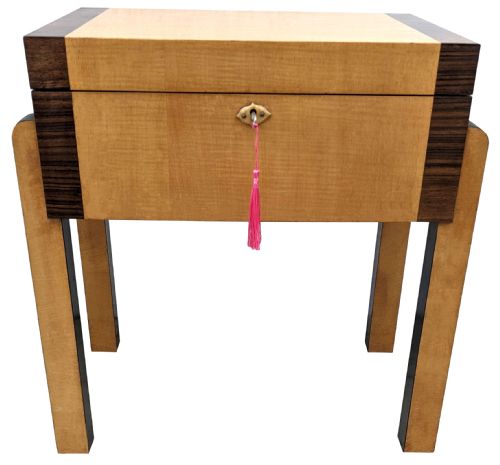
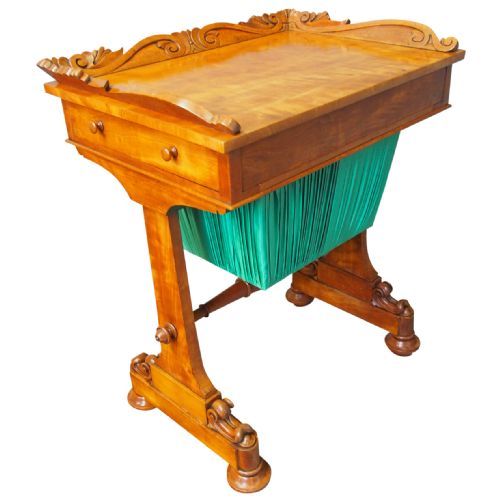
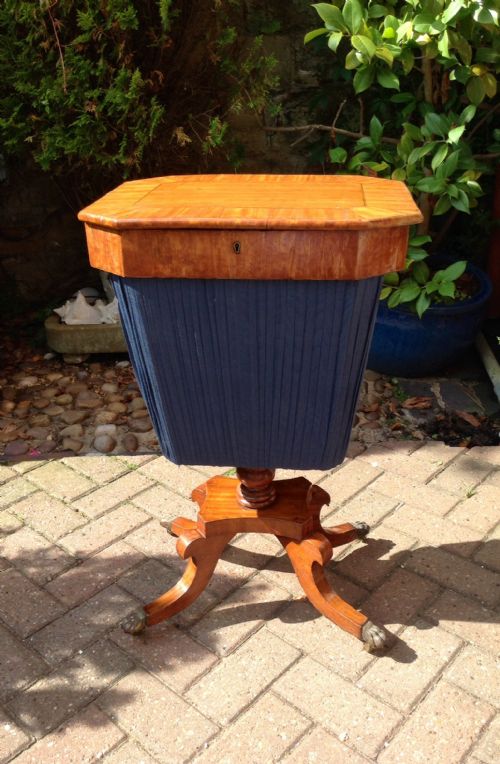
A satinwood sewing box encompasses work tables, sewing tables, and smaller caskets designed to hold needles, threads, and small treasures. The versions met most often on this page range from Regency pedestals and George III examples to Edwardian inlaid work tables and 1930s Art Deco pieces.
These items serve equally well as side tables, occasional tables, or vanity pieces in a modern home. They combine compartmented interiors with elegant timber surfaces, keeping small items concealed while adding period character to a room.
How they were made
Cabinetmakers utilised timber like satinwood, mahogany, rosewood, and ebony, frequently combining them with contrasting boxwood stringing and marquetry inlays. Brass mounts, handles, and paw feet often provide structural and decorative accents.
Interiors frequently feature fitted compartments lined with silk or fabric, designed to house spools and thimbles securely. Hand-painted portrait decoration and intricate shell inlays appear on specific Edwardian and late nineteenth-century examples.
Some Edwardian pieces hide tiny secret compartments beneath sliding trays, designed to keep precious thimbles away from curious fingers.
What varies in quality
The distinction between tiers rests upon the choice of timber and the precision of the marquetry or stringing. Finely figured satinwood veneer combined with detailed hand-painted panels or intricate brass mounts elevates a piece significantly.
Internal joinery and the preservation of original silk or fabric linings distinguish superior examples. Pieces signed by known makers or possessing distinct sarcophagus forms command particular attention from collectors.
Pearce London
The Satinwood Sewing Box Glossary
- Satinwood
- A pale, lustrous hardwood with a golden sheen, highly prized for fine cabinetmaking and decorative veneer work. It reflects light differently depending on the grain orientation.
- Work Table
- A specialised table featuring internal compartments or a fabric bag beneath for needlework and sewing supplies. These items double as compact side tables.
- Marquetry
- The art of applying pieces of veneer to a structure to form decorative patterns and pictures. Makers used contrasting timbers like ebony and boxwood to achieve crisp outlines.
- Sarcophagus Form
- A heavy, flared box shape with a domed or stepped lid, popular during the Regency period. This architectural profile mimics classical stone tombs.
- Stringing
- Thin inlay lines of contrasting wood set into the surface of a panel to create borders and geometric frames. It defines the edges of tabletops and drawer fronts.
Satinwood Sewing Box: Frequently Asked Questions
What is a satinwood sewing box?
A satinwood sewing box is a fitted wooden container or small table created to hold needlework equipment, threads, and personal items. They combine decorative timber exteriors with partitioned interiors.
Many examples take the form of miniature caskets or elevated work tables featuring hinged lids and silk-lined compartments. They function as both decorative objects and practical storage units.
How were work tables used?
Work tables served as mobile stations for domestic sewing, embroidery, and mending tasks during the Georgian, Regency, and Victorian eras. The internal trays kept spools, pins, and scissors organised.
When closed, the smooth wooden top allowed the piece to serve as an occasional side table in a drawing room or boudoir. The hanging fabric bags sometimes attached below held unfinished stitching projects.
How do I date a sewing box?
Dating relies on observing timber choices, hardware styles, and overall architectural proportions. Regency pieces often display sarcophagus shapes and brass mounts, while Edwardian versions frequently feature delicate shell inlay and satinwood veneer.
Construction methods inside the drawers and the style of the fabric linings also provide clues. Comparing the piece to documented examples from the same decade helps confirm the era.
How do I care for satinwood?
Satinwood benefits from being kept away from direct sunlight and heat sources to prevent the pale timber from darkening or splitting. Regular dusting with a soft, dry cloth preserves the polished surface.
Harsh chemical polishes should be avoided in favour of traditional waxes applied sparingly. Protecting the top from moisture ensures the veneer remains secure and unblemished.