




Cut Glass Decanter Set
A cut glass decanter set brings heavy crystal and gleaming metalwork together for the proper presentation of spirits.
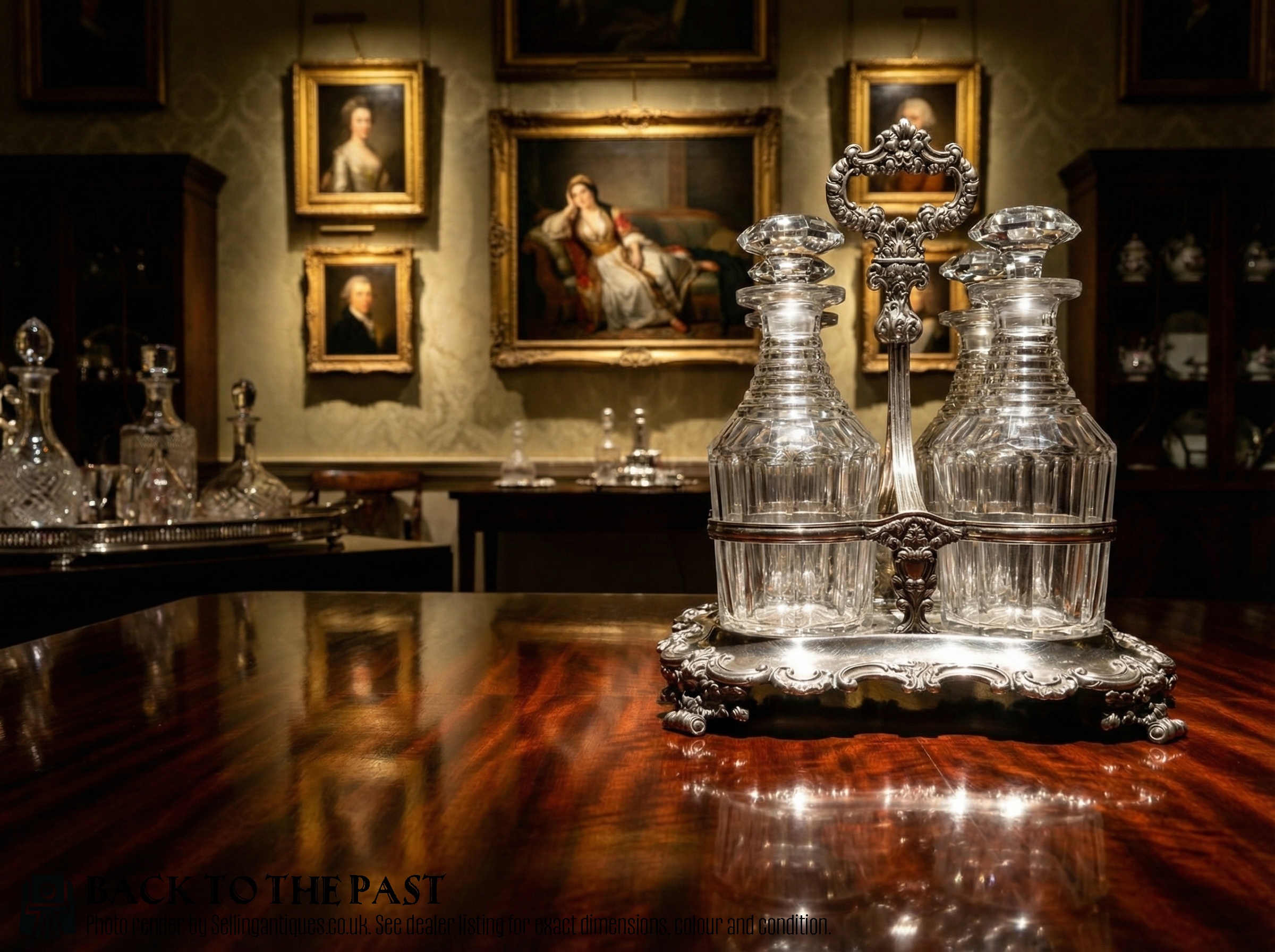
Cut Glass Decanter Set
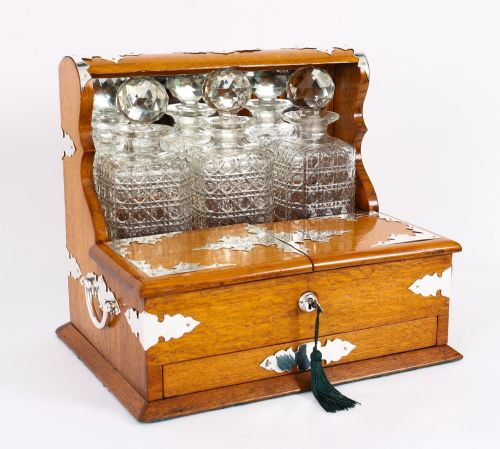
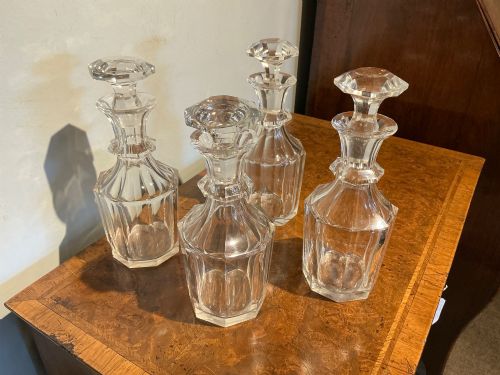
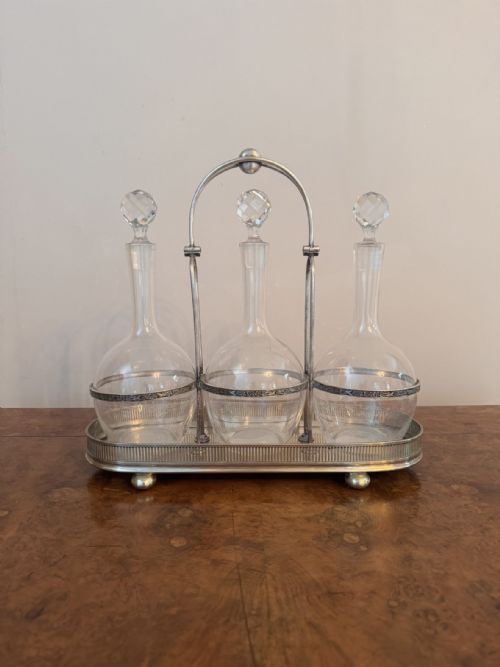
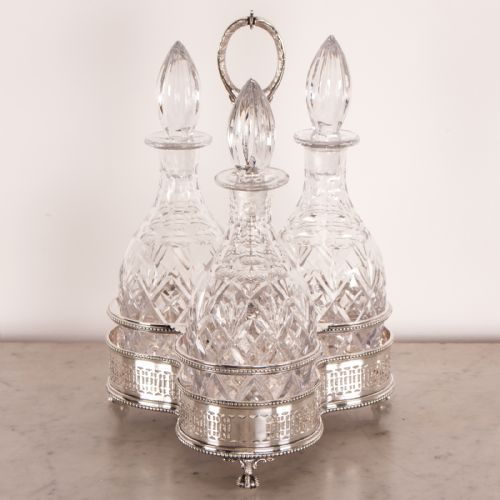
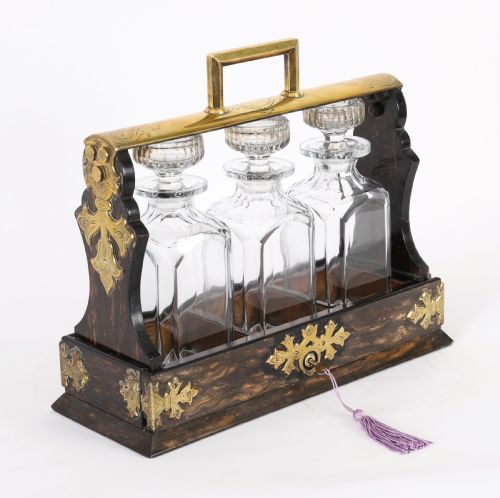
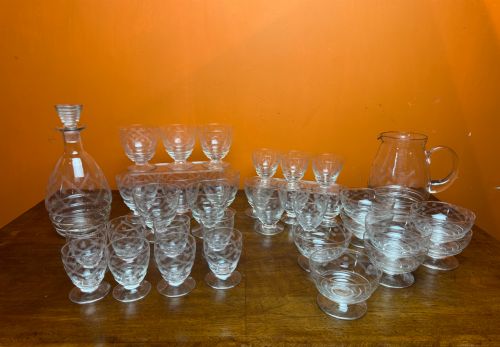
A cut glass decanter set combines matching glass bottles with fitted stands, trays, or secure locking frames designed for spirits and wine. The versions most commonly found here are Victorian and Edwardian arrangements housing two or three heavy crystal bottles alongside silver plated framework.
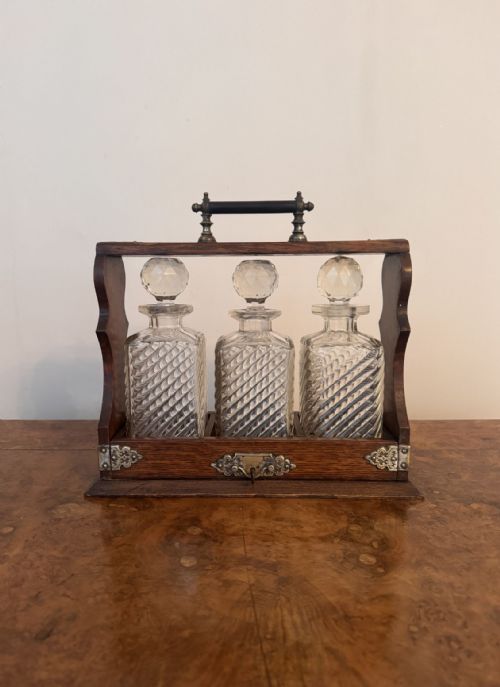
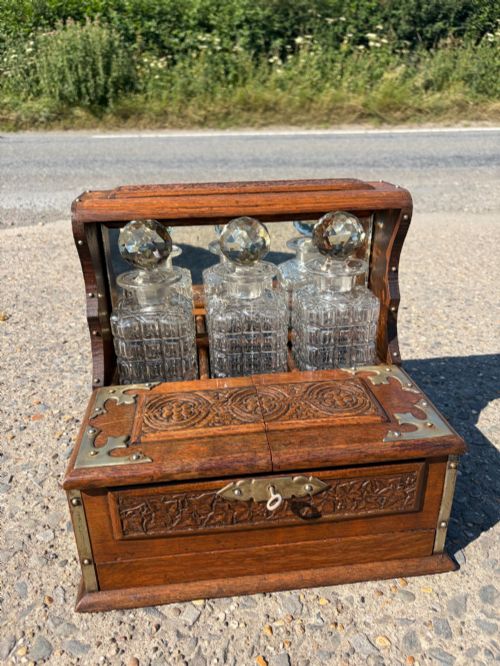
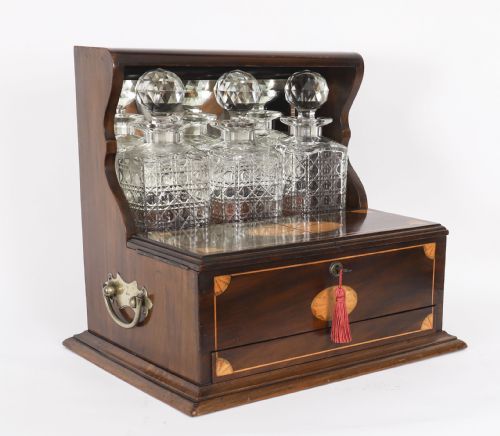
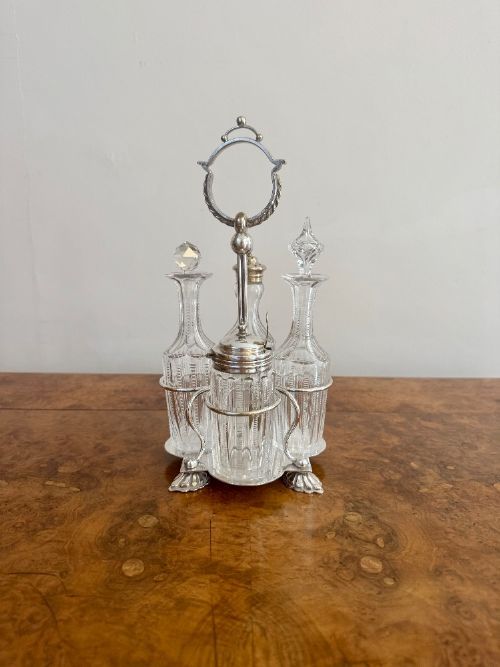
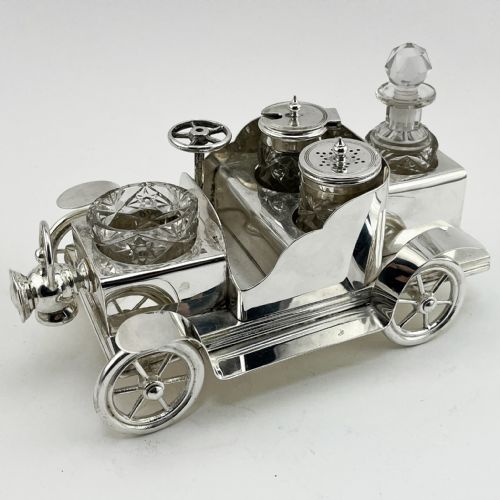
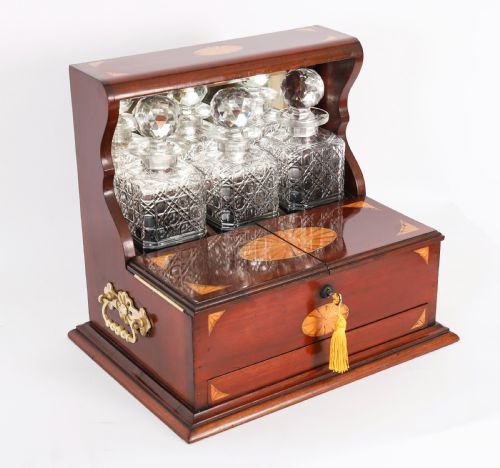
Beyond simple trays, these assemblies frequently take the form of a tantalus, where a locking mechanism secures the decanters inside an oak or mahogany frame. Cruet sets and liqueur suites also appear under this heading, grouping smaller bottles for oils, vinegars, or after dinner cordials.
The materials span nineteenth century output, linking lead crystal glass with fitted wooden cabinetry, brass mountings, and silver plate. Pieces range from modest pairs of decanters to extensive games compendiums fitted with compartments for cards and counters.

Materials and construction
The bottles are formed from heavy cut glass or lead crystal, shaped by blowing before deep geometric patterns are wheel cut into the surface to catch the light. This dense glass provides the substantial weight expected of proper nineteenth century barware.
Metal mounts, handles, and locking bars utilise silver plate, brass, or old Sheffield plate fixed securely to timber bases made from oak, walnut, or inlaid mahogany. Frames often feature brass carrying handles, lockable drop fronts, and marquetry stringing.
Cut Glass Decanter Set Retail Price Guide 2026
Typical asking prices for cut glass decanter set among the pieces listed under this phrase on Sellingantiques today, from the lower quarter to the upper quarter. They describe what is for sale here now, not the wider market.
Listings span the nineteenth and early twentieth centuries, featuring oak, mahogany, and coromandel timbers alongside cut crystal and silver plate.
Distinctions in quality
Quality rests in the crispness of the glass cutting and the structural integrity of the housing. Superior examples feature deeply faceted crystal with matching original stoppers and heavy silver plated mountings that show no wear through to the base metal.
The complexity of the cabinetry distinguishes standard decanter stands from elite pieces. Elaborate tantalus frames incorporate working Bramah locks, secret drawers, and integrated games compendiums finished in figured timbers with fine marquetry.
Walker And Hall·Elkington·James Powell·Webb Corbett·Karl Palda·Charles Thomas Fox·Hester Bateman
The Cut Glass Decanter Set Glossary
- Tantalus
- A locking drink cabinet that holds decanters securely within a wooden and metal frame so they cannot be removed without a key. The clever design frustrates would be drinkers by displaying the bottles while keeping the contents out of reach.
- Cruet set
- A matched group of glass bottles or cruets fitted into a metal frame for holding condiments, oils, or vinegars at the dining table. Victorian and Georgian versions frequently employ silver plated stands with central carrying rings.
- Lead crystal
- A heavy variety of glass containing lead oxide, which increases brilliance, clarity, and weight. It provides the ideal medium for deep wheel cutting.
- Old Sheffield plate
- An early method of fusing a thin sheet of silver onto a copper base before rolling and forming. This technique predates modern electroplating and produces a warm, durable finish.
- Intaglio
- A design carved into the surface of glass rather than standing proud in relief. It creates a subtle, frosted decorative effect across the body of the vessel.
Cut Glass Decanter Set: Frequently Asked Questions
Are original stoppers important?
Original stoppers matching the cut pattern and dimensions of the decanter add considerably to the integrity of a set. Finding a precise period replacement for a missing stopper can prove difficult due to hand cut variations.
When examining a set, check that the ground glass neck and the lower portion of the stopper show matching wear and numbering. This confirms the stoppers belong to the specific bottles they accompany.
How should antique decanters be cleaned?
Antique glass should be washed by hand in warm water using mild soap, avoiding sudden temperature changes that can crack heavy crystal. Stubborn internal residue is best shifted with specialised cleaning beads and water rather than harsh abrasives.
Silver plated frames and mountings require a gentle cloth and non abrasive polish to protect the plating. Keep moisture away from old wooden cases and interior velvet linings during the cleaning process.
What is the difference between a decanter set and a cruet set?
A decanter set is intended for alcoholic spirits and wine, featuring large bottles and often a locking tantalus or serving tray. The glasswork is heavy and deeply faceted to showcase whiskey, brandy, or port.
A cruet set is designed for the dining table, housing smaller bottles for oils, vinegars, and sauces alongside condiment containers. These assemblies prioritize accessibility and tabletop presentation over secure storage.