


19th Century Tantalus
A 19th century tantalus locks away spirits in polished wood and cut glass, daring guests to reach for a drink.
What 19th Century Tantaluses Are
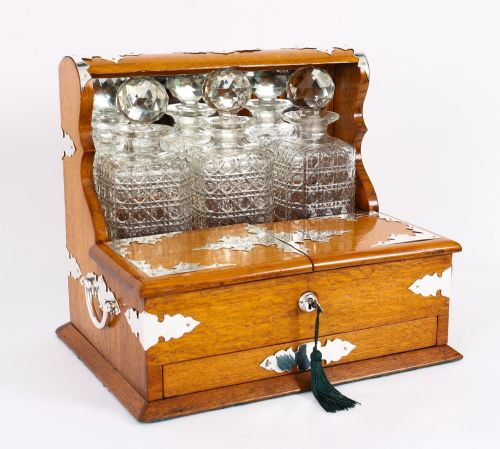
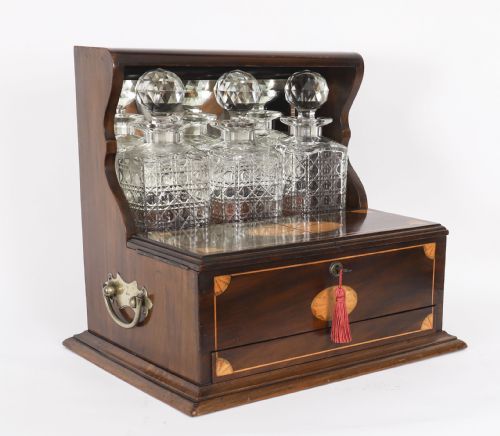
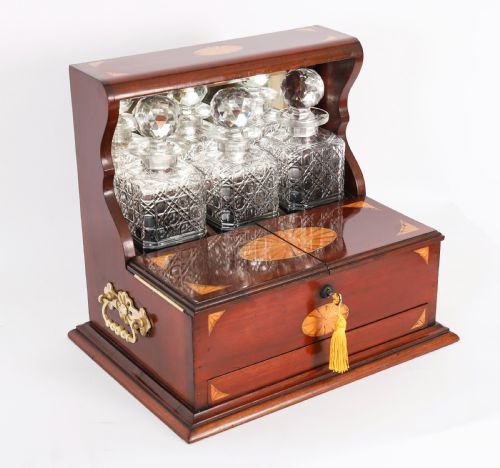
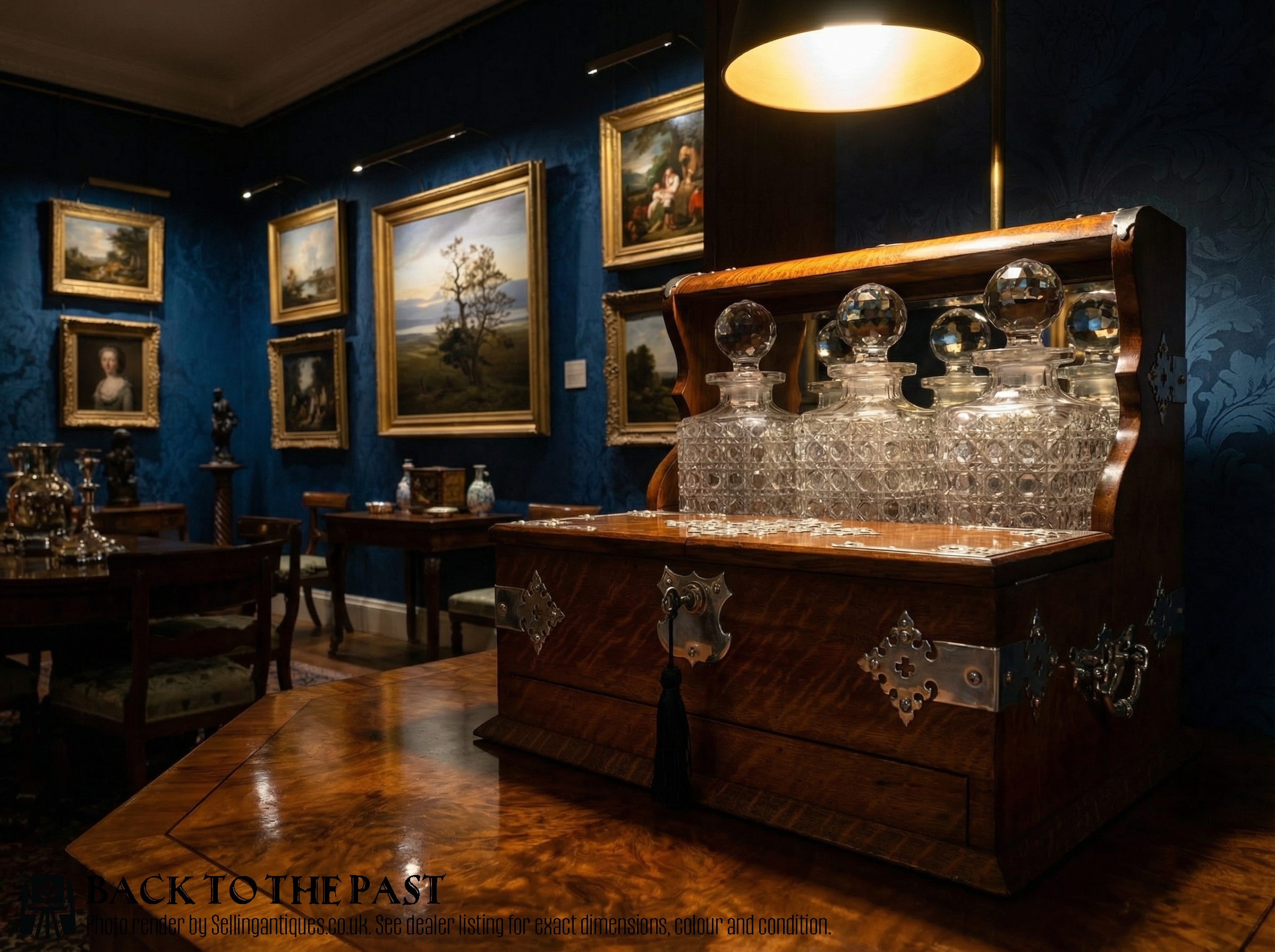
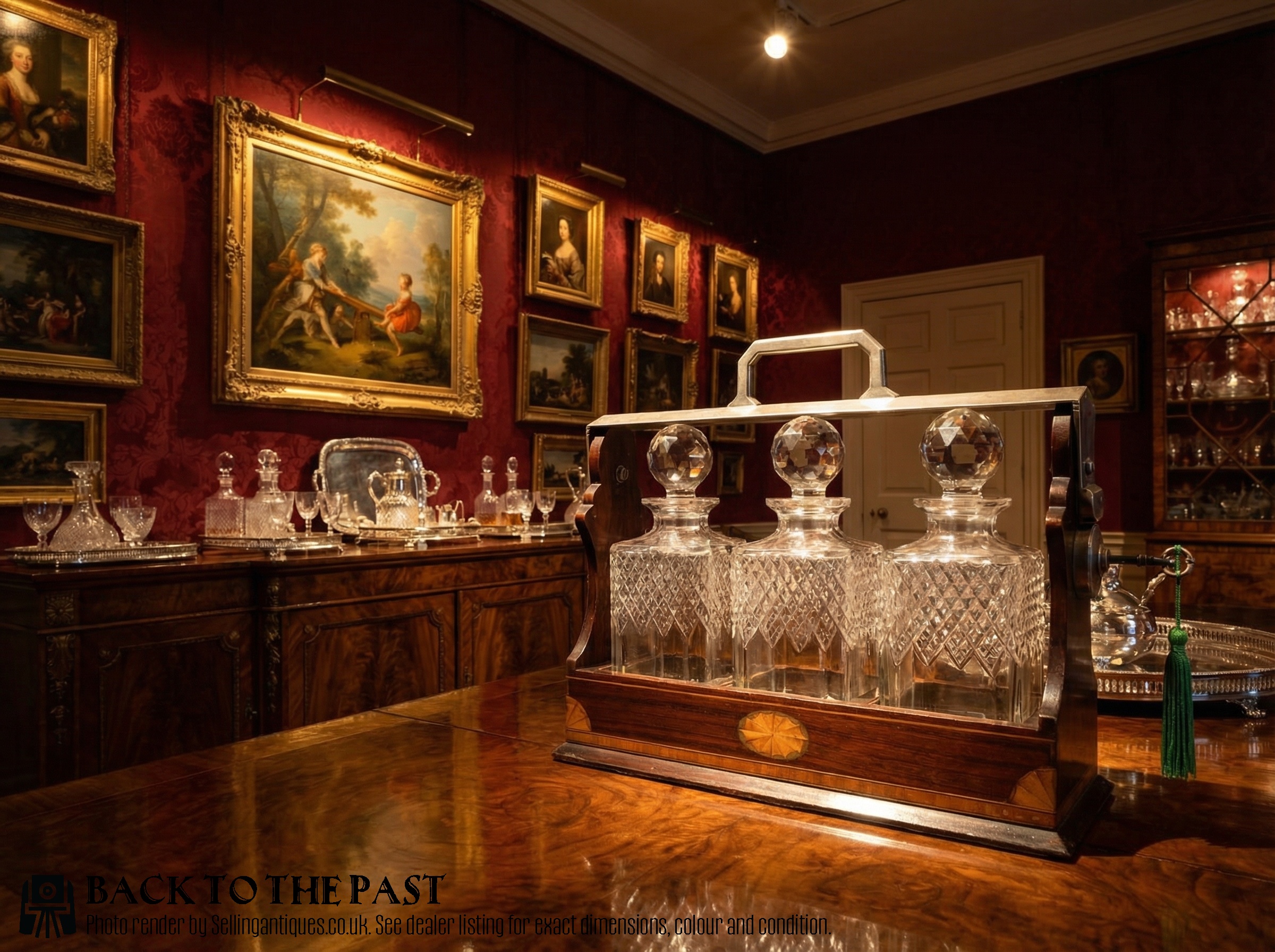
A 19th century tantalus is a locking barware container designed to secure precious liquor bottles from unauthorised pouring. The form appears primarily across the Victorian period, spanning decades from the 1870s to the 1890s.
The most common version on this page is the three-bottle setup housed in oak, mahogany, or burr walnut, frequently combined with games compendiums and dry bar fittings.
Makers adapted the concept into various formats, ranging from fitted decanter boxes and serpentine cave a liqueur boxes to substantial tantalus cabinets with silver plated mounts and brass plaques.
What Varies in Quality
The distinction between standard production and exceptional work rests on the ambition of the fitted interior, moving from simple bottle holders to complex combinations with games compendiums and humidors.
Materials dictate much of the standing, with exotic timbers like coromandel and burr walnut, paired with heavy silver plate and deep-cut crystal, representing the upper tier of execution.
The sophistication of the locking mechanism and the integration of maker details, such as named manufacturing firms, mark out superior examples.
Retail Price Guide 2026
Typical UK retail prices for 19th century tantalus, calculated from the Sellingantiques database of over a million retail prices indexed since 2003. This retail price guide relies exclusively on Sellingantiques data; no external sources or auction records are used, so the figures do not describe the wider market.
Victorian hosts used these locking frames precisely to keep thirsty household staff away from the good Scotch.
The Goldsmith Co.·Philip Ashberry·Betjemann & Sons
The 19th Century Tantalus Glossary
- Cave a liqueur
- A continental bottle box holding liqueur decanters and matching glasses, often featuring serpentine forms and brass inlay.
- Games compendium
- A multi-use box containing equipment for various parlour games, frequently built into the base or sides of a tantalus.
- Cut crystal
- Glassware carved with deep geometric patterns that catch the light, commonly matched to Victorian drinking cabinets.
- Coromandel
- A dense, dark exotic timber with striking contrasting grain, utilised for high-end nineteenth-century luxury boxes.
Frequently Asked Questions
How does a tantalus lock work?
The locking bar drops down over the glass stoppers of the decanters, preventing them from being pulled upward and out of the wooden frame.
Turning the key releases the metal bracket, allowing the bottles to slide free from their housing.
What is the difference between a tantalus and a decanter box?
A decanter box completely encloses the bottles beneath hinged lids and folding panels, hiding the glassware entirely from view when closed.
A tantalus displays the decanters openly behind a locking metal frame, showcasing the cut crystal while keeping the contents secure.
Were these made for wine or spirits?
These cabinets housed strong spirits and liqueurs rather than table wine, which required different storage and immediate pouring.
The inclusion of multiple small bottles suited the service of various costly cordials and whiskies after dinner.
How do I date a 19th century tantalus?
Dating relies on timber choices, hardware styles, and patent details stamped into the locking mechanisms by the manufacturing firms.
Walnut and coromandel boxes often point toward the middle and later decades of the century, while specific cabinet-makers' marks narrow the production window.