
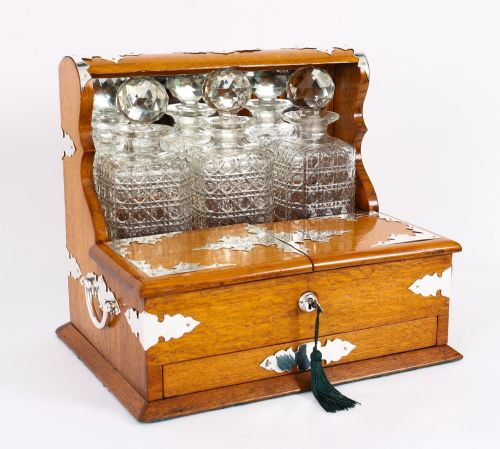
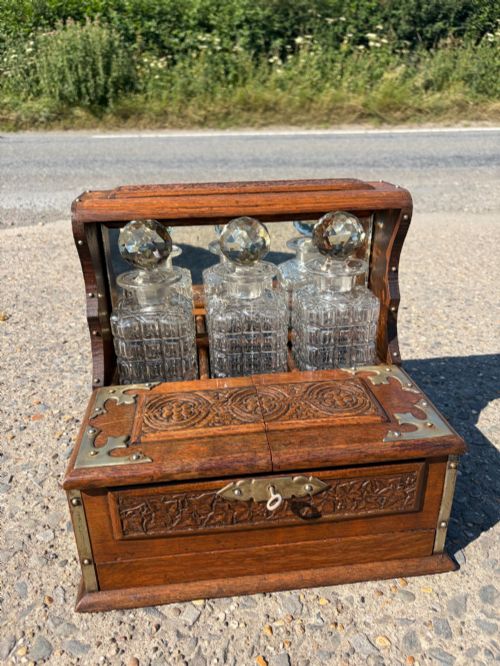
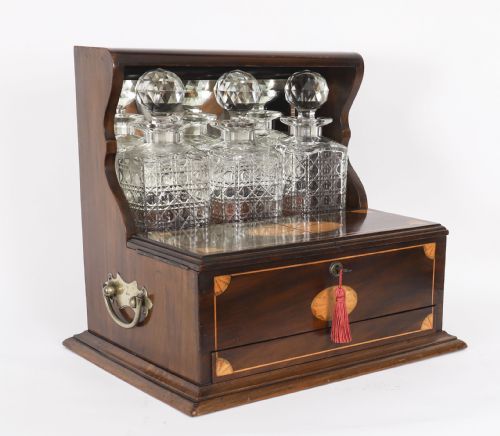

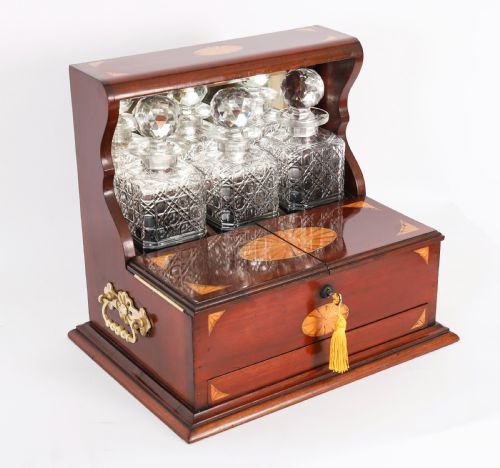
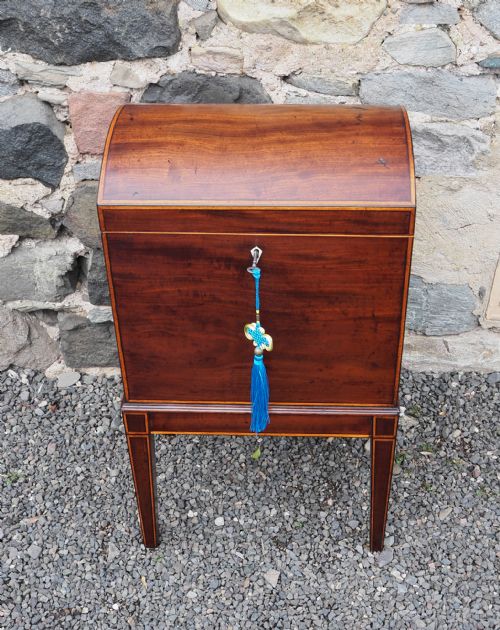


Spirit Decanter Chest
A spirit decanter chest protects your hospitality and organises your bottles.
Spirit Decanter Chest
A spirit decanter chest brings together portable drinking sets, cellarettes and locking tantalus boxes from the Georgian, Victorian and Edwardian periods. You will regularly encounter mahogany or oak cases housing cut crystal or cut glass bottles, often with integrated games compendiums.
The selections span simple single bottle carriers to large campaign sets and inlaid tantalus boxes fitted with brass mounts. These pieces reflect the changing domestic habits of the nineteenth century, moving from secure cellarettes to display bars.
Materials and construction
Cabinetmakers built these chests in dense timbers like mahogany, oak, walnut and satinwood, frequently applying brass binding or inlay to strengthen the corners and edges. The interiors required precise carpentry to create fitted partitions for decanters and drinking glasses.
Vessels within the boxes rely on heavy cut crystal or cut glass, sometimes enhanced with gold decoration or paired with silver mounts. Locking mechanisms deployed brass locks to secure spirits away from household staff.
Listings span the Georgian, Regency, Victorian, and Edwardian periods, utilising mahogany, oak, satinwood, and cut crystal.
What separates the examples
Quality rests in the precision of the internal joinery and the selection of figured timber veneers. Superior boxes feature intricate marquetry stringing, substantial brass hardware and fully intact original crystal decanters.
The sophistication of the locking mechanism and the inclusion of functioning games compendiums differentiate standard containers from exceptional pieces. The weight and clarity of the glass bottles further distinguish the tier of the object.
The Spirit Decanter Chest Glossary
- Cellarette
- A secure freestanding or table cabinet designed to hold wine and spirits bottles. These precursors to the tantalus date back to the Georgian era.
- Tantalus
- A locking drink cabinet that displays decanters while preventing access without a key. The frame holds the bottles by their necks until unlocked.
- Games Compendium
- A fitted box containing boards and pieces for pastimes like chess, backgammon or cards. They frequently share housing with nineteenth-century decanters.
- Marquetry
- Decorative woodwork where small pieces of wood veneer form intricate patterns on a surface. Craftsmen used this technique to ornament Victorian oak boxes.
- Campaign Set
- Portable furniture and equipment designed for travel by officers or gentlemen on the move. These sets packed tightly into fitted wooden chests.
Spirit Decanter Chest: Frequently Asked Questions
How do you date a spirit decanter chest?
Dating relies upon the combination of timber choices, construction methods and lock types used in the cabinet. Earlier pieces from the Georgian period favour solid mahogany and simpler fitted interiors.
Later Victorian and Edwardian examples often incorporate satinwood inlay, combination locks or complex tantalus mechanisms designed to secure the bottles from the top handle.
What is the difference between a tantalus and a cellarette?
A cellarette is a deep box or cabinet traditionally used to store wine bottles beneath a lid or within a pedestal base. They appear frequently in Georgian dining rooms.
A tantalus exposes the decanters visually within a metal and wood framework while locking them securely in place by a hinged bar across the stoppers, a design that emerged during the Victorian era.
How should I clean the wooden case?
Maintain the finish by applying a quality beeswax and buffing gently with a soft cloth to nourish the dry timber. Avoid modern silicone polishes that can build up on antique veneers and damage the surface.
Keep the chest away from direct sunlight and strong heat sources to prevent the wood from warping or the glue joints from failing over time.
Can I replace missing decanters?
Finding exact period replacements for missing decanters requires patience because nineteenth-century glassmakers blew and cut bottles to fit specific internal dimensions. Look for period-correct cut crystal bottles that match the height and base width of the original apertures.
Even slight variations in the shoulder height of the decanter can prevent a tantalus locking bar from closing properly across the stoppers.