
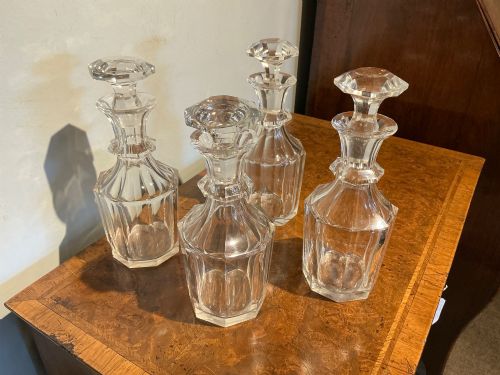
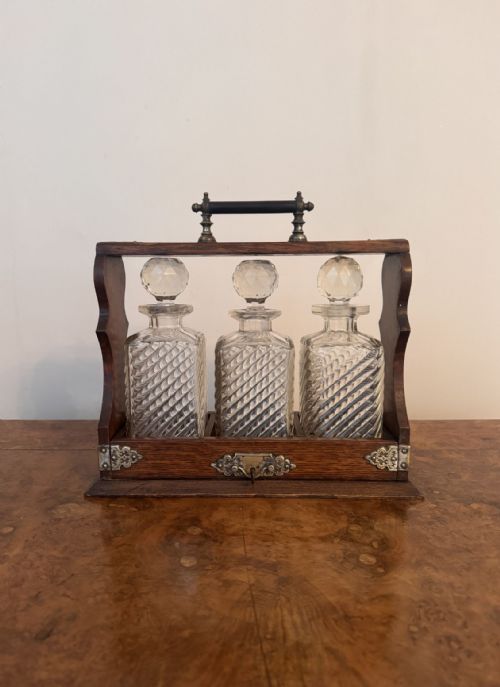
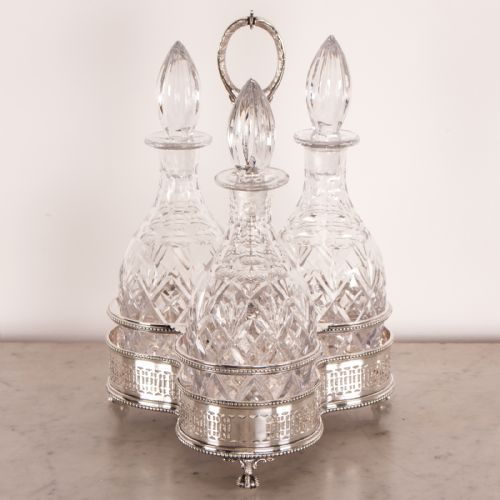
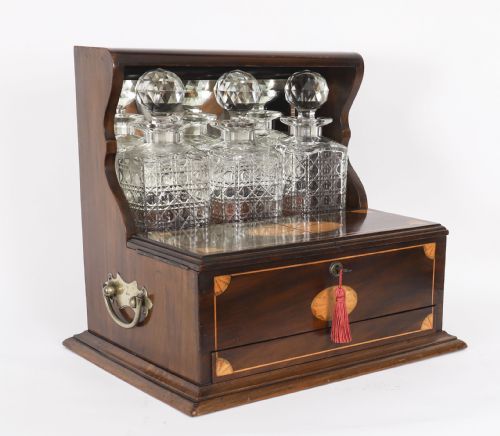





Cut Crystal Decanter Set
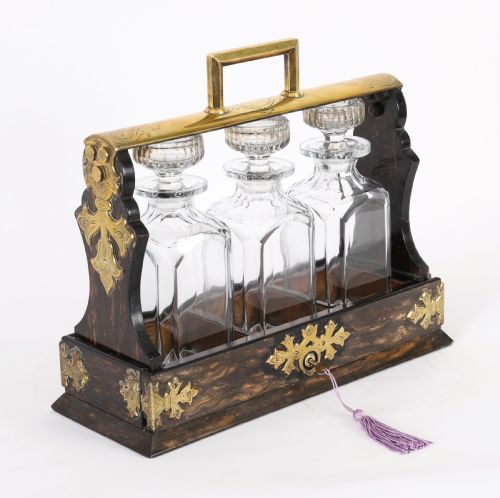
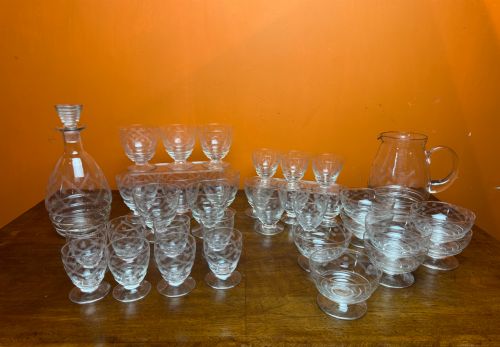
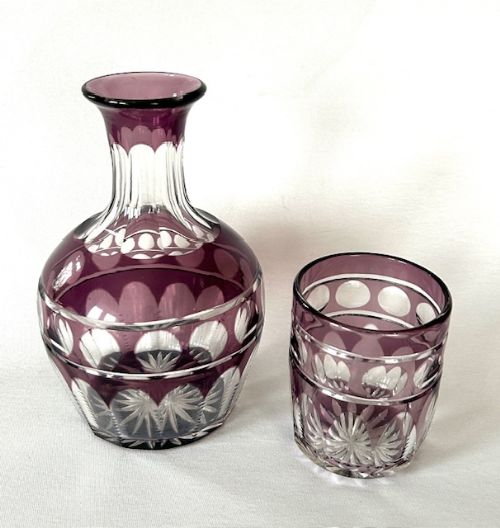
These cut crystal decanter set pieces are heavy lead glass vessels housed in fitted stands or locking tantalus frames that secure spirits in style.
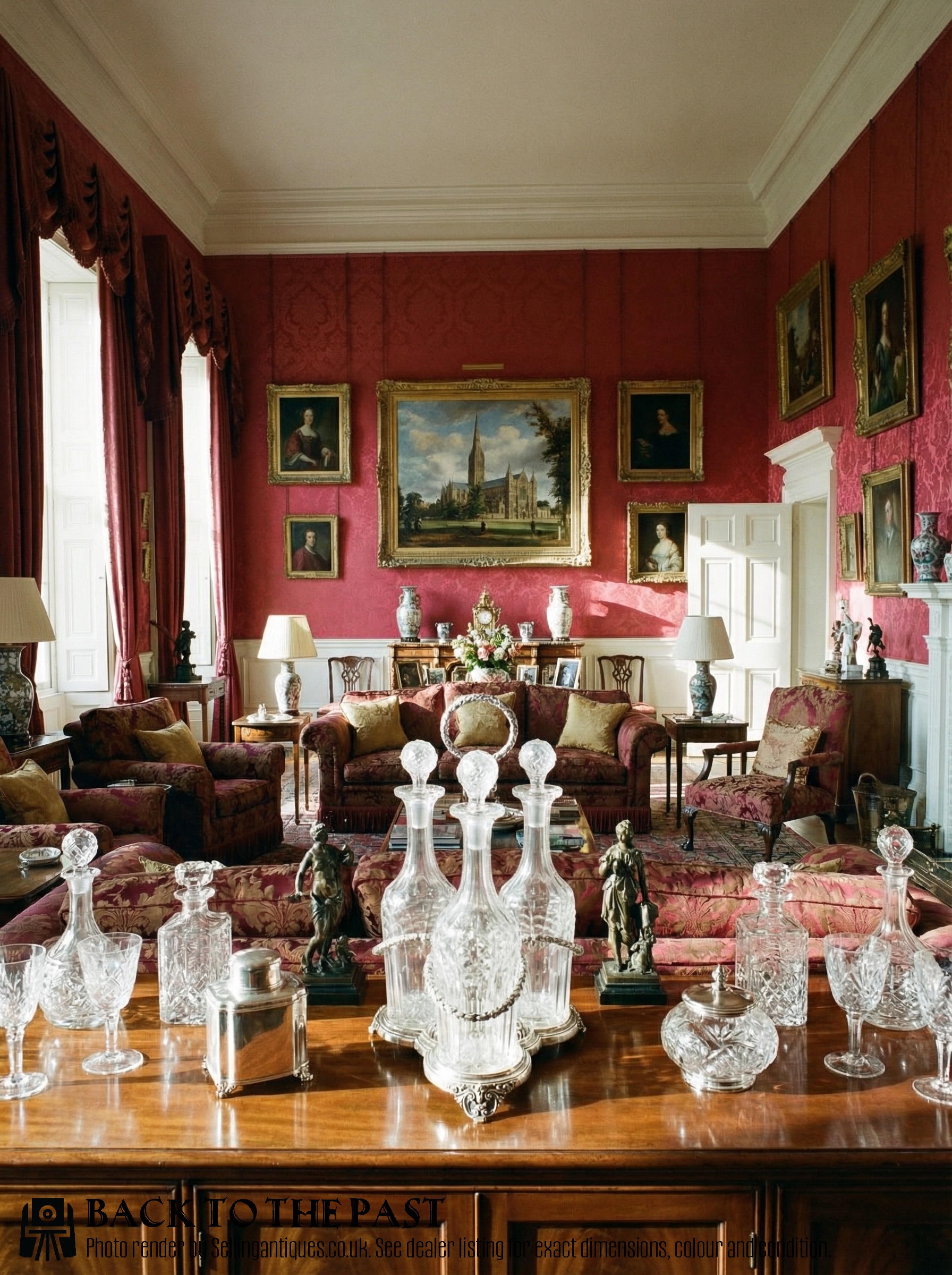
Identifying cut crystal decanter sets
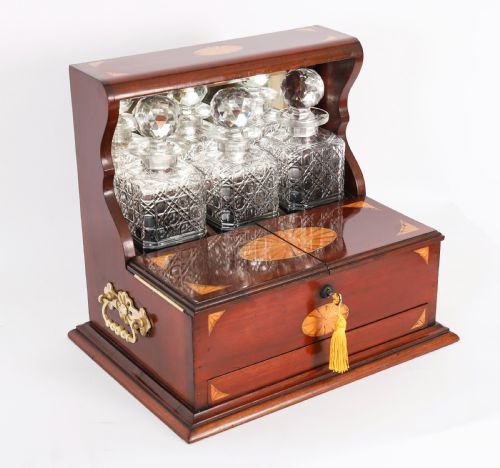
A cut crystal decanter set typically comprises two or three heavy glass bottles paired with a specialised serving frame or secure housing. These assemblies range from ornate metal stands to elaborate locking boxes incorporating games compendiums.
The versions most commonly met here include Victorian and Edwardian tantalus frames fitted with hobnail cut bottles and mahogany or satinwood veneer cases. Oak frames and silver-plated stands also appear frequently across the inventory.
Originating primarily from British workshops of the late nineteenth and early twentieth centuries, these pieces combine heavy spirit bottles with functional social furniture designed for the dining room or library.
Materials and construction
The bottles are formed from heavy lead crystal or cut glass, shaped by blowing and finished with deep geometric facet cutting or hobnail patterns. Engraved lettering occasionally identifies specific spirits directly on the glass surface.
Frames and stands utilise substantial hardwoods such as mahogany, satinwood, and oak, frequently enhanced with inlaid details and mirror glass bases. Metal components rely on silver plate and brass for handles, locks, and protective corners.
Retail Price Guide 2026
Typical UK retail prices for cut crystal decanter set, calculated from the Sellingantiques database of over a million retail prices indexed since 2003. This retail price guide relies exclusively on Sellingantiques data; no external sources or auction records are used, so the figures do not describe the wider market.
Victorian hosts locked their whiskey away from thirsty butlers inside ingenious frames named after the mythological king who starved just out of reach of fruit and water.
Assessing quality and execution
Quality rests upon the crispness of the glass cutting and the weight of the crystal bottles, where deeper facets catch the light more effectively. Matching stoppers original to each bottle elevate an assembly significantly.
The joinery and timber selection of the housing frame dictate the upper tier of the range, particularly where intricate inlay work and functional locking mechanisms remain intact and fully operational.
Walker & Hall·James Powell·Elkington
The Cut Crystal Decanter Set Glossary
- Tantalus
- A locking wooden frame that holds decanters securely by their necks, preventing the removal of the bottles while displaying the contents within. This ingenious security device keeps spirits safe from unauthorized access by domestic staff.
- Hobnail cut
- A decorative surface pattern featuring rows of small, raised pyramidal facets cut into the glass. This dense cutting style creates a highly tactile texture that refracts light brilliantly.
- Optically blown
- A glassmaking technique where molten metal is inflated inside a ribbed or patterned mould to create subtle vertical fluting in the vessel wall. The resulting optical distortion adds depth to the clear material.
- Games compendium
- A multi-compartment box integrated into the decanter stand to store playing cards, dice, and gaming boards. Such multifunctional furniture pieces were popular for evening entertainment in Victorian drawing rooms.
- Silver plate
- A thin layer of silver fused over a base metal foundation, commonly used for the structural stands and carrying handles. This technique provided the opulent appearance of solid silver at a more accessible cost.
Frequently Asked Questions
What is a tantalus?
A tantalus is a locking wooden or metal frame designed to secure decanters so that guests or staff cannot pour drinks without a key. The metal bar locks over the stoppers, keeping the spirits visible yet physically out of reach.
First patented in the Victorian era, these locking frames became status symbols in middle and upper-class homes. They allowed hosts to display expensive imported spirits safely in the dining room or study.
How do I date a set?
Dating relies on the style of the timber housing, the complexity of the glass cutting, and any maker marks on the silver plate. Victorian pieces often feature heavy oak or mahogany, while Edwardian examples show lighter satinwood inlay.
Mechanical hardware and lock designs also provide clues, as patented locking mechanisms evolved rapidly through the second half of the nineteenth century. Examining the stoppers and base wear helps confirm period authenticity.
Are the stoppers original?
Original stoppers match the exact cut pattern, glass colour, and internal wear of the decanter body. Because stoppers were easily broken or swapped over decades of use, finding a matched set requires careful inspection.
Holding the bottle up to the light helps reveal if the glass tint and refractive index match between the stopper and the base. Numbered grinding marks on the neck and peg can also confirm the stopper belongs to that specific vessel.
How should I clean them?
Cleaning cut crystal decanters requires lukewarm water and mild detergent, avoiding sudden temperature changes that can crack aged glass. Wooden stands and metal mounts should be dusted with a dry cloth and kept away from excessive moisture.
Stubborn interior residue responds best to specialised bottle brushes rather than harsh chemical abrasives. Silver-plated mounts benefit from gentle polishing with a non-abrasive cloth to preserve the underlying finish.