


Antique Liquor Decanter Set
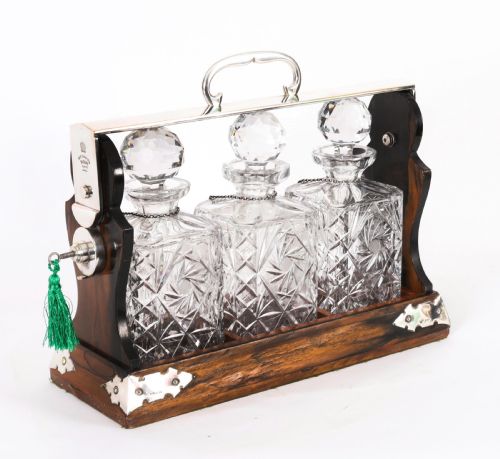
An antique liquor decanter set holds spirits securely in cut crystal bottles housed within fitted wooden stands or locking frames.
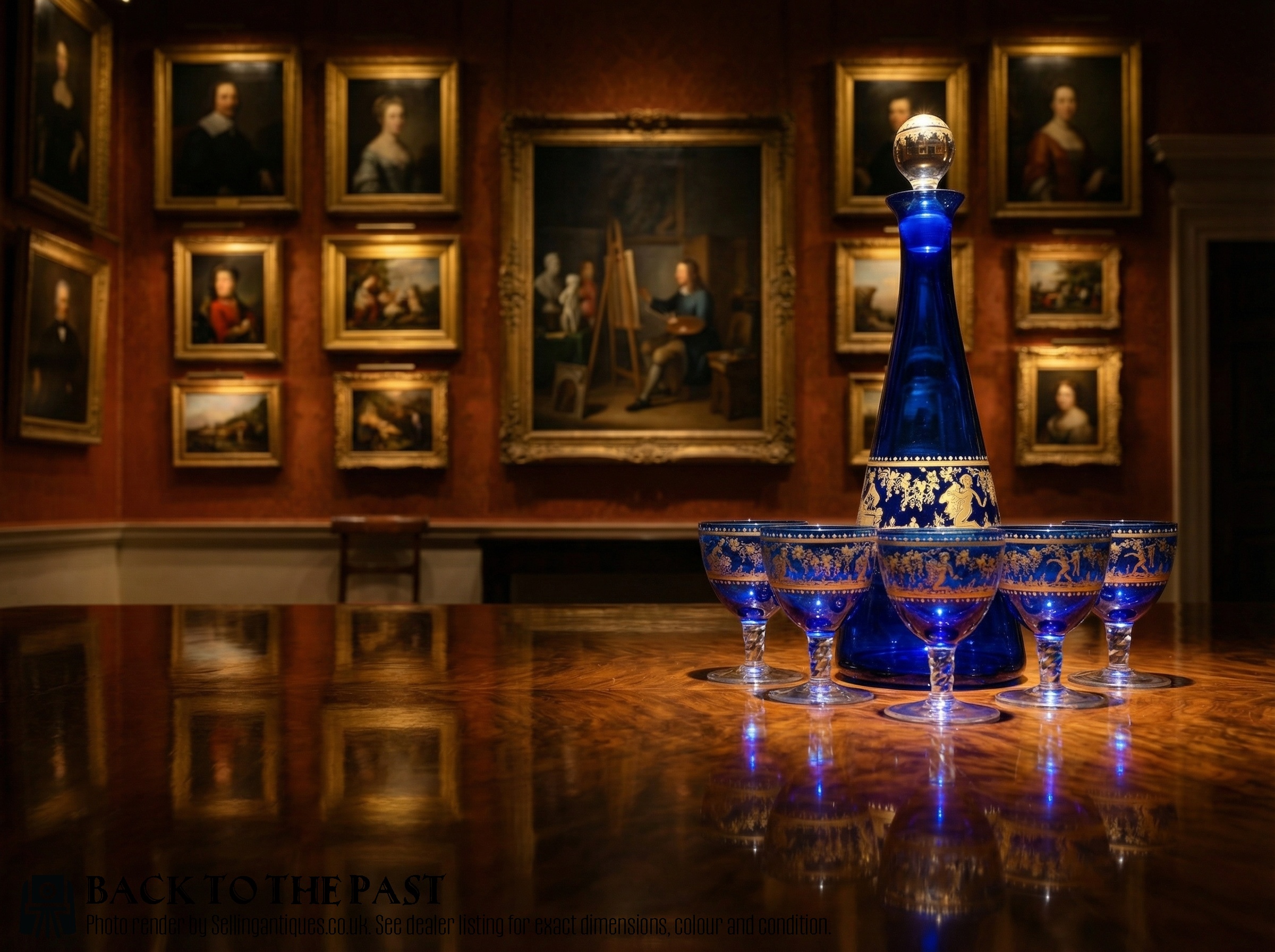
Antique Liquor Decanter Set
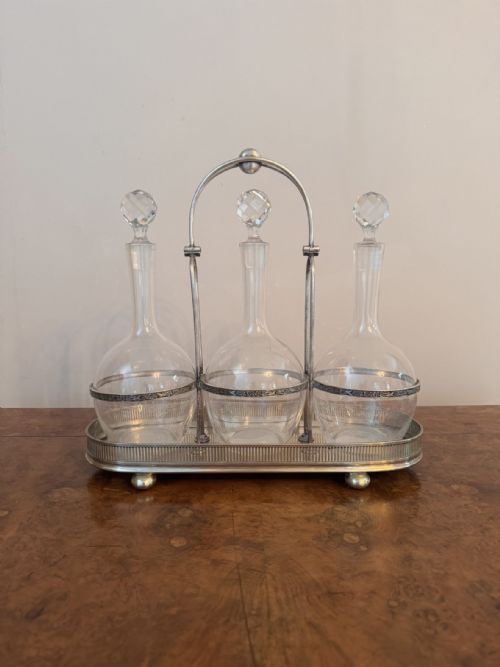
An antique liquor decanter set encompasses several distinct formats designed to hold and display spirits in the home. Buyers encounter everything from portable mahogany boxes and French cave à liqueur cases to locking oak tantalus frames secured with metal bars. These pieces span the Victorian, Edwardian, and Art Deco periods, drawing on Georgian traditions of serving fine drinks.
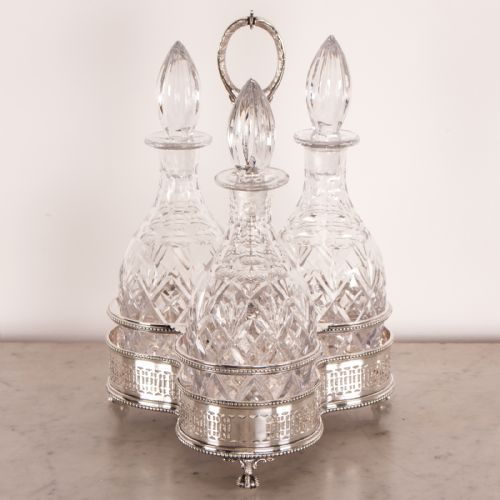
The most frequent version on this page is the three-bottle tantalus or fitted stand holding cut crystal decanters alongside silver-plated mounts. Alongside these stands, collectors find matching sets of glass decanters paired with six glasses from the nineteen-thirties, as well as earlier nineteenth-century lockable spirit boxes lined in velvet.
Materials shift across these decades from heavy timbers like oak, walnut, and coromandel to polished brass, silver plate, and clear, coloured, or frosted glass. Pieces range from plain late-nineteenth-century utility items to ornate French ormolu-mounted liqueur cabinets designed for formal drawing rooms.
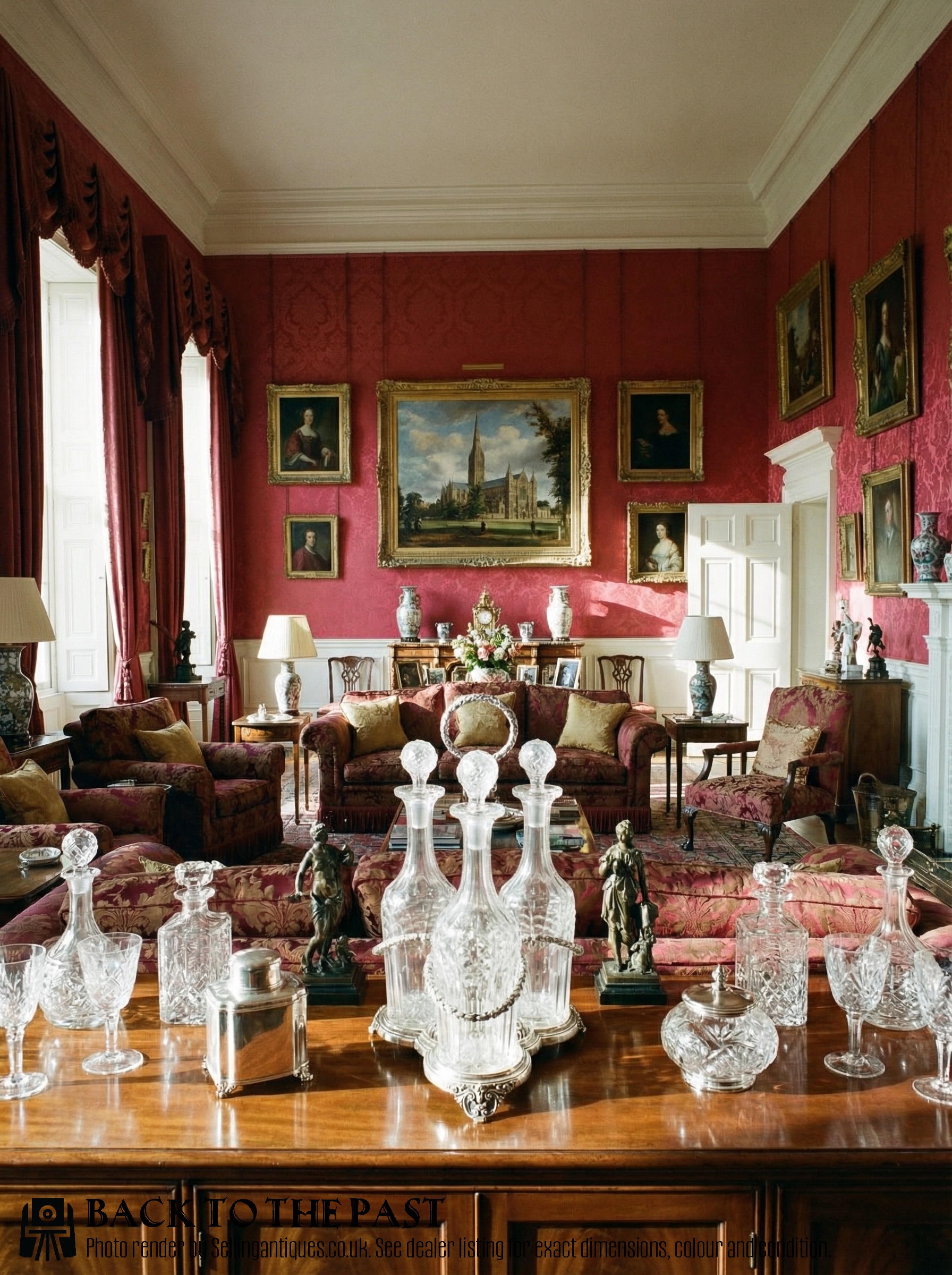
Materials and construction
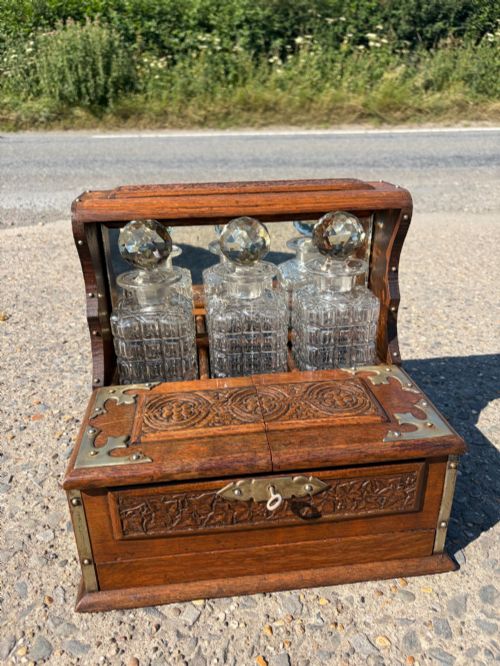
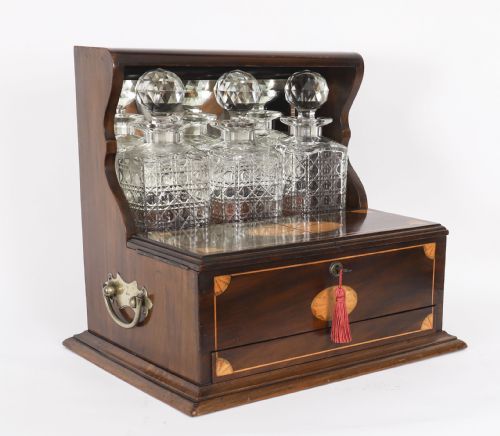
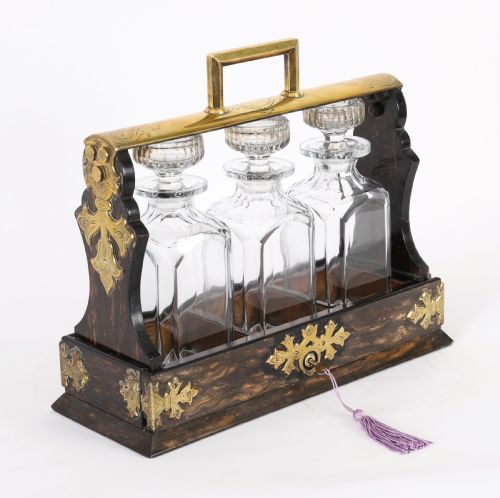
Makers built these sets using durable hardwoods such as oak, mahogany, and coromandel, often embellished with brass mounts, inlay, and marquetry stringing. Wood was joined with precision to house glass bottles safely while incorporating locking mechanisms and drop-front game compendiums.
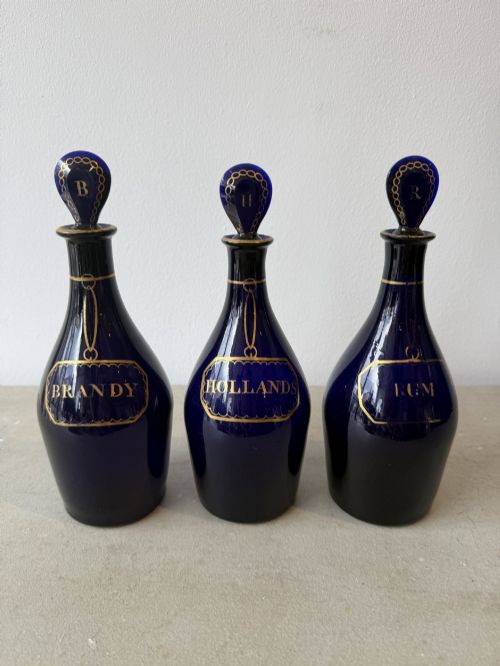
Decanters and matching glasses were formed from cut crystal, frosted glass, or coloured glass including Bristol blue, ruby, and cranberry tones. Metal elements combined silver plating or old Sheffield plate with brass handles, hinges, and locks.
Antique Liquor Decanter Set Retail Price Guide 2026
Typical asking prices for liquor decanter set among the pieces listed under this phrase on Sellingantiques today, from the lower quarter to the upper quarter. They describe what is for sale here now, not the wider market.
Several Victorian oak stands double as secret game compendiums, hiding cards and counters beneath the liquor bottles.
Standards of craftsmanship
Quality rests upon the weight and clarity of the glass bottles and the precision of the woodwork housing them. Finer examples feature heavy cut crystal decanters with matching stoppers, substantial silver-plated stands, and tightly fitted locking bars that operate smoothly.
The sophistication of the cabinetwork separates standard items from exceptional pieces. Superior boxes display figured veneers, marquetry inlay, original working keys, and integrated compartments for games or glasses.
Walker & Hall·Betjemann·Baccarat·James Powell·Elkington·Val Saint Lambert
The Antique Liquor Decanter Set Glossary
- Tantalus
- A locking drink stand that holds decanters by their necks to prevent unauthorized removal while displaying the bottles within a metal bar frame.
- Cave a liqueur
- A fitted French box or case containing a set of matching liqueur glasses and decanters, often decorated with ormolu mounts.
- Decanter label
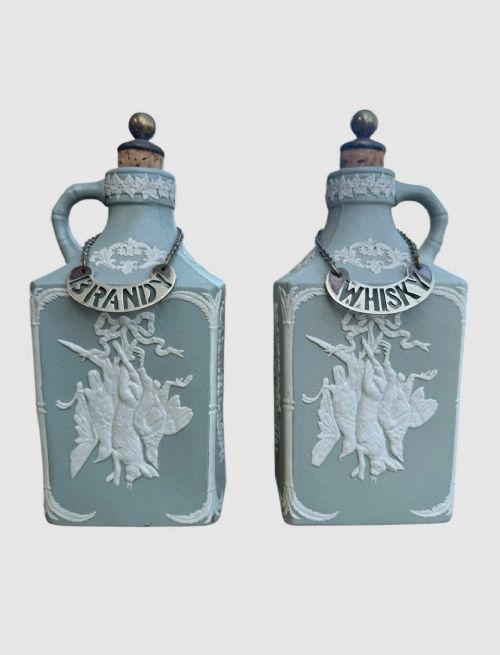
- A small silver or plated tag hung by a chain around the neck of a bottle to identify the spirit inside.
- Cut crystal
- Glass shaped with sharp geometric facets through wheel-cutting to catch the light and create a brilliant surface.
- Silver plate
- A thin layer of silver fused or electroplated onto a base metal foundation such as copper or nickel brass.
Antique Liquor Decanter Set: Frequently Asked Questions
What is a tantalus?
A tantalus is a locking liquor stand that secures decanters behind a metal bar. This design allows owners to display fine spirits while preventing servants or guests from pouring drinks without permission.
The name draws on the Greek myth of Tantalus, whose food and drink remained forever out of reach, because the bottles are fully visible yet locked away inside the frame.
How do you date an antique set?
Dating relies on combining the style of the woodwork, the cut of the glass, and any metal hallmarks present on the mounts or bottle labels. Victorian pieces often favor heavy oak and coromandel with robust brass hardware.
Later Edwardian and Art Deco examples shift toward sleeker lines, lighter wood tones, or matching glass services with six tumblers. Examining the construction methods inside the box provides further clues to the exact decade of manufacture.
Were these sets used for dining?
These sets served primarily in drawing rooms, studies, and dining rooms to offer after-dinner liqueurs and spirits to guests. Portable boxes allowed hosts to lock away valuable alcoholic beverages between social gatherings.
Many examples combine the decanter frames with games compendiums, housing playing cards and counters alongside the crystal bottles to entertain visitors.