
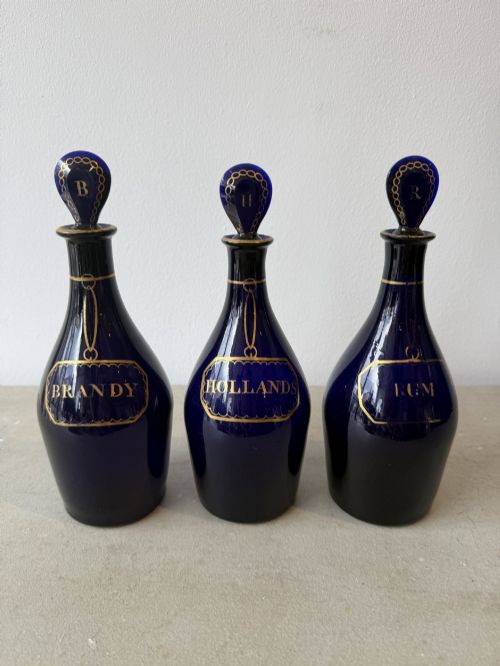
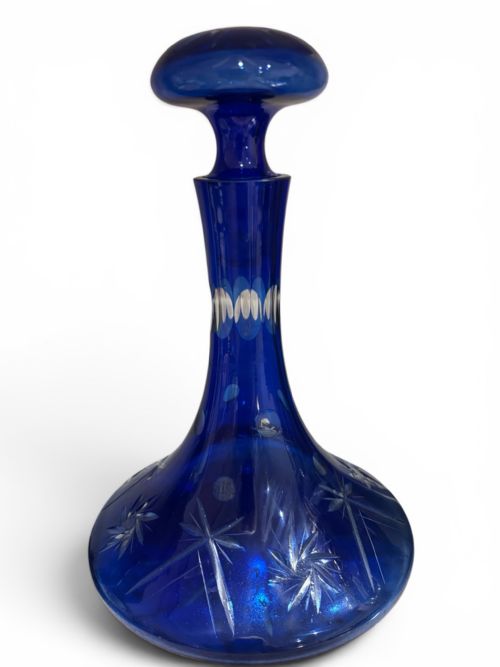


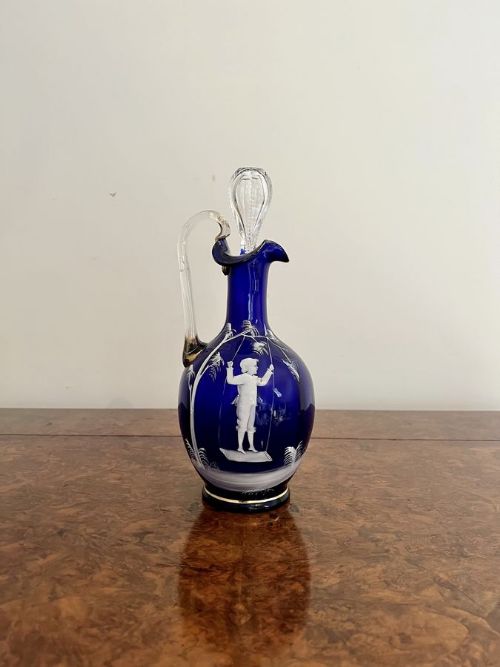
Cobalt Blue Decanter
A cobalt blue decanter brings intense colour and historical presence to a table, combining deep glass tones with period silver or enamel.
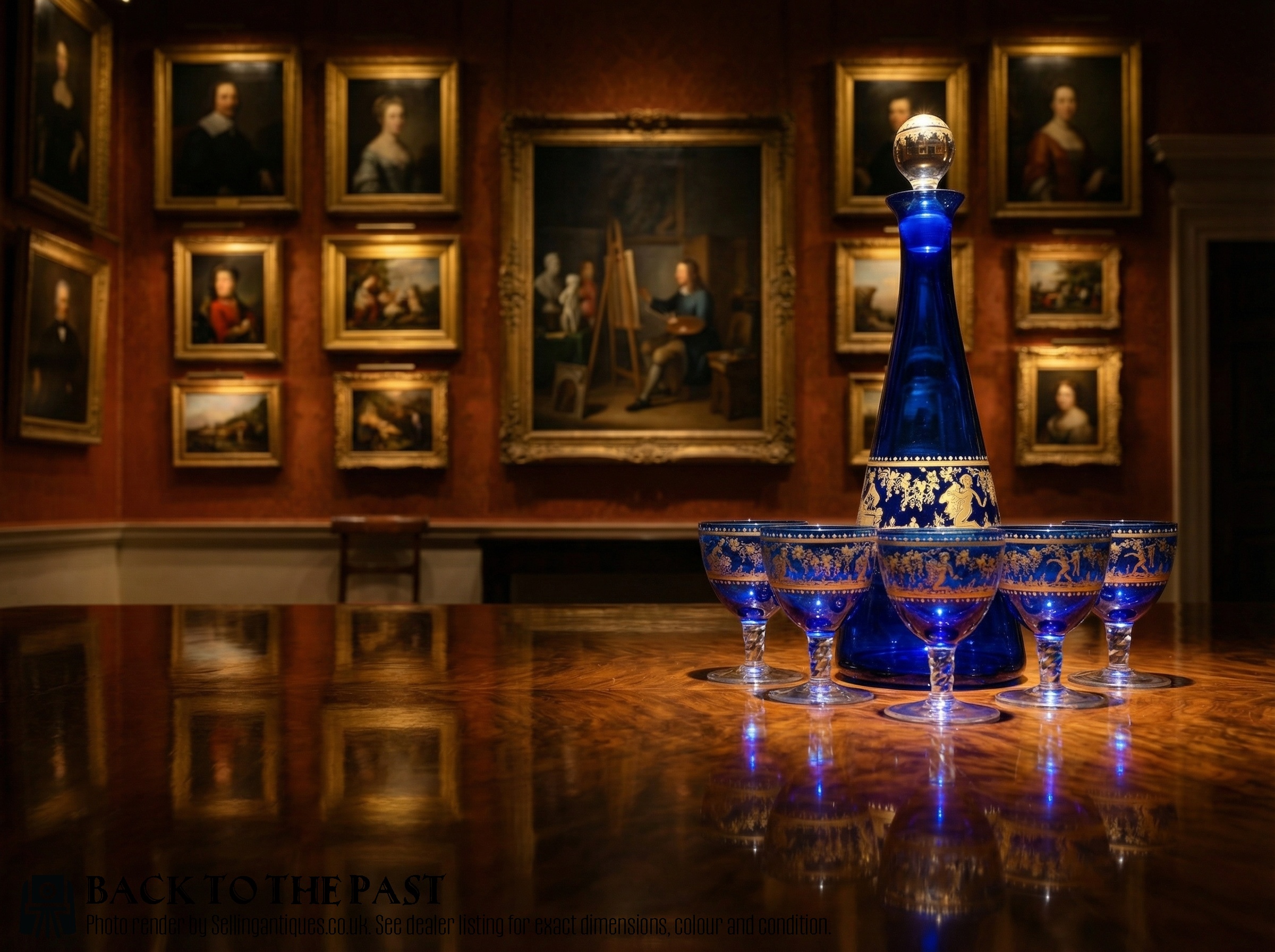
Cobalt Blue Decanter
When you search for a cobalt blue decanter, you encounter vessels produced primarily during the nineteenth century, alongside earlier Georgian examples and later Art Deco interpretations.
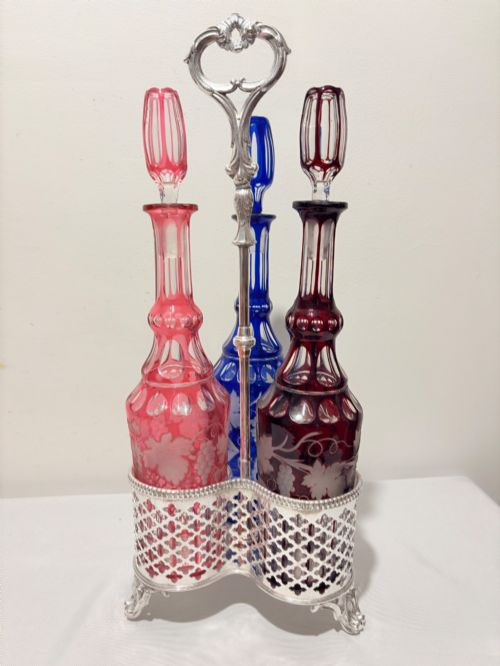
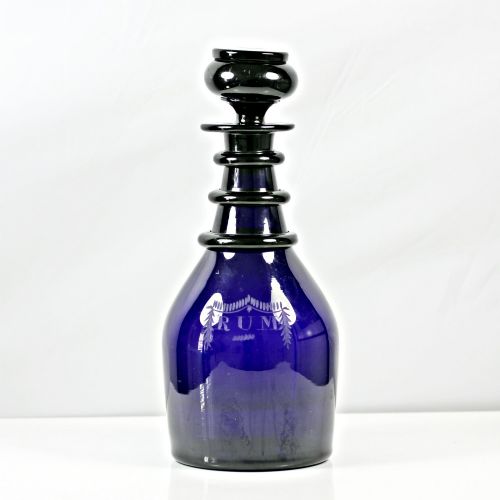
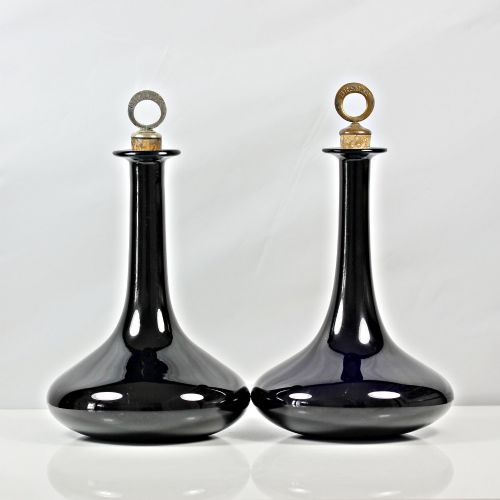
The most common items on this page are Victorian Bristol blue vessels, ranging from three-ring rum decanters and mell shapes to serving bottles and apothecary jars.
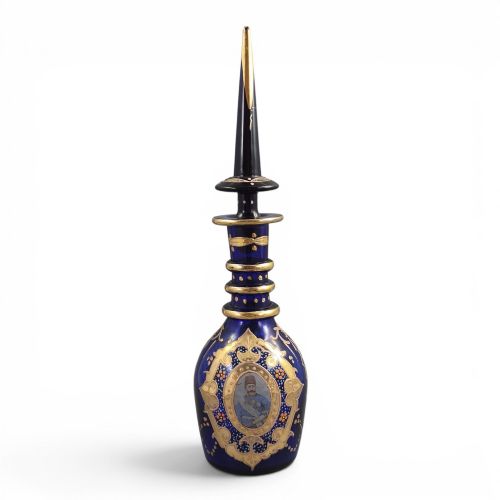
Origins span English glasshouses, Bohemian workshops created for export, and occasional Japanese Arita bottles, showing a wide international reach for rich blue glass.
What varies in quality
Quality depends on the depth and saturation of the cobalt glass itself, alongside the crispness of any hand-cut facets or hand-painted enamel details.
The integration of metal components matters greatly, separating standard silver plate from heavier, more refined mounts or complete decanter stands.
Proportion and form define the better examples, where traditional shapes like the mell or three-ring body remain well-balanced and structurally sound.
Some Victorian apothecaries kept their remedies in brilliant blue glass simply to ensure the shelf looked cheerful during bleak winter mornings.
The Cobalt Blue Decanter Glossary
- Bristol blue
- A deep cobalt glass traditionally associated with West Country glasshouses in England during the Georgian and Victorian periods.
- Mell decanter
- A mallet-shaped bottle with a wide base and tapering neck, frequently used for spirits during the eighteenth and nineteenth centuries.
- Qajar Era
- A Persian historical period that influenced nineteenth-century Bohemian glassmakers to produce specific export wares featuring vibrant enamel work.
- Silver plate
- A layer of silver fused to a base metal foundation, commonly utilised for the rims, necks, and stands of nineteenth-century serving bottles.
- Mary Gregory
- A style of white enamel decoration depicting silhouetted Victorian children, typically applied to dark glass surfaces.
Cobalt Blue Decanter: Frequently Asked Questions
What were cobalt blue decanters used for?
These vessels served to store and pour spirits, wines, and medicinal liquids on dining tables and sideboards. Their dark glass protected light-sensitive contents from degradation.
They also functioned as decorative objects, adding striking visual contrast to nineteenth-century room interiors and entertaining spaces.
How do I identify a Georgian decanter?
Georgian examples often feature hand-blown bodies with polished pontil marks on the base, combined with characteristic three-ring necks for a secure grip. Their proportions tend to be stout and heavy.
Looking closer at the glass reveals minor bubbles and irregularities typical of early manufacturing methods before industrial pressing became widespread.
How should I clean blue glass?
Wash these pieces gently using warm water and mild soap, avoiding harsh abrasives that might damage surface enamelling or gold leaf accents. Wooden bottle brushes help clean interior residue safely.
Dry the glass thoroughly with a soft cloth to prevent water spots from dulling the rich cobalt surface.
Are stoppers original to the bottles?
Many antique bottles survive without their original stoppers because these fragile glass elements were easily misplaced or broken over generations of use. Replacement stoppers are common in the secondary market.
When a piece retains its matching stopper, it usually shares the same tone of glass and wear patterns consistent with the body.