



Blue Glass Bottle
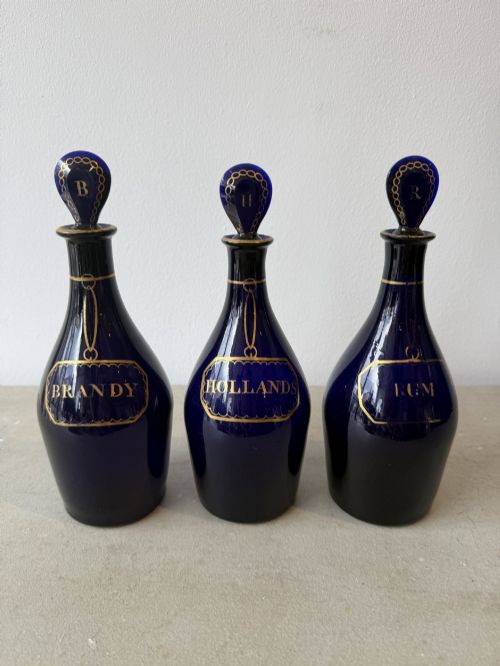
These pieces of blue glass bottle range from small Victorian scent vials to deep Georgian decanters, prized for their rich cobalt tones and decorative metal mounts.
Blue Glass Bottle
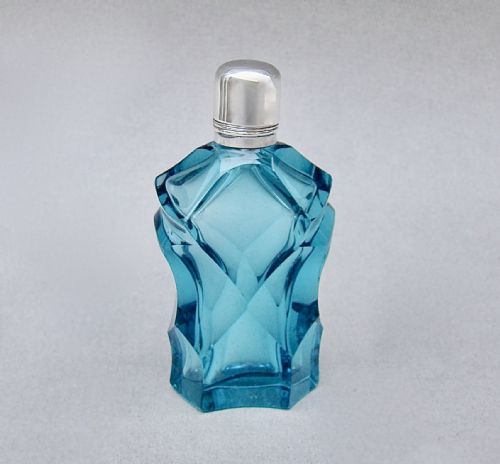
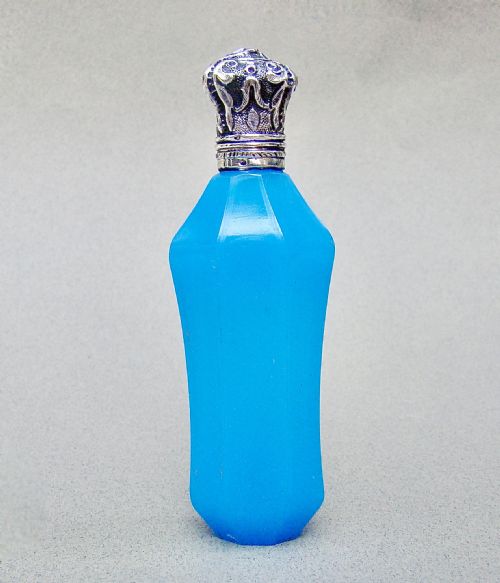
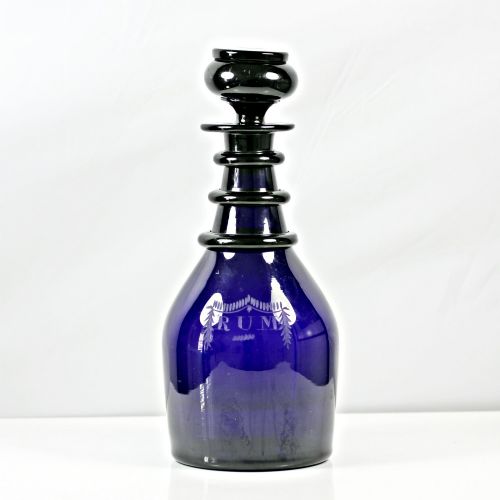
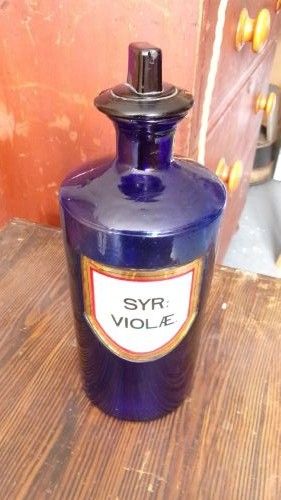
A blue glass bottle encompasses a wide variety of functional and decorative vessels from the Georgian, Victorian, and Edwardian eras. Buyers frequently encounter deeply pigmented table decanters, pharmacist containers, and pocket-sized scent bottles.
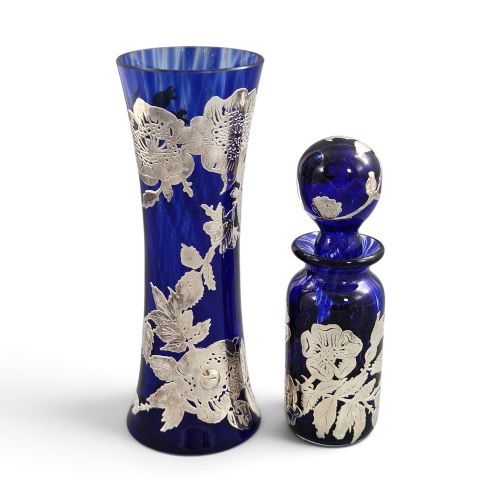
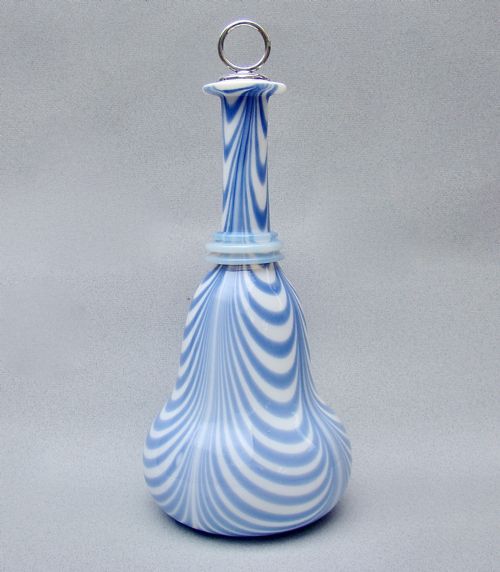
Many examples combine rich cobalt or opaline glass bodies with precious metal elements such as sterling silver overlays, hinged lids, and chatelaine mounts. Others showcase specialised manufacturing origins like Bristol, Bohemia, and French glassworks.
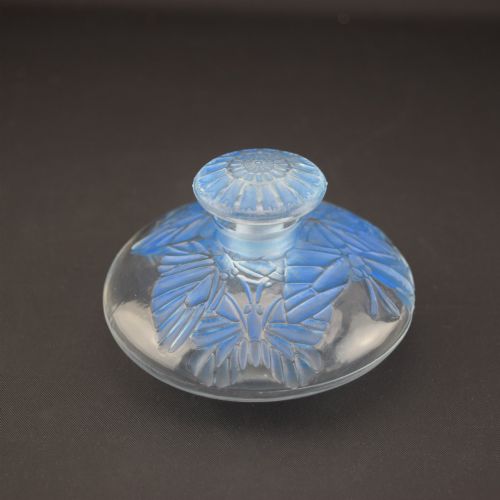
The selection ranges from utilitarian spirits flagons and chemist jars to moulded perfume flasks designed by notable early twentieth-century makers. Each form illustrates how intense colour transformed everyday storage into display items.
How They Were Made
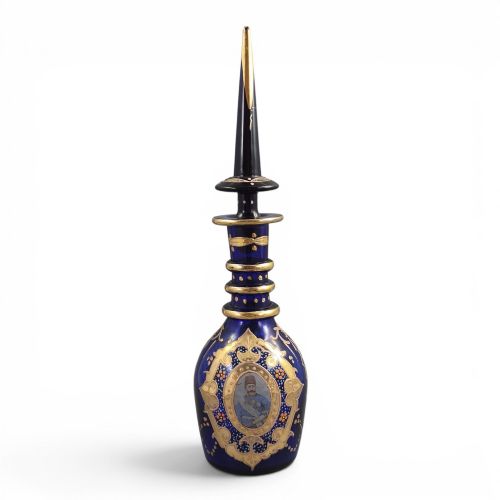
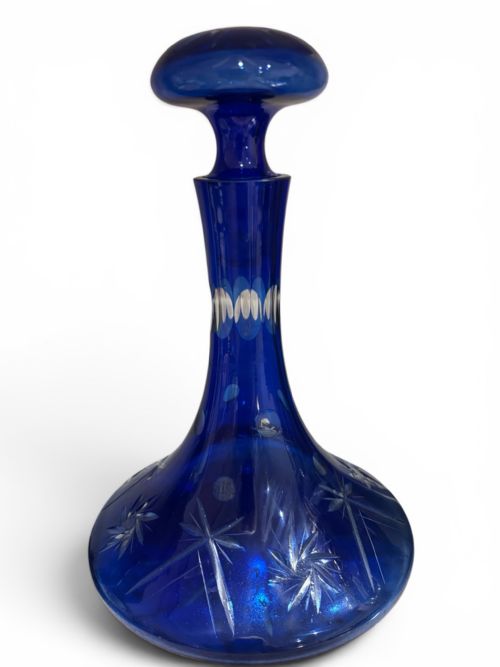
Craftsmen produced these vessels using free-blowing and mold-blowing techniques, incorporating metallic oxides into the molten batch to achieve distinct cobalt and teal shades. Overlay pieces involved casing a clear or coloured core with a contrasting layer of glass before cutting away patterns.
Metal components, including sterling silver, silver plate, and old Sheffield plate, were custom-fitted to bottle necks and stoppers. Enamelling, hand-painting, and wheel-cutting frequently decorated the exterior glass surfaces.
Materials documented across the inventory include sterling silver, opalescent glass, guilloche enamel, and old Sheffield plate.
What Varies in Quality
Quality rests upon the depth and uniformity of the glass coloration, alongside the crispness of any wheel-cut or overlay detailing. Heavy, resonant crystal and thick cased glass indicate superior material selection.
The integration and hallmarking of the metal mounts heavily influence desirability. Elaborate chased silverwork, intact guilloche enamel, and original matching stoppers elevate an ordinary container into a masterwork.
Rene Lalique·Charles May·Sampson Mordan·Karl Palda·Franchini And Bigaglia
The Blue Glass Bottle Glossary
- Bristol Blue
- A deep cobalt glass traditionally associated with West Country production centres during the Georgian and Victorian periods. It gained widespread popularity for serving bottles and apothecary wares.
- Overlay Glass
- A technique where a glass vessel is cased in one or more contrasting exterior layers. Artisans then cut through the outer stratum to expose the base colour beneath.
- Mell Decanter
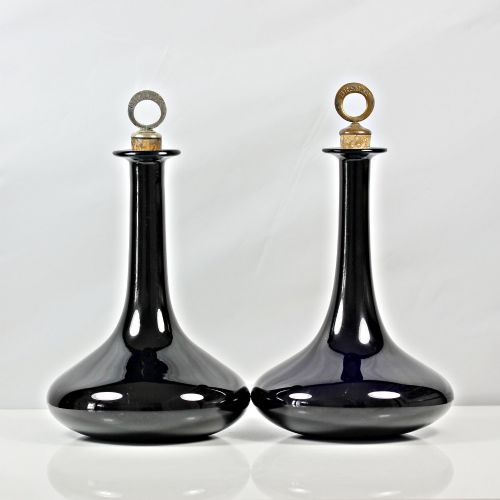
- A heavy, mallet-shaped wine bottle featuring a broad base and tapered neck. These stable forms prevented tipping aboard ships and at crowded dining tables.
- Guilloche Enamel
- A decorative metalworking process where an engraved geometric pattern is covered with translucent enamel. It appears frequently on early twentieth-century perfume bottle caps.
- Chatelaine Scent Bottle
- A miniature container suspended from a belt hook by chains. Ladies wore these small vessels during the nineteenth century for carrying smelling salts.
Blue Glass Bottle: Frequently Asked Questions
What is Bristol blue glass?
Bristol blue glass refers to deep cobalt vessels produced primarily in England during the late eighteenth and nineteenth centuries. The rich coloration derives from cobalt oxide mixed directly into the molten batch.
These pieces were widely utilised for drinking decanters, finger bowls, and apothecary containers. Their intense hue protected light-sensitive contents while offering a striking visual display on dining sideboards.
How were scent bottles used?
Scent bottles held liquid perfumes or smelling salts used to counter unpleasant odours or fainting spells during the Victorian era. Wealthy individuals carried them in pockets, handbags, or suspended from chatelaine belts.
Most examples feature tight-fitting silver or hinged metal caps to prevent evaporation. Their portable nature made them both personal accessories and status symbols.
How do I date a blue glass bottle?
Dating relies on examining the pontil mark on the base, the manufacturing style, and any metal hallmarks present. Georgian and early Victorian pieces often exhibit raw pontil scars and heavier hand-blown forms.
Later Victorian and Edwardian examples frequently feature stamped silver hallmarks that provide precise assay years and maker marks. Machine-molded pieces and distinct Art Deco designs generally point toward the twentieth century.
What are overlay glass bottles?
Overlay glass bottles consist of a clear or coloured core covered by one or more distinct outer layers of contrasting glass. Artisans carved or wheel-cut through the outer shell to reveal intricate geometric or floral patterns.
This labor-intensive method created high-contrast decorative effects prized by nineteenth-century collectors. Bohemian and French glasshouses excelled in producing these layered display items.