
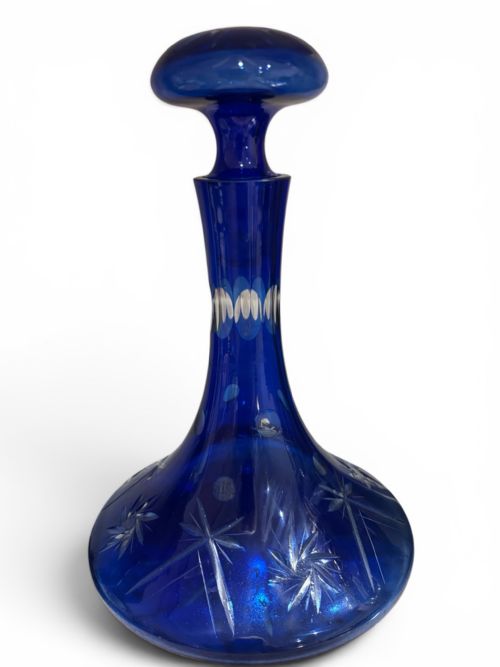
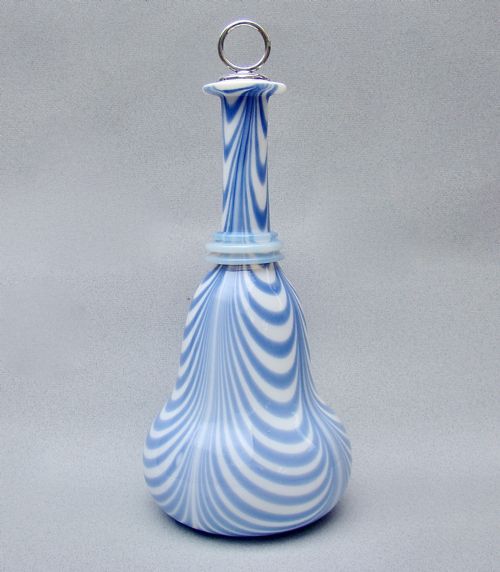


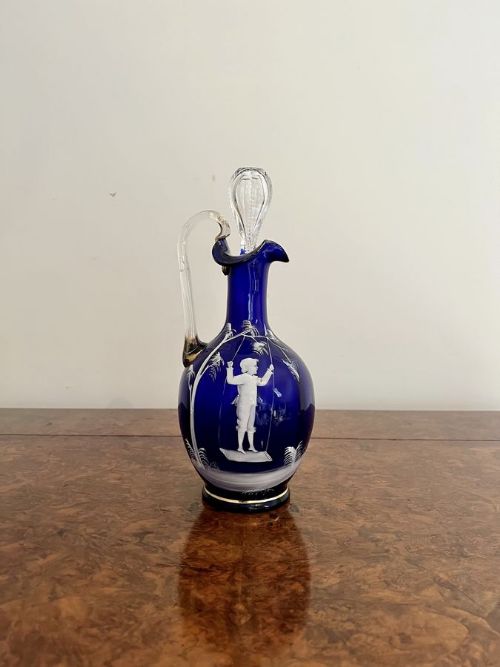

Victorian Blue Glass Decanter
A victorian blue glass decanter brings deep colour and nineteenth-century character to a dining table.
Victorian Blue Glass Decanter
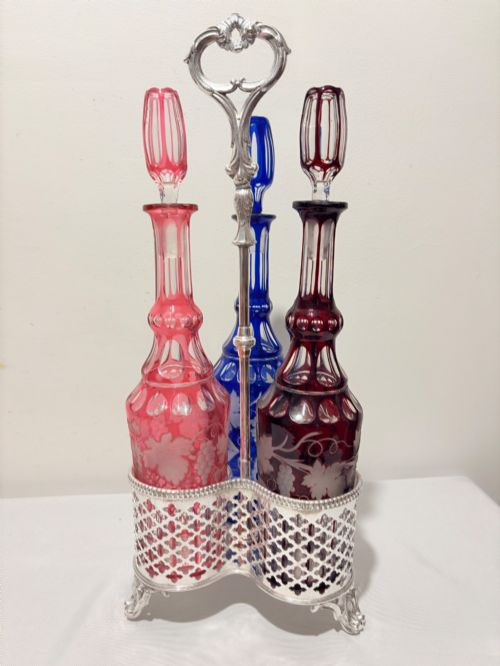
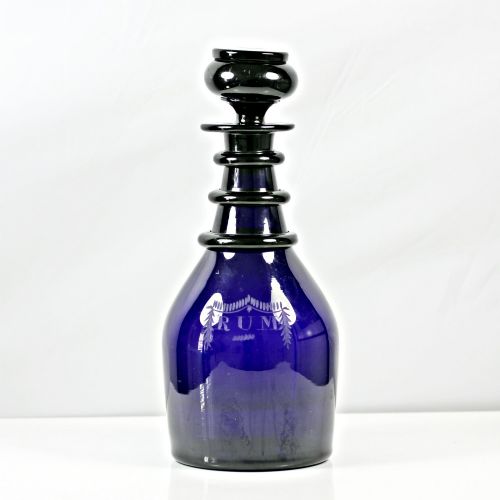
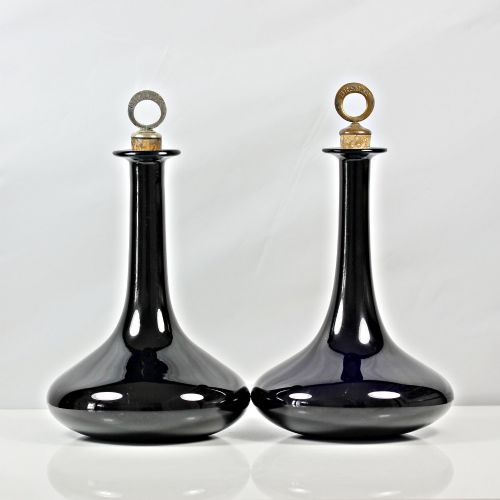
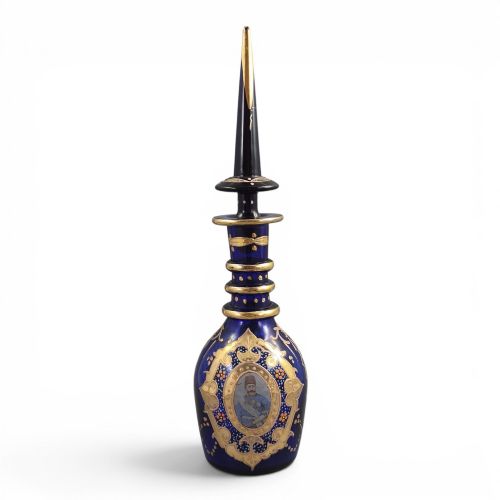
Buyers will encounter various regional styles on this page, ranging from English Bristol blue productions and Scottish mell designs to Bohemian exports created for the Persian Qajar market. Some examples arrive paired with silver-plated stands, matching goblets, or fitted rosewood frames.
Beyond standard drinks service, the selection includes apothecary bottles and water jugs that share the same deep cobalt palette. Each piece reflects the functional elegance of nineteenth-century entertaining and the distinct glasshouse traditions of the era.
Distinctions in quality
Quality in these pieces rests upon the depth and uniformity of the glass colour, the crispness of hand-blown neck rings, and the integration of decorative elements like enamel painting. Superior examples exhibit refined proportions, balanced weight, and well-executed metal mounts in silver plate or old Sheffield plate.
The sophistication of surface ornament further separates standard vessels from finer works, particularly where delicate gilding or detailed figural enamel remains crisp and intact. Complete sets involving matching stands, frames, or accompanying glassware elevate the desirability of individual decanters.
Some nineteenth-century makers evidently decided that decanters deserved to travel in pairs or triplets inside dedicated rosewood frames.
The Victorian Blue Glass Decanter Glossary
- Bristol blue
- A deep, vibrant cobalt blue glass historically associated with Bristol glasshouses during the eighteenth and nineteenth centuries.
- Mell decanter
- A decanter featuring a distinct sloping, bulbous body shape resembling a mallet.
- Ring neck
- A decanter neck adorned with horizontal raised glass rings designed to provide a secure grip when pouring.
- Old Sheffield plate
- A composite material made by fusing a thin sheet of silver to a thicker copper base, common on nineteenth-century mounts.
- Cased glass
- Glass formed of two or more distinct layers of different colours, often cut back to reveal the contrasting layer beneath.
Victorian Blue Glass Decanter: Frequently Asked Questions
How do I clean a vintage decanter safely?
Fill the vessel with warm water and mild detergent, avoiding harsh abrasives that might scratch the interior or damage old metal mounts. Swirl gently or use specialised cleaning beads rather than stiff brushes.
Dry the piece thoroughly upside down on a soft cloth, and leave the stopper out until the interior is completely free of moisture.
Can I still use these for serving wine?
Most nineteenth-century vessels remain fully functional for serving wine or spirits at the dining table. Ensure the interior is clean and inspect any cork stopper for structural integrity before use.
Hand wash only after use to protect the glass and any applied silver plating or enamel work from thermal shock.
What is the difference between Bristol blue and cobalt glass?
Bristol blue specifically denotes the deep cobalt coloration traditionally produced by West Country glassmakers during the Georgian and Victorian periods. Cobalt glass is a broader descriptive term for any glassware coloured using cobalt oxide regardless of origin.
Both types share the same intense blue hue, though regional manufacturing traits help differentiate English pieces from continental output.
How do I date an antique glass decanter?
Examine the pontil mark on the base, where a rough scar indicates the vessel was snapped off a blowing iron before being ground smooth. Form, neck style, and the presence of applied metal collars in silver plate or pewter also offer strong chronological clues.
Compare the wear patterns and manufacturing characteristics against documented examples from specific nineteenth-century decades.