


Cobalt Glass Spirit Bottle
A cobalt glass spirit bottle catches the evening light with a deep, arresting tone that makes every table setting feel instantly historic.
Cobalt Glass Spirit Bottle
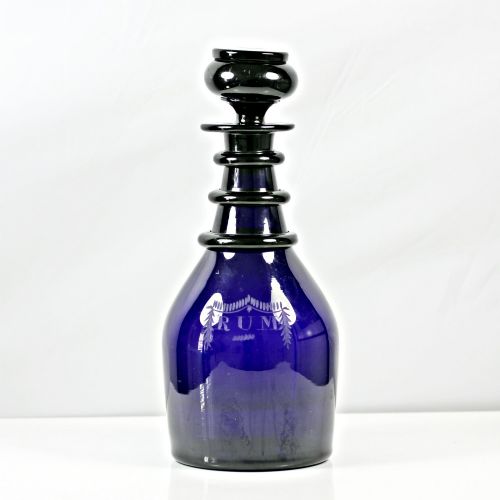
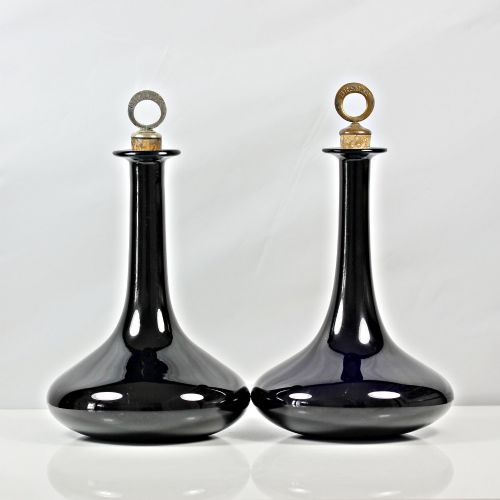
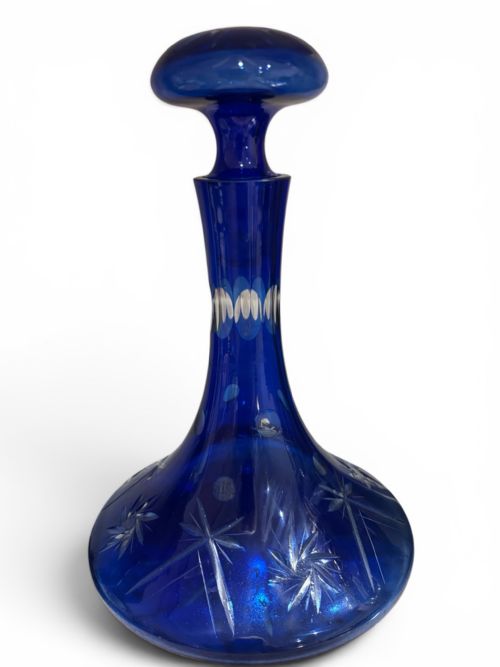
A cobalt glass spirit bottle brings intense colour to domestic interiors, taking the form of decanters and serving vessels designed for the dining table. When seeking a cobalt glass spirit bottle, buyers encounter pieces from the Georgian, William IV, Victorian, and Art Deco periods, alongside examples from around 1900 and 1920.
The prevailing styles on this page range from Georgian and William IV to Victorian, Scottish Victorian, and Bohemian. Forms include mell decanters, three-ring rum decanters, flagon decanters, and serving bottles.
Many examples originate from British and Irish workshops, showcasing traditional silhouettes shaped to hold spirits securely. These pieces function both as practical containers and as decorative objects displaying rich blue hues.
How they were made
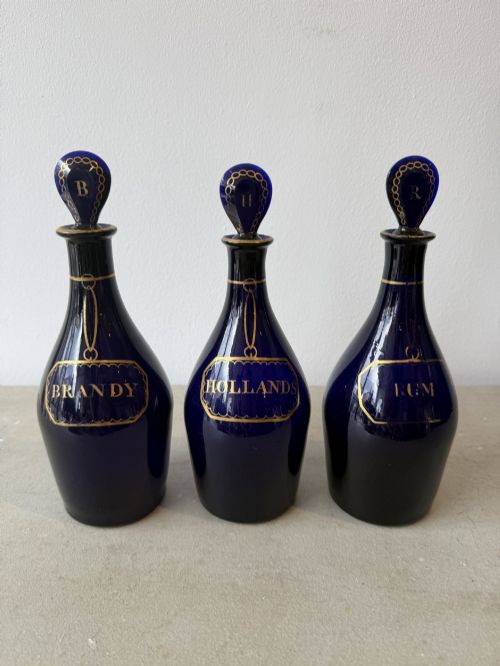
Makers utilised hand-blown glass, creating thick walls infused with rich cobalt or Bristol blue colourants. Some vessels incorporate crystal, adding clarity and weight to the finished form.
Finishing touches often include applied silver plate mounts, gold leaf decoration, and metal collars paired with cork stoppers. Hand-painted details appear on specific Georgian and nineteenth-century items, adding individual character to the surface.
Several Victorian bottles spent decades guarding rum before finding new life reflecting candlelit dining rooms.
What varies in quality
The standard of a piece depends on the depth and evenness of the glass colour, alongside the crispness of any hand-painted gilding. Heavier, hand-blown metal-rimmed examples demonstrate superior craftsmanship compared to simpler production methods.
The integrity of applied silver mounts and the preservation of original stoppers or corks influence the overall harmony of the object. Pieces featuring distinct regional forms, such as Scottish mell shapes, carry specific traditional craftsmanship merits.
The Cobalt Glass Spirit Bottle Glossary
- Bristol blue glass
- A deep vibrant blue glass traditionally associated with West Country production centres during the eighteenth and nineteenth centuries. This intense colouration remains stable and striking under varied lighting.
- Mell decanter
- A specific bottle shape featuring a rounded body tapering towards the base, designed for storing and pouring spirits. This form offers stability on sideboard trays.
- Three-ring decanter
- A serving bottle featuring three distinct glass rings applied around the neck for a secure grip during pouring. These rings are characteristic of nineteenth-century tavern and dining room glassware.
- Silver plate mount
- A protective or decorative metal collar fitted to the neck of a glass bottle. It often secures a stopper and adds a contrasting metallic sheen.
Cobalt Glass Spirit Bottle: Frequently Asked Questions
What spirits went into these bottles?
These vessels held strong liquors such as rum, Irish whiskey, and various household spirits decanted from large storage casks for dining table service.
The deep blue shade of the glass also helped protect light-sensitive contents from direct sunlight while resting on sideboards.
How do I date a blue decanter?
Dating relies on observing silhouette characteristics, neck ring configurations, and any accompanying metal mounts or hand-painted motifs.
Georgian and William IV examples often display heavier hand-blown walls and distinctive pouring profiles compared to later Art Deco pieces.
Are original stoppers common?
Original stoppers matching the exact glass shade and period remain scarce because stoppers frequently suffered breakage during daily use and washing.
Many surviving bottles present well with fitted corks or replacement closures collected over the lifetime of the object.
Can I use these for serving drinks today?
These historical bottles function effectively for serving modern spirits provided the interior is gently cleaned and any historic cork is assessed.
Hand washing in tepid water preserves both the rich cobalt glass tone and any delicate gold leaf or silver mounts.