


Hand Blown Glass Decanter
These hand blown glass decanter pieces bring tactile weight and historic character to a table, offering a functional vessel shaped by individual breath and hand.
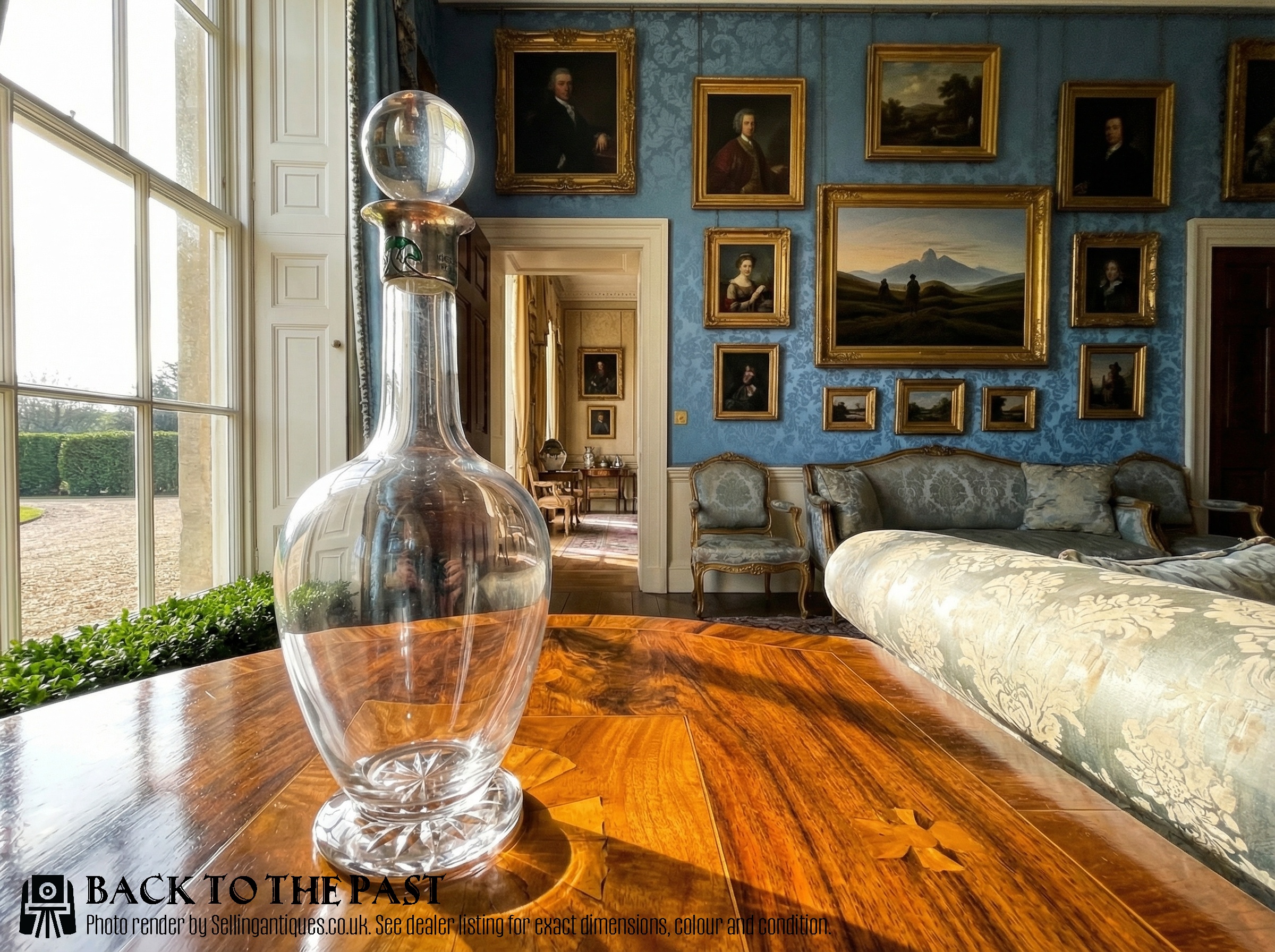
Identifying a hand blown glass decanter
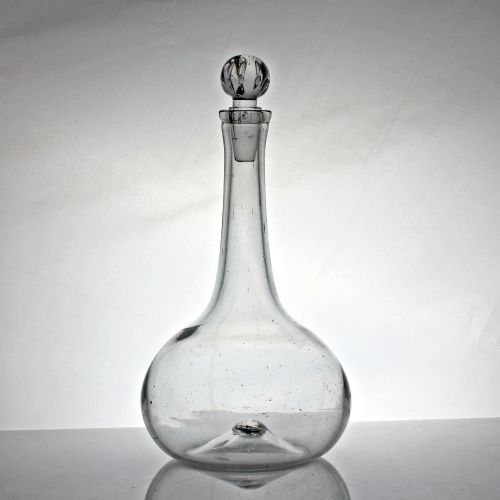
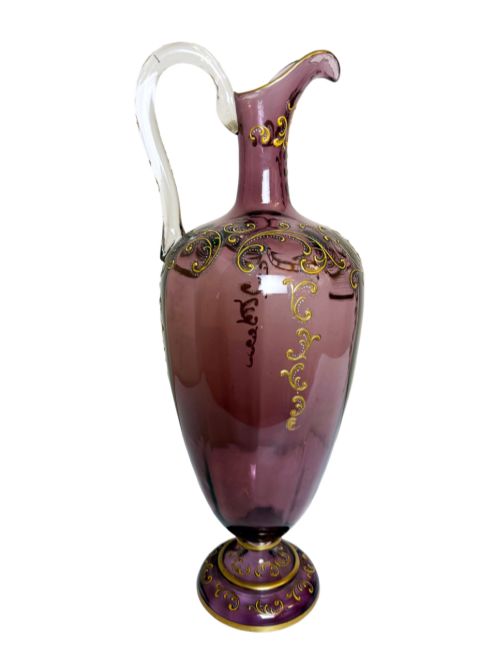
A hand blown glass decanter is a traditional drinking vessel designed for serving wine, spirits, or oils, shaped entirely by manual glassblowing techniques. When you search for this phrase, you encounter diverse historical forms ranging from Georgian shaft and globe carafes to Victorian ewers, novelty dog shapes, and Scottish mell designs.
The pieces on this page span several distinct periods including the 18th Century, Georgian era, 1880, 1890, Edwardian period, and 1900. You are most likely to meet Victorian and Georgian examples alongside Arts and Crafts creations, reflecting centuries of domestic utility and decorative craft.
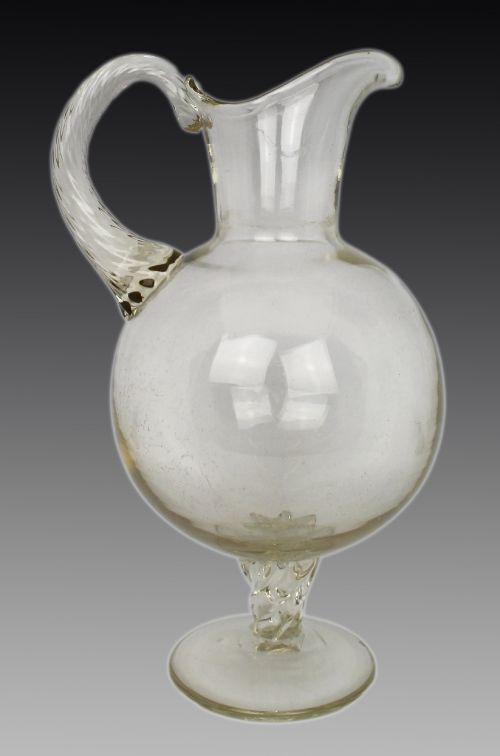
Forms vary from standard decanter bottles and wine funnels to footed ewers and oil vinegar bottles. Certain pieces incorporate specific regional styles such as Late 19th Century Italian work, Bohemian or Scandinavian animal forms, and Scottish mell silhouettes.
Assessing quality and finish
Quality in these vessels rests upon the clarity and weight of the glass, the balance of the hand-blown form, and the finesse of any accompanying silver or enamel work. Finer pieces demonstrate superior control over wall thickness and bubble distribution during the blowing process.
The distinction between standard domestic items and superior examples often lies in the originality of fitted stoppers, the precision of applied handles or collars, and the integrity of supplementary materials like sterling silver mounts.
Retail Price Guide 2026
Typical UK retail prices for hand blown glass decanter, calculated from the Sellingantiques database of over a million retail prices indexed since 2003. This retail price guide relies exclusively on Sellingantiques data; no external sources or auction records are used, so the figures do not describe the wider market.
One exceptional piece takes the literal form of a canine companion, proving that historic drinkers appreciated a canine toast.
Archibald Knox for Liberty
The Hand Blown Glass Decanter Glossary
- Pontil mark
- The rough scar left on the base of blown glass where the pontil rod was detached. This feature confirms traditional hand-blown manufacture.
- Mell decanter
- A Scottish form of decanter featuring a distinctive mallet or mallet-like silhouette. These pieces were traditionally used for serving whisky or wine.
- Ewer
- A large jug or pitcher with a wide spout and a large handle, often used for water or wine. Footed examples elevate the vessel above the table surface.
- Shaft and globe
- A decanter shape characterised by a long slender neck and a bulbous spherical body. This classic 18th Century silhouette provides stability and aesthetic balance.
Frequently Asked Questions
Can I use these decanters daily?
These vessels are robust enough for occasional serving, though many collectors prefer to display them as decorative objects. Ensure any cork or stopper fits securely before pouring.
Hand-blown glass benefits from careful handling and should be washed by hand rather than placed in a modern dishwasher.
How do I date an antique decanter?
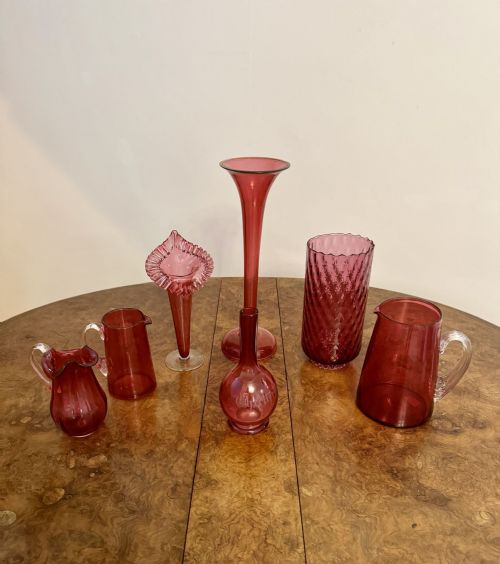
Dating relies on observing manufacturing marks, silhouette styles, and material combinations such as sterling silver or cranberry glass. Georgian pieces often feature distinct shaft and globe proportions, while Victorian examples show varied colours and novelty shapes.
Compare the pontil mark and glass weight against known period specimens. Subtle irregularities in the glass often point towards earlier hand-blown production.
What is a mell decanter?
A mell decanter is a specific Scottish form characterised by its mallet shape, designed for stable placement on dining tables. These vessels typically feature heavy glass bases and short necks.
They represent regional variations in British glassmaking traditions from the turn of the 20th Century.