


Art Nouveau Glass Decanter
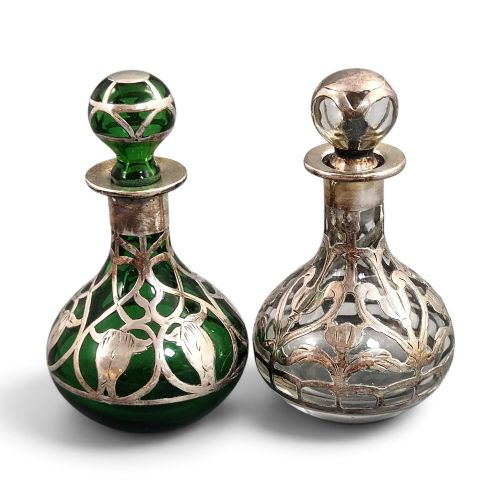
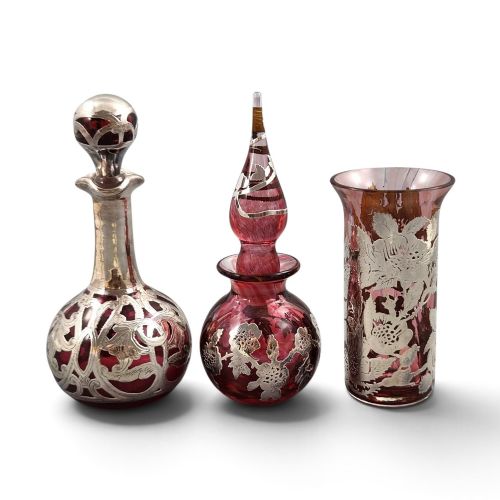
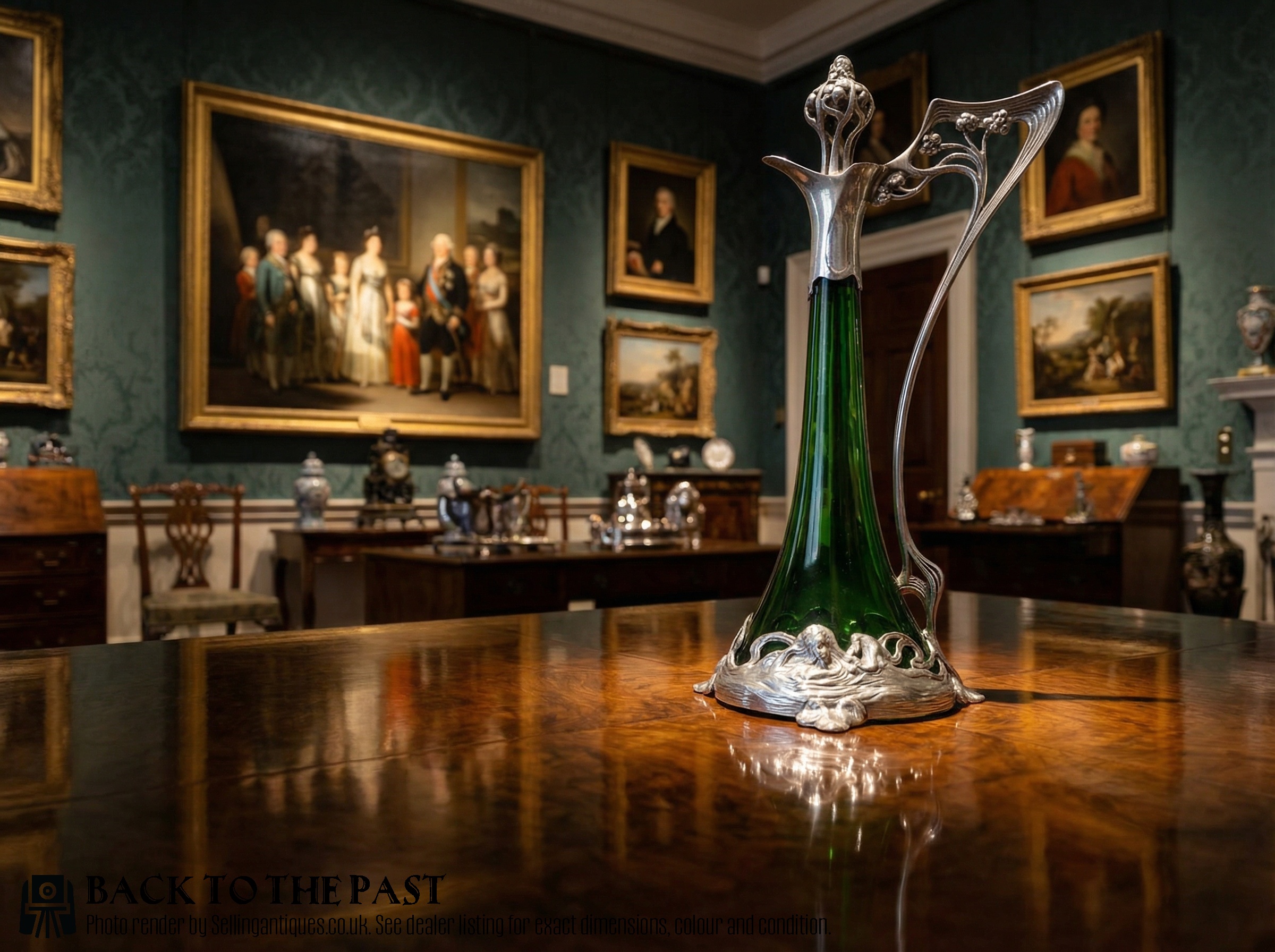
These art nouveau glass decanter pieces combine organic fluid forms with precious mounts, offering a striking centrepiece for any table.
Understanding art nouveau glass decanter pieces
When you search for an art nouveau glass decanter, you encounter vessels that bridge the Victorian and Edwardian eras, spanning periods from 1890 to 1909. These objects encompass claret jugs, perfume bottles, and liqueur decanters produced across England, France, and Germany.
The most common examples on this page merge iridescent or green glass bodies with intricate metalwork mounts, reflecting the dominant styles of Art Nouveau and Arts & Crafts design.
Makers utilised specific regional aesthetics, ranging from continental figural pewter to English hallmarked silver rims and stoppers.
Materials and construction methods
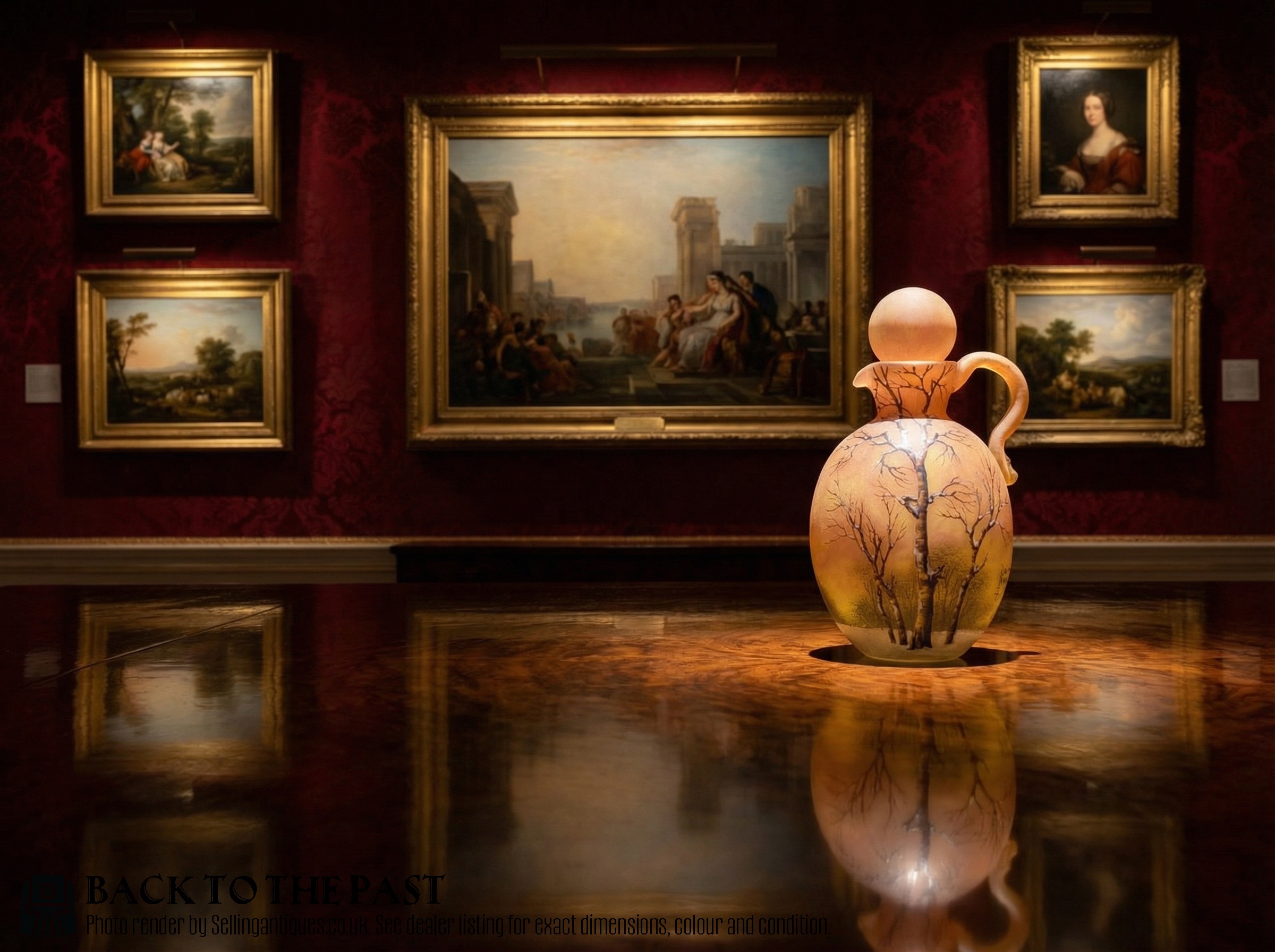
Glass bodies were formed through blowing and moulding, frequently employing cameo techniques, enamel decoration, or integrated green glass coloration. Some examples incorporate trailed glass details or winter landscape motifs applied directly to the surface.
Mounts and hardware combine silver plate, sterling silver, and silvered pewter to frame the glass. Metalwork was often cast with flowing maiden motifs, organic tendrils, or Celtic revival patterns typical of the period.
Retail Price Guide 2026
Typical UK retail prices for art nouveau glass decanter, calculated from the Sellingantiques database of over a million retail prices indexed since 2003. This retail price guide relies exclusively on Sellingantiques data; no external sources or auction records are used, so the figures do not describe the wider market.
Several decanters are accompanied by matching cordial glasses, ensuring your after-dinner digestif is served with proper historical coordination.
Assessing quality in period vessels
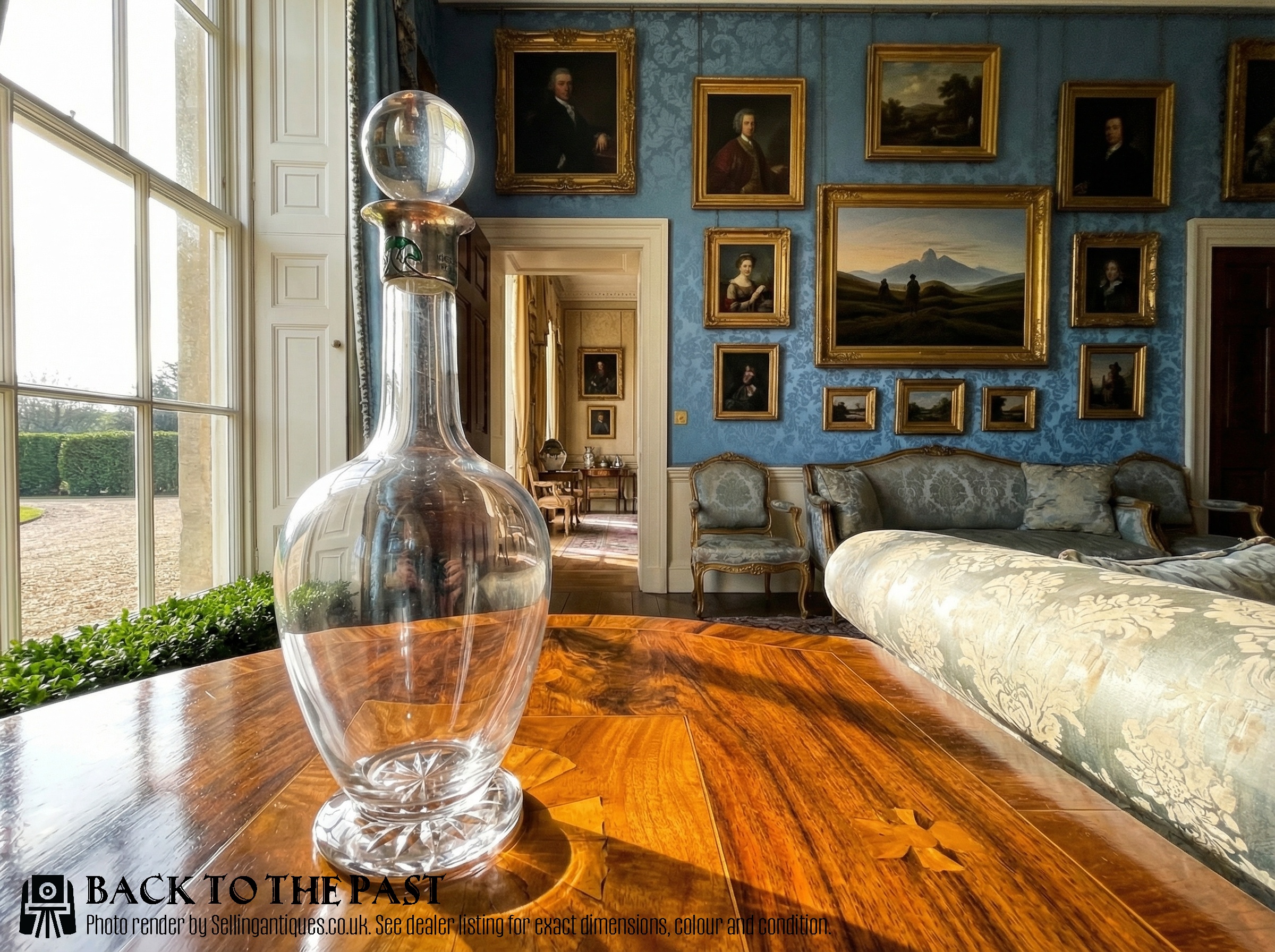
Quality rests in the integration between the glass body and its metal mount, where the precision of the silver or pewter framing dictates the piece's refinement. Makers who employed heavy gauge sterling silver or complex cameo glass elevated the standard far above simpler pressed glass and plated alternatives.
The presence of original stoppers and matching accessory sets preserves the integrity of the design. Vessels carrying documented factory origins or clear silversmith hallmarks demonstrate superior craftsmanship compared to unmarked workshop output.
Archibald Knox for Liberty·WMF·Daum·Asprey
The Art Nouveau Glass Decanter Glossary
- Cameo glass
- Glass formed with multiple layers of different colours, acid-etched to create a raised design. This technique allows intricate polychrome motifs to emerge across the surface of the vessel.
- Silvered pewter
- An alloy of tin finished with a thin layer of silver plating to achieve a lustrous metallic sheen. It served as a favoured medium for continental manufacturers producing flowing organic mounts.
- Kluk kluk glug glug decanter
- A traditional multi-necked glass bottle that produces a gurgling sound when liquid is poured. The distinctive shape requires specialist glassblowing skill to form the folded channels.
- Enamel
- Vitrified glass powder fused to a surface through firing to create colourful opaque decoration. Artisans applied this method to highlight floral and landscape scenes on the glass body.
- Claret jug
- A large pouring vessel designed specifically for serving red wine at the table. These forms typically feature a hinged metal lid and an ergonomic handle attached to a glass reservoir.
Frequently Asked Questions
What is a kluk kluk decanter?
A kluk kluk decanter is a distinctive multi-chambered glass bottle designed to make a gurgling sound when liquid is poured from it. The complex folded neck requires skilled glassblowing techniques.
These pieces often feature silver mounts and date to the late Victorian or Edwardian periods, combining practical function with unusual auditory charm.
How do I clean antique glass?
Antique glass requires gentle cleaning using warm water and mild soap, avoiding harsh chemicals that might damage enamel or cameo work. Metal mounts should be polished carefully to prevent any cleaning agents from touching the glass surface.
Original stoppers should be washed separately and dried thoroughly before being placed back into the neck of the vessel.
Are original stoppers important?
Original stoppers maintain the complete aesthetic and historical integrity of the piece, as replacements rarely match the exact glass tint, wear patterns, or mount style. Finding a vessel retaining its matching stopper is a significant benefit for collectors.
Even perfume bottles and liqueur jugs rely on the correct stopper to balance the upper silhouette of the design.
How do I identify Art Nouveau?
Art Nouveau style is defined by asymmetrical flowing lines, whiplash curves, and motifs inspired by natural plant and floral forms. Metal mounts frequently incorporate stylized maidens or organic tendrils wrapping around the glass.
Examining the manufacturing techniques and hallmarks helps distinguish these turn-of-the-century pieces from earlier Victorian or later modernist items.